Cable Forward Raise: Proper Form, Sets, Tips & FAQ
Learn how to perform the Cable Forward Raise with proper form to target the front delts. Includes setup, step-by-step execution, sets and reps by goal, common mistakes, FAQs, and recommended equipment.
Cable Forward Raise
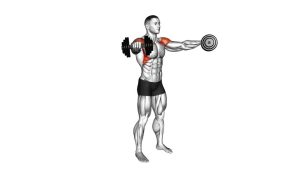
This movement is best performed with strict technique and moderate loading. The goal is to lift the handle with the front of the shoulder, not with momentum, lower-back swing, or upper-trap shrugging. A slight elbow bend is normal, but the body should stay tall and quiet throughout the set. Because the cable provides constant resistance, even lighter weights can feel very effective when the reps are controlled.
Quick Overview
| Body Part | front shoulders |
|---|---|
| Primary Muscle | Anterior deltoid (front deltoid) |
| Secondary Muscle | Upper chest, serratus anterior, upper traps (minimal if form is strict), core stabilizers |
| Equipment | Cable machine with a low pulley and single handle attachment |
| Difficulty | Beginner to Intermediate |
Sets & Reps (By Goal)
- Muscle growth: 3–4 sets × 10–15 reps with controlled tempo and 45–75 seconds rest
- Shoulder definition / accessory work: 2–4 sets × 12–18 reps with lighter weight and strict form
- Strength-focused shoulder assistance: 3–4 sets × 8–10 reps with moderate load and no body swing
- Warm-up / activation: 1–3 sets × 12–20 reps using very light resistance before pressing workouts
Progression rule: Increase the load only after you can raise to shoulder height with smooth reps, zero torso swing, and a controlled lowering phase.
Setup / Starting Position
- Set the pulley low: Attach a single handle to the low pulley of a cable machine.
- Stand tall: Face away from or slightly side-on to the machine depending on the setup, with feet about hip-width apart.
- Grab the handle: Hold the handle with one hand using a neutral or overhand grip, keeping the arm down near the thigh.
- Brace your body: Tighten the core, keep the chest up, and relax the shoulders away from the ears.
- Start with tension: Step into position so the cable already has light tension before the rep begins.
Tip: Keep the non-working hand on your hip or lightly against your side to help maintain balance and reduce unnecessary movement.
Execution (Step-by-Step)
- Begin from the shoulder: Initiate the raise by lifting the arm forward in front of the body.
- Keep a soft elbow bend: Maintain a slight bend at the elbow without turning the movement into a press.
- Raise in a smooth arc: Bring the handle up to about shoulder height while keeping the wrist neutral.
- Pause briefly: Hold the top for a moment to reinforce control and front-delt contraction.
- Lower slowly: Return the handle back down under control until the arm is near the starting position.
- Repeat without swinging: Maintain the same posture and tension on every repetition.
Pro Tips & Common Mistakes
- Lift only to shoulder height: Going much higher often shifts tension away from the front delts and can irritate the shoulder.
- Control the eccentric: Lowering slowly increases time under tension and improves shoulder stability.
- Keep the ribcage down: Avoid leaning backward to cheat the handle upward.
- Do not shrug: The upper traps should not dominate the movement.
- Use moderate weight: Cable front raises work best when the target muscle does the lifting, not momentum.
- Train both sides evenly: Match reps and effort from arm to arm to reduce strength imbalances.
- Do not lock the elbow: A slight bend keeps the movement joint-friendly and mechanically cleaner.
FAQ
What muscle does the cable forward raise target the most?
The main target is the anterior deltoid, which is the front portion of the shoulder. The upper chest and stabilizers may assist slightly, but the front delt should do most of the work.
Is the cable forward raise better than the dumbbell front raise?
Neither is universally better, but the cable version provides more consistent tension throughout the rep. Many lifters prefer it for hypertrophy because the front delt stays loaded even near the bottom.
Should I do this exercise with one arm or both arms?
Both versions work, but the single-arm variation often makes it easier to focus on control, posture, and side-to-side balance.
How heavy should I go on cable forward raises?
Use a weight that allows you to lift to shoulder height without torso swing, shrugging, or losing the slow lowering phase. This exercise usually works best with light to moderate resistance.
Can beginners do cable forward raises?
Yes. Beginners can use this exercise effectively as long as the weight stays manageable and the reps remain controlled. It is a simple way to learn front-delt isolation.
Recommended Equipment
- Single D-Handle Cable Attachment — ideal for smooth single-arm cable raises and other unilateral machine work
- Adjustable Cable Machine / Functional Trainer — the main setup needed for cable forward raises and many other shoulder exercises
- Weightlifting Grips for Cable Training — useful if grip fatigue limits shoulder isolation during higher-rep sets
- Exercise Mat — helps create a stable training area around your cable station
- Lightweight Training Belt — optional for lifters who want extra trunk awareness during heavier accessory work
Tip: For this exercise, the most important piece of equipment is a smooth cable setup with a comfortable single handle. Good movement quality matters more than heavy resistance.