Dumbbell Front Raise: Proper Form, Sets, Tips & FAQ
Learn how to do the Dumbbell Front Raise with proper form to build stronger front delts. Includes step-by-step instructions, sets and reps by goal, common mistakes, FAQs, and recommended equipment.
Dumbbell Front Raise
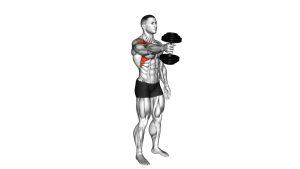
The Dumbbell Front Raise works best when performed with light-to-moderate weight, a stable torso, and a controlled tempo. The goal is to lift with the shoulders, not with momentum from the hips or lower back. You should feel the front of the shoulders doing most of the work, while the core stays braced and the wrists stay neutral.
Quick Overview
| Body Part | Shoulders |
|---|---|
| Primary Muscle | Anterior deltoid (front delts) |
| Secondary Muscle | Lateral deltoid, upper chest, upper traps, core stabilizers |
| Equipment | Dumbbells |
| Difficulty | Beginner to Intermediate |
Sets & Reps (By Goal)
- Muscle growth: 3–4 sets × 10–15 reps with controlled form and 45–75 seconds of rest
- Shoulder endurance: 2–4 sets × 15–20 reps using lighter dumbbells and smooth tempo
- Technique practice: 2–3 sets × 8–12 reps with light weight and strict execution
- Accessory work after pressing: 2–3 sets × 12–15 reps with moderate effort
Progression tip: Increase reps first, then increase weight in small jumps. If form breaks down or you start swinging, the dumbbells are too heavy.
Setup / Starting Position
- Stand tall: Place your feet about hip-width to shoulder-width apart with your chest up and core engaged.
- Hold the dumbbells at your thighs: Let the weights rest in front of your legs with a neutral grip or palms facing down, depending on comfort.
- Keep a soft bend in the elbows: Your arms should stay nearly straight, but never locked rigidly.
- Set the shoulders: Keep them down and back lightly without shrugging.
- Brace the torso: Avoid leaning back before the lift even begins.
A neutral grip is often more comfortable for many lifters, especially if front raises with palms-down aggravate the shoulders.
Execution (Step-by-Step)
- Start from the thighs: Begin with the dumbbells in front of your legs and your body fully stable.
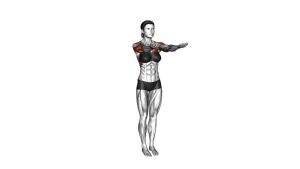
- Raise the weights forward: Lift both dumbbells in front of your body in a controlled arc.
- Stop at shoulder height: Bring the dumbbells up until your arms are about parallel to the floor.
- Pause briefly: Hold the top for a moment without shrugging the shoulders.
- Lower slowly: Return the dumbbells to the starting position under control rather than letting them drop.
- Repeat with clean reps: Keep every repetition smooth, balanced, and free from momentum.
Pro Tips & Common Mistakes
- Use lighter weight than you think: Front raises are an isolation movement, not a momentum exercise.
- Lift to shoulder level: Going much higher often shifts tension away from the target and can irritate the shoulder.
- Do not swing: If your hips or lower back help start the rep, reduce the load immediately.
- Keep the wrists neutral: Avoid bending them excessively during the lift.
- Do not shrug the traps: Keep tension centered on the front delts instead of the neck and upper traps.
- Control the lowering phase: The eccentric portion is valuable for muscle growth and shoulder control.
- Maintain a braced core: Leaning back is one of the most common mistakes and often indicates too much weight.
FAQ
What muscles does the Dumbbell Front Raise work?
The main target is the anterior deltoid, which is the front part of the shoulder. The exercise also involves stabilizing support from the lateral delts, upper chest, traps, and core.
How high should I raise the dumbbells?
In most cases, you should raise them to about shoulder height. That range keeps tension on the front delts without turning the movement into a trap-dominant lift.
Should I do front raises if I already do shoulder presses?
Yes, but usually as an accessory exercise. Shoulder presses already train the front delts, so front raises are best used to add focused isolation volume rather than replace pressing movements.
Is it better to lift both arms together or one at a time?
Both options work. Lifting both together saves time, while alternating or single-arm front raises can help improve control, balance, and focus on one side at a time.
Why do I feel this in my neck or lower back?
That usually happens when the dumbbells are too heavy or when you compensate by shrugging or leaning back. Reduce the load, brace the core, and slow the movement down.
Recommended Equipment
- Adjustable Dumbbells — ideal for progressive overload without needing multiple fixed-weight pairs
- Light Neoprene Dumbbells — a great option for beginners learning strict front raise form
- Full-Length Workout Mirror — helps you monitor shoulder height, torso position, and unwanted swinging
- Resistance Bands Set — useful for shoulder warm-ups, activation drills, and complementary delt work
- Weightlifting Gloves or Grip Pads — helpful if grip fatigue distracts from clean shoulder-focused reps
Tip: Choose a weight that lets you raise the dumbbells smoothly to shoulder height without leaning back or using momentum.