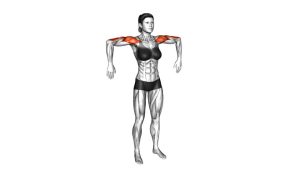
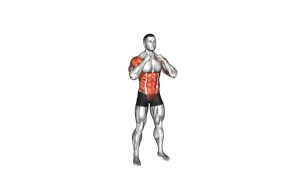
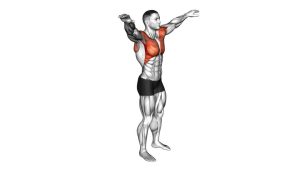
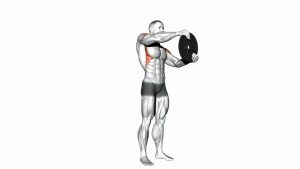
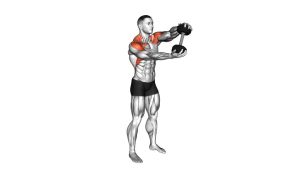
Dumbbell Iron Cross Squat Hold: Form, Sets, Muscles Worked & FAQ
Learn how to do the Dumbbell Iron Cross Squat Hold with proper form. Discover muscles worked, setup, step-by-step execution, sets by goal, common mistakes, FAQs, and recommended equipment.
Dumbbell Iron Cross Squat Hold
This movement works best when you treat it as a full-body tension drill. The shoulders must resist the pull of the dumbbells, the legs must support the squat position, and the trunk must prevent excessive leaning or rounding. Even light dumbbells can feel difficult because the extended arm position creates a long lever and increases time under tension.
Quick Overview
| Body Part | Front Shoulders |
|---|---|
| Primary Muscle | Anterior deltoids |
| Secondary Muscle | Quadriceps, glutes, core, upper chest |
| Equipment | Pair of dumbbells |
| Difficulty | Intermediate |
Sets & Reps (By Goal)
- Shoulder endurance: 3–4 sets × 20–40 second holds, 45–75 seconds rest
- Leg and core conditioning: 3–5 sets × 30–45 second holds, 60–90 seconds rest
- Finisher work: 2–3 sets × 15–30 second holds after shoulder or leg training
- Technique practice: 2–3 sets × 10–20 second holds with light dumbbells
Progression rule: Add hold time before increasing the dumbbell weight. When you can maintain the same squat depth and arm height for all sets, increase the challenge gradually.
Setup / Starting Position
- Select light-to-moderate dumbbells: Start lighter than you think you need because the lever length makes the hold harder than it looks.
- Stand with feet about shoulder-width apart: Turn the toes slightly outward if that helps you squat more comfortably.
- Grip the dumbbells firmly: Hold one dumbbell in each hand with a neutral or overhand-style grip, depending on what feels strongest.
- Raise the arms in front of the body: Extend them until the dumbbells are around shoulder level, keeping the elbows straight or softly bent.
- Sit into a squat: Lower under control until you reach a stable squat depth that you can hold without your heels coming up.
- Brace the trunk: Keep the chest lifted, ribs controlled, and gaze forward so the body stays organized under tension.
Tip: You do not need to force the deepest possible squat. Use a depth that lets you hold your posture cleanly while keeping the arms level.
Execution (Step-by-Step)
- Set the arm position first: Bring both dumbbells forward to shoulder height and lock in a stable upper-body position.
- Lower into the squat: Bend the knees and hips together until you reach your chosen hold depth.
- Keep the shoulders active: Do not let the dumbbells drift downward. Actively reach forward while keeping the neck relaxed.
- Hold and breathe: Maintain a steady brace through the core while taking controlled breaths instead of holding your breath.
- Monitor lower-body alignment: Keep the knees tracking over the feet and press through the full foot.
- Finish with control: Stand up smoothly, then lower the dumbbells only after the set is complete.
Pro Tips & Common Mistakes
- Use lighter weights than a normal front raise: Holding the position is far more demanding than performing standard reps.
- Keep the dumbbells level: Uneven arm height usually means one shoulder is fatiguing faster or the core is rotating.
- Stay tall through the chest: Excessive forward collapse shifts stress away from the target muscles and into the lower back.
- Do not shrug the shoulders: Let the front delts work while the upper traps stay supportive but not dominant.
- Avoid bouncing in the squat: This is an isometric hold, so remove unnecessary motion and own the position.
- Keep the heels grounded: Rising onto the toes often signals poor squat balance or too much fatigue.
- Shorten the hold before adding load: Better tension with lighter dumbbells beats sloppy form with heavier ones.
FAQ
What muscles does the Dumbbell Iron Cross Squat Hold work most?
The biggest emphasis is on the anterior deltoids because the arms are held straight out in front. The quadriceps, glutes, and core also work hard to maintain the squat position and keep the torso stable.
Is this exercise better for strength or endurance?
It is mainly an endurance and stability exercise. Since it is performed as a hold, it builds time under tension, postural control, and muscular stamina more than maximal strength.
How heavy should the dumbbells be?
Start with a pair you can hold at shoulder height without shaking excessively or losing squat position. For many lifters, lighter dumbbells work better than expected because the hold becomes challenging very quickly.
Can beginners do this exercise?
Beginners can try it with a very short hold, a shallow squat, or extremely light dumbbells. Still, it is usually best classified as intermediate because it demands coordination, mobility, and whole-body tension.
What is the best way to make it harder?
Increase the hold duration, improve the squat depth, or slow your breathing while staying braced. Add more weight only after you can maintain all positions cleanly.
Recommended Equipment
- Adjustable Dumbbells — ideal for gradually increasing load as your shoulder endurance and squat stability improve
- Rubber Hex Dumbbells — stable, durable, and easy to control during static holds
- Exercise Mat — helpful for comfort and traction if you are training on a hard or slippery surface
- Weightlifting Shoes — can improve squat stability and help some lifters maintain a more upright position
- Loop Resistance Bands — useful for warm-ups, shoulder activation, and additional lower-body prep before the hold
Tip: Start with the dumbbells first and add specialty gear only if it genuinely improves your training quality or comfort.