Arm Circles: Proper Form, Shoulder Benefits, Sets, Tips & FAQ
Learn how to do Arm Circles with proper form to warm up the shoulders, improve mobility, and build muscular endurance. Includes setup, execution, sets by goal, common mistakes, FAQs, and recommended equipment.
Arm Circles
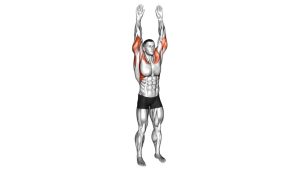
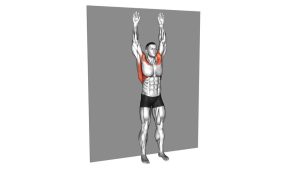
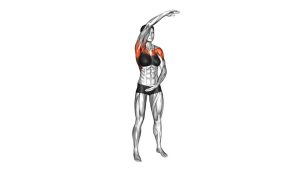
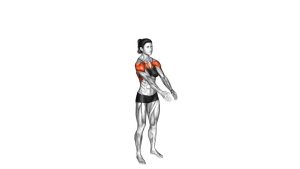
Arm circles work best as a quality movement, not a rushed conditioning drill. The goal is to feel light-to-moderate effort in the shoulders while maintaining straight arms, a tall posture, and a consistent circular path. This makes the exercise useful for warm-ups, shoulder activation, posture-focused sessions, and light muscular endurance work.
Quick Overview
| Body Part | Shoulders |
|---|---|
| Primary Muscle | Deltoids (anterior and lateral heads) |
| Secondary Muscle | Posterior deltoids, rotator cuff, upper traps, upper chest |
| Equipment | None |
| Difficulty | Beginner |
Sets & Reps (By Goal)
- General warm-up: 2–3 sets × 20–30 seconds forward + 20–30 seconds backward
- Shoulder activation before pressing or upper-body training: 2–4 sets × 30–45 seconds
- Light muscular endurance: 2–3 sets × 45–60 seconds with controlled tempo
- Beginner mobility practice: 1–2 sets × 15–20 small circles in each direction
Progression rule: First increase time under tension or improve control. Only add difficulty by making the circles slightly larger or holding very light weights once your shoulder mechanics stay clean.
Setup / Starting Position
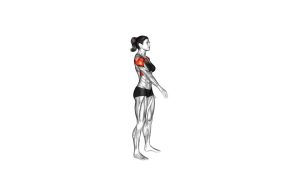
- Stand tall: Keep your feet about hip- to shoulder-width apart and maintain a balanced stance.
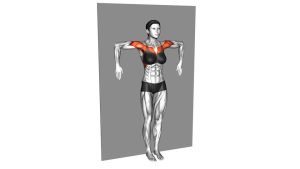
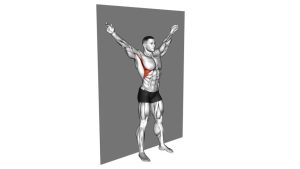
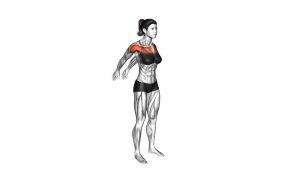
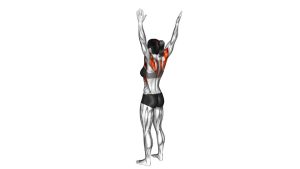
- Raise the arms: Extend both arms out to the sides until they are roughly in line with the shoulders.
- Straight but soft elbows: Keep the arms long without locking the joints aggressively.
- Brace lightly: Engage the core so the torso stays still and you do not sway.
- Set the shoulders: Keep them down and relaxed rather than shrugged toward the ears.
Tip: Start with small circles before progressing to medium circles. Better control usually means better shoulder activation.
Execution (Step-by-Step)
- Hold the T position: Keep your arms out to the sides and chest open.
- Begin circling: Make small, controlled circles from the shoulders rather than from the wrists.
- Keep the torso quiet: Avoid rocking, twisting, or using momentum to swing the arms.
- Breathe normally: Maintain a steady rhythm and do not hold your breath.
- Reverse direction: After completing one interval, switch and perform the same movement in the opposite direction.
Pro Tips & Common Mistakes
- Start small: Small circles are easier to control and usually feel better on the shoulders.
- Do both directions: Forward and backward circles create a more balanced warm-up effect.
- Keep the arms level: Letting them drift downward reduces the training effect.
- Do not shrug: Keep tension in the delts, not the upper traps.
- Use time, not speed: Fast sloppy circles turn the drill into momentum instead of shoulder work.
- Progress carefully: If you use light weights, keep them very light so the shoulder joint stays comfortable.
FAQ
What muscles do arm circles work the most?
Arm circles mainly target the deltoids, especially the front and side heads. They also involve the rotator cuff and other small stabilizers that help control shoulder movement.
Are arm circles good before a workout?
Yes. They are commonly used as a dynamic warm-up before shoulder training, pressing movements, calisthenics, and general upper-body sessions.
Should I use big or small circles?
Start with small circles. Once your shoulders feel warm and the movement stays pain-free, you can gradually increase the size slightly.
Can I do arm circles every day?
In most cases, yes. Because they are low-load and commonly used for mobility and warm-up work, many people can perform them daily as long as the movement stays comfortable.
Should I add weights to arm circles?
Only after you can perform bodyweight arm circles with excellent control. If you add load, use very light dumbbells or small plates and keep the movement smooth.
Recommended Equipment
- Shoulder Resistance Bands — useful for shoulder activation, warm-ups, and pairing with pull-aparts or external rotations
- Warm-Up Bands — a simple low-resistance option for pre-workout shoulder prep
- Mobility Stick — helpful for shoulder mobility drills and upper-body range-of-motion work
- Lacrosse Massage Ball — useful for chest, rear shoulder, and upper-back soft-tissue work before training
- Light Dumbbells Pair — optional for advanced arm circle progressions when bodyweight becomes too easy
Tip: Choose tools that support mobility, activation, and light progression. Arm circles should stay controlled, so avoid adding heavy resistance.