Dumbbell Seated Alternate Press: Proper Form, Sets, Tips & FAQ
Learn how to do the Dumbbell Seated Alternate Press with proper form. Discover muscles worked, setup, execution, sets and reps by goal, common mistakes, FAQs, and recommended equipment.
Dumbbell Seated Alternate Press
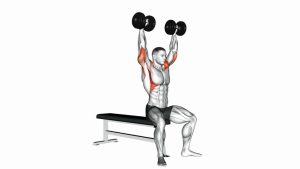
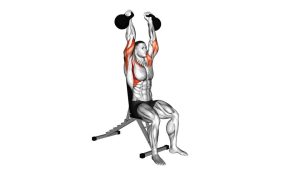
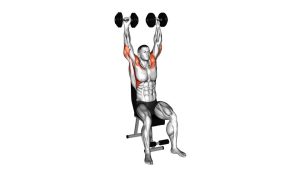
This exercise is especially useful for lifters who want more control than a standing press and more unilateral demand than a standard two-arm seated press. The bench support helps reduce lower-body momentum, while the alternating pattern increases time under tension and exposes side-to-side strength differences. Done correctly, you should feel the front and side delts working hard, with the triceps assisting to finish each lockout.
Quick Overview
| Body Part | Shoulders |
|---|---|
| Primary Muscle | Anterior deltoids (front shoulders) |
| Secondary Muscle | Lateral deltoids, triceps, upper chest, and core stabilizers |
| Equipment | Dumbbells and a seated bench with back support |
| Difficulty | Beginner to Intermediate |
Sets & Reps (By Goal)
- Muscle growth: 3–4 sets × 8–12 reps per arm
- Strength focus: 4–5 sets × 5–8 reps per arm
- Control and stability: 2–4 sets × 10–15 reps per arm with strict tempo
- Beginner shoulder training: 2–3 sets × 8–10 reps per arm using moderate weight
Progression rule: Add reps before adding load. Once you can complete all planned reps with smooth control, stable posture, and no excessive back arch, increase the dumbbell weight gradually.
Setup / Starting Position
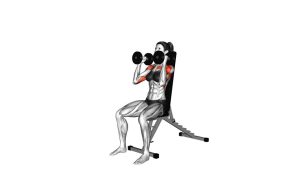
- Adjust the bench: Sit on a bench with back support set close to upright so your torso stays tall.
- Plant your feet: Keep both feet flat on the floor for balance and full-body stability.
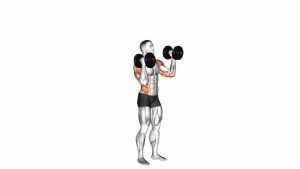
- Bring the dumbbells up: Hold one dumbbell in each hand at shoulder level with elbows bent and under control.
- Brace the torso: Tighten your core, keep your chest lifted naturally, and avoid flaring the ribs.
- Set the shoulder position: Keep the shoulders packed and wrists stacked over the elbows.
Tip: Start with the dumbbells slightly in front of the shoulders instead of letting the elbows drift far behind the body.
Execution (Step-by-Step)
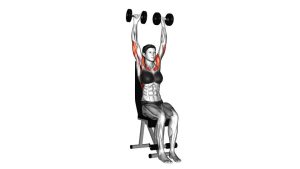
- Press the first dumbbell: Drive one dumbbell overhead until the arm is nearly straight.
- Keep the opposite side loaded: Hold the other dumbbell steady at shoulder height instead of dropping it.
- Lower with control: Bring the top dumbbell back down slowly to the starting position.
- Switch sides: Press the opposite dumbbell overhead while the first arm stays fixed at shoulder level.
- Repeat in rhythm: Continue alternating sides for the target number of reps per arm.
Pro Tips & Common Mistakes
- Press straight up: Keep the dumbbell path efficient instead of drifting too far forward or out to the side.
- Don’t rush the alternation: Finish each rep fully before switching arms.
- Keep the non-working arm active: Letting the idle dumbbell collapse too low reduces tension and control.
- Avoid excessive back arch: If your lower back lifts off the bench, the load is probably too heavy.
- Use a full but pain-free range: Press high without forcing an uncomfortable lockout.
- Control the eccentric: The lowering phase is where much of the shoulder-building stimulus happens.
FAQ
What makes the seated alternate press different from a regular dumbbell shoulder press?
Instead of pressing both dumbbells together, you press one side at a time. This increases unilateral control, keeps one shoulder under isometric tension, and can help reveal strength imbalances between arms.
Is this exercise better for shoulders or triceps?
It is primarily a shoulder exercise, especially for the front delts. The triceps assist during the pressing and lockout phase, but the shoulders do most of the work.
Should I use a bench with back support?
Yes, especially for strict form. A back-supported bench helps reduce momentum and makes it easier to focus on clean shoulder-driven reps.
Can beginners do the dumbbell seated alternate press?
Yes. Beginners can use lighter dumbbells and slower reps to learn the pressing path, improve balance, and build foundational shoulder strength.
How heavy should I go?
Choose a weight that lets you press with control, keep the non-working arm stable, and avoid leaning back. If posture breaks down before the set ends, reduce the load.
Recommended Equipment
- Adjustable Dumbbells — ideal for progressive overload without needing a full rack of fixed dumbbells
- Adjustable Weight Bench — gives you stable seated support and a strong setup for overhead pressing
- Wrist Wraps — useful for lifters who want extra wrist support during pressing sessions
- Resistance Bands Set — great for shoulder warm-ups, activation drills, and accessory work around your pressing routine
- Foam Roller — helpful for upper-back mobility work before shoulder training
Tip: For most home gym setups, the best starting combination is an adjustable bench, adjustable dumbbells, and a simple resistance band set.