Dumbbell Seated Bent-Over Rear Delt Row: Proper Form, Sets, Tips & FAQ
Learn how to do the Dumbbell Seated Bent-Over Rear Delt Row with proper form to target the rear delts and upper back. Includes setup, execution, sets by goal, common mistakes, FAQs, and recommended equipment.
Dumbbell Seated Bent-Over Rear Delt Row
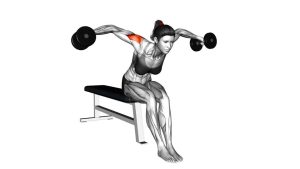
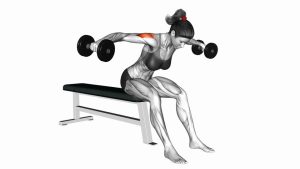
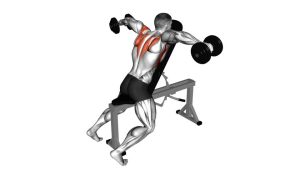
This exercise is a strong choice for building rear shoulder size, improving upper-back balance, and supporting healthier shoulder mechanics. Because you are seated and bent over, it reduces lower-body involvement and helps isolate the upper body. The key is to row wide rather than row close—that elbow path is what makes the rear delts do more of the work.
Quick Overview
| Body Part | Rear Shoulders |
|---|---|
| Primary Muscle | Rear deltoids (posterior delts) |
| Secondary Muscle | Rhomboids, middle trapezius, teres minor, infraspinatus, biceps assisting |
| Equipment | Dumbbells and a flat bench |
| Difficulty | Intermediate |
Sets & Reps (By Goal)
- Muscle growth: 3–4 sets × 10–15 reps with controlled tempo and 60–90 sec rest
- Shoulder definition / isolation work: 2–4 sets × 12–20 reps with lighter weight and strict form
- Strength-focused accessory: 3–4 sets × 8–10 reps with clean reps and no body swing
- Upper-body warm-up / activation: 2–3 sets × 12–15 reps using light dumbbells
Progression rule: Add reps before adding load. Only move up in weight when you can keep the torso stable, the elbows flared, and the rear delts doing the work from start to finish.
Setup / Starting Position
- Sit on a flat bench: Position yourself near the front edge so you can hinge forward freely.
- Plant your feet firmly: Keep them flat on the floor about shoulder-width apart for stability.
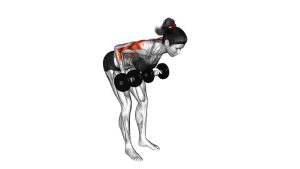
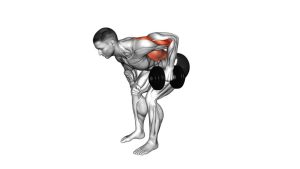
- Hinge at the hips: Lean your torso forward until your chest is close to your thighs.
- Keep a neutral spine: Avoid rounding your back or overextending your neck.
- Hold the dumbbells under your shoulders: Let your arms hang straight down with a neutral grip.
- Set the shoulders: Keep the chest open and shoulders away from the ears before starting the row.
Tip: The more consistent your bent-over position, the easier it is to isolate the rear delts without turning the rep into a full upper-back row.
Execution (Step-by-Step)
- Brace your torso: Tighten your core and keep your chest steady against your hinged position.
- Start the row: Pull the dumbbells upward by driving your elbows out and back rather than keeping them tucked close.
- Row wide: Think about pulling through the rear shoulders, not dragging the weight with your lats.
- Reach the top under control: Bring the dumbbells toward the outer ribs or lower chest area depending on your arm path.
- Pause briefly: Squeeze the rear delts and upper back for a moment at peak contraction.
- Lower slowly: Return the dumbbells to the starting position with full control while keeping tension on the target muscles.
- Repeat smoothly: Maintain the same torso angle and avoid using momentum from the hips or lower back.
Pro Tips & Common Mistakes
- Lead with the elbows: Think elbows out and up, not hands pulling first.
- Do not swing the torso: Momentum reduces rear-delt tension and can stress the lower back.
- Avoid shrugging: Excess trap dominance can take tension away from the rear delts.
- Use lighter weights if needed: This exercise works best with control, not ego loading.
- Keep the neck neutral: Do not crank your head upward while rowing.
- Control the lowering phase: The eccentric helps build rear-delt size and reinforces better shoulder mechanics.
- Do not row too low: Pulling with tucked elbows into the waist turns it into a different exercise.
FAQ
What muscle does the Dumbbell Seated Bent-Over Rear Delt Row target most?
The main target is the rear deltoid. It also trains the rhomboids and middle traps, but the flared elbow path is what makes it especially effective for the rear shoulders.
Is this different from a regular dumbbell row?
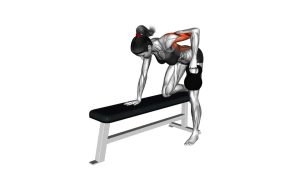
Yes. A regular dumbbell row usually keeps the elbows closer to the body and emphasizes the lats more. This variation uses a wider elbow path to shift more tension toward the rear delts and upper back.
How heavy should I go on this exercise?
Use a weight that allows you to keep your torso still and your elbows flared without jerking. Most people get better results using moderate or light-to-moderate dumbbells with strict form.
Should I squeeze my shoulder blades together?
A slight natural squeeze is fine, but do not over-pinch the shoulder blades so much that the rear delts lose tension. Focus first on moving the elbows correctly and keeping the shoulders controlled.
Where should I place this in my workout?
It works well on shoulder day, pull day, or as a rear-delt accessory after your main presses and rows. Many lifters place it in the middle or later part of the session for hypertrophy work.
Recommended Equipment (Optional)
- Adjustable Dumbbells — versatile for progressive overload and convenient for home shoulder training
- Flat Weight Bench — provides a stable seat and proper setup position for bent-over dumbbell work
- Lifting Straps — helpful if grip fatigue limits your rear-delt and upper-back training volume
- Fitness Gloves — can improve dumbbell grip comfort during higher-rep sets
- Resistance Bands Set — useful for pairing with rear-delt activation drills, pull-aparts, and shoulder warm-ups
Tip: Rear-delt training responds best to clean reps, steady tempo, and moderate loads. Choose equipment that helps you stay strict and consistent.