Band Incline Y Raise: Proper Form, Sets, Benefits & FAQ
Learn how to perform the Band Incline Y Raise with proper form to strengthen the rear delts, lower traps, and upper back. Includes setup, execution, sets by goal, mistakes, FAQs, and recommended equipment.
Band Incline Y Raise
This exercise is excellent for improving posture, shoulder control, and upper-back activation. Because the torso is supported on the bench, it becomes easier to isolate the target muscles and avoid cheating with the lower back or body swing. Use a moderate band tension and focus on a slow, precise lift instead of trying to move too fast.
Quick Overview
| Body Part | Shoulders |
|---|---|
| Primary Muscle | Rear deltoids |
| Secondary Muscle | Lower trapezius, middle trapezius, rhomboids, rotator cuff |
| Equipment | Resistance band, incline bench |
| Difficulty | Beginner to Intermediate |
Sets & Reps (By Goal)
- Muscle activation / warm-up: 2–3 sets × 12–15 reps with light tension
- Shoulder stability / posture: 2–4 sets × 10–15 reps with controlled tempo
- Hypertrophy / rear-delt focus: 3–4 sets × 8–12 reps with moderate tension
- Rehab-style control work: 2–3 sets × 10–12 reps with very slow movement and low resistance
Progression rule: First improve control, pause quality, and full clean range. Then increase band tension gradually without losing the Y-shaped path.
Setup / Starting Position
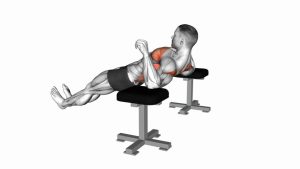
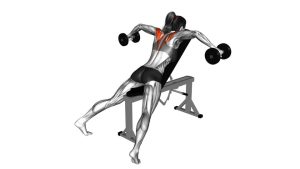
- Set the bench: Adjust an incline bench to a moderate angle so your chest can rest comfortably against it.
- Anchor the band: Secure the resistance band low in front of the bench or under a stable point.
- Lie face down: Position your chest on the bench with your head neutral and feet planted for balance.
- Grip the band: Hold one end in each hand with your arms hanging down naturally.
- Start aligned: Keep your chest supported, core lightly braced, shoulders relaxed, and palms facing inward or slightly forward.
Tip: Start with lighter resistance than you think you need. This exercise works best when the motion stays smooth and controlled.
Execution (Step-by-Step)
- Set your position: Keep your chest pressed into the bench and your neck neutral. Let the arms hang under control.
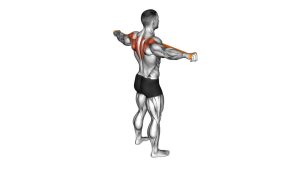
- Raise into a Y: Lift both arms diagonally upward so they form a Y shape relative to your torso.
- Lead with the shoulders: Focus on moving through the rear delts and shoulder blades rather than pulling with the arms only.
- Pause at the top: Briefly hold the top position while keeping the shoulders down and the upper back engaged.
- Lower slowly: Return to the starting position with control and maintain tension in the band the entire time.
Pro Tips & Common Mistakes
- Keep the chest supported: Don’t lift the torso off the bench to create momentum.
- Use a true Y angle: Raise the arms diagonally, not straight out to the sides.
- Avoid shrugging: Keep the shoulders away from the ears to prevent upper trap dominance.
- Maintain soft elbows: A slight bend is fine, but too much elbow flexion changes the movement.
- Control the lowering phase: Don’t let the band snap your arms back down.
- Choose the right tension: If you cannot pause at the top cleanly, the band is probably too strong.
FAQ
What muscles does the Band Incline Y Raise work?
It primarily targets the rear deltoids and also trains the lower traps, middle traps, rhomboids, and smaller shoulder stabilizers.
Is this exercise better for shoulders or upper back?
It trains both, but it is especially valuable for rear-delt activation and scapular control. It is often used to improve posture and shoulder balance.
Should I use heavy band resistance?
Usually no. This exercise works best with light to moderate tension so you can keep a clean Y path, control the top position, and avoid shrugging or swinging.
What is the difference between a Y raise and a reverse fly?
A Y raise uses a more diagonal overhead path and emphasizes the lower traps and shoulder stabilizers more, while a reverse fly is usually performed more out to the sides and focuses heavily on the rear delts and upper back.
Can beginners do the Band Incline Y Raise?
Yes. Beginners can benefit a lot from it as long as they start with a light band and focus on control instead of resistance.
Recommended Equipment
- Resistance Bands Set — useful for adjusting tension levels for activation, stability work, and higher-rep shoulder training
- Adjustable Incline Weight Bench — provides the stable chest support needed for strict incline Y raises
- Resistance Band Door Anchor — helps create a secure low anchor point for smooth band tension
- Exercise Mat — adds comfort and floor grip when setting up the bench and anchor area
- Shoulder Mobility Bands — useful for warm-ups, activation drills, and shoulder-prep work before training
Tip: Prioritize band quality and bench stability over maximum resistance. Clean movement and joint control matter more than heavy tension here.