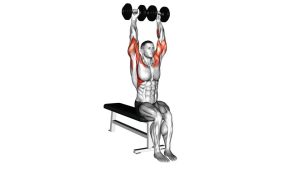
Dumbbell Seated Military Hold Alternate Leg Raise: Core & Shoulder Control
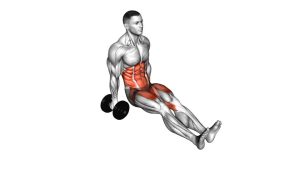
Train core stability, shoulder endurance, and hip flexor control with the Dumbbell Seated Military Hold Alternate Leg Raise on Floor.
Dumbbell Seated Military Hold Alternate Leg Raise on Floor
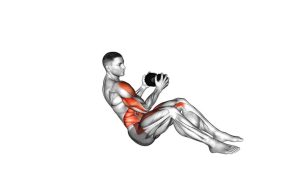
This exercise works best when every repetition stays smooth and balanced. The seated floor position challenges the rectus abdominis, deep core stabilizers, and hip flexors, while the dumbbells add a serious shoulder-stability demand. In addition, the alternating leg action forces the trunk to resist rocking, which makes the movement more useful for total-body control.
Quick Overview
| Body Part | Core |
|---|---|
| Primary Muscle | Rectus abdominis and deep core stabilizers |
| Secondary Muscle | Hip flexors, shoulders, triceps, upper back, and serratus anterior |
| Equipment | Pair of dumbbells and exercise mat |
| Difficulty | Advanced because it combines overhead loading, seated balance, and alternating leg control |
Sets & Reps (By Goal)
- Core stability: 3 sets × 8–12 alternating reps per side with slow control
- Shoulder endurance: 2–4 sets × 20–35 seconds while alternating the legs evenly
- Strength-focused control: 3–5 sets × 6–10 reps per side using moderate dumbbells
- Conditioning finisher: 2–3 rounds × 30–45 seconds with light dumbbells and clean rhythm
Progression rule: First improve control and time under tension. Then, once the torso stays steady and the arms remain locked overhead, increase dumbbell weight gradually.
Setup / Starting Position
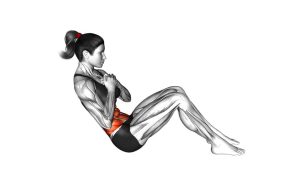
- Sit on the floor: Start seated with your legs extended forward and your torso slightly leaned back.
- Grip the dumbbells: Hold one dumbbell in each hand, then press both arms overhead until the elbows are extended.
- Brace your core: Keep your ribs controlled and avoid letting your lower back collapse into the floor.
- Lift the legs: Raise both legs slightly off the ground before beginning the alternating motion.
- Set your shoulder position: Keep the dumbbells stacked over the shoulders as much as possible, without letting them drift forward or outward.
Tip: If your arms shake immediately, reduce the dumbbell weight. A stable overhead hold is more important than using heavy loading.
Execution (Step-by-Step)
- Begin in the seated hold: Keep your torso slightly leaned back, arms extended overhead, and legs lifted forward.
- Raise one leg higher: Lift one leg while the opposite leg stays extended slightly lower.
- Control the switch: Lower the raised leg as the opposite leg begins to rise.
- Keep the dumbbells fixed: Maintain the overhead military-hold position without bending the elbows or dropping the shoulders.
- Repeat evenly: Continue alternating legs with a steady rhythm while keeping your torso as still as possible.
- Finish with control: Lower the legs and dumbbells carefully after the set instead of relaxing suddenly.
Pro Tips & Common Mistakes
- Keep the arms vertical: Do not let the dumbbells drift too far behind or in front of your head.
- Use a controlled leg path: Avoid kicking quickly, because momentum reduces core tension.
- Brace before switching legs: A strong brace helps prevent side-to-side torso movement.
- Avoid shoulder shrugging: Keep the shoulders strong but not jammed into the neck.
- Do not arch the lower back: If the back starts to overextend, reduce the leg height or rest briefly.
- Choose smart dumbbell weight: The overhead hold should challenge your shoulders without breaking your core position.
- Breathe steadily: Exhale during each leg switch to keep your ribs from flaring upward.
FAQ
What muscles does the Dumbbell Seated Military Hold Alternate Leg Raise work?
It mainly targets the abs and deep core stabilizers. However, it also trains the hip flexors, shoulders, triceps, and upper back because the dumbbells stay locked overhead while the legs alternate.
Is this exercise beginner-friendly?
No, it is better for intermediate to advanced trainees. Beginners should first master seated leg raises, hollow holds, and light overhead holds before combining them into one movement.
Why do my shoulders fatigue before my abs?
The overhead dumbbell hold places constant demand on the shoulders and triceps. Therefore, if your shoulders fatigue first, use lighter dumbbells or shorten the set duration while maintaining proper arm position.
Should my feet touch the floor between reps?
In the demonstrated movement, the feet stay elevated while the legs alternate. However, you can briefly tap the heels down as a regression if your lower back or hip flexors lose control.
How can I make this exercise easier?
Use lighter dumbbells, bend the knees slightly, reduce the leg range, or perform the leg raises without dumbbells first. Additionally, you can hold only one dumbbell overhead to reduce the total load.
How can I make this exercise harder?
Increase the dumbbell weight, slow down each leg switch, extend the set duration, or keep the legs lower to the floor. Nevertheless, only progress when your torso stays stable and your shoulders remain controlled.
Recommended Equipment
- Adjustable Dumbbells — useful for changing load as your overhead hold and core control improve
- Rubber Hex Dumbbells — stable, durable option for floor-based dumbbell core training
- Thick Exercise Mat — adds comfort for seated floor work and protects the lower back and hips
- Non-Slip Fitness Mat — helps keep your seated position secure during alternating leg raises
- Core Sliders — helpful for related core progressions, regressions, and controlled floor drills
Tip: Start with light dumbbells and prioritize shoulder position, core tension, and smooth leg control before increasing load.