Band Kneeling Crunch: Proper Form, Benefits, Sets & Core Tips
Learn the Band Kneeling Crunch for stronger abs, better core control, and safer spinal flexion with step-by-step form, sets, tips, FAQs, and gear.
Band Kneeling Crunch
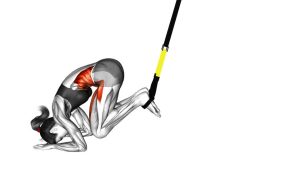
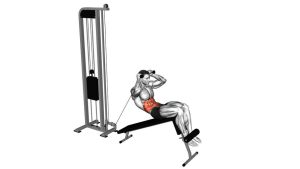
The Band Kneeling Crunch works best when the movement is slow, compact, and controlled. The band should create steady tension from the top position to the bottom position. As you crunch down, your abdominal muscles shorten against resistance. As you return upward, they control the band’s pull without letting your torso snap back.
This exercise is especially useful for lifters who want a simple ab movement that can be done at home, in a small gym space, or during a quick core finisher. It also helps improve the mind-muscle connection because the resistance encourages you to focus on rib movement instead of swinging the whole body.
Quick Overview
| Body Part | Abs |
|---|---|
| Primary Muscle | Rectus abdominis |
| Secondary Muscle | Obliques, transverse abdominis, deep core stabilizers |
| Equipment | Resistance band, secure overhead anchor, exercise mat |
| Difficulty | Beginner to intermediate |
Sets & Reps (By Goal)
- Core activation: 2–3 sets × 10–12 reps with a slow 2-second crunch and controlled return.
- Muscle growth: 3–4 sets × 12–20 reps using moderate band tension and a strong squeeze at the bottom.
- Strength endurance: 3–5 sets × 15–25 reps with steady breathing and no momentum.
- Beginner practice: 2 sets × 8–10 reps using light resistance and a shorter range of motion.
- Core finisher: 2–3 rounds × 20–30 controlled reps after your main workout.
Progression rule: Add reps first, then increase band tension. Do not progress by making the movement faster. Better results come from a stronger abdominal squeeze, cleaner rib movement, and a slower eccentric return.
Setup / Starting Position
- Anchor the band overhead: Secure the resistance band to a high anchor point, such as a door anchor, pull-up bar, rack, or stable attachment point.
- Kneel below the anchor: Position both knees on a mat. Your body should face away from or slightly under the anchor depending on the band angle.
- Hold the band near your head: Grip the band ends or handles with both hands. Keep your hands close to the sides of your head or just above your shoulders.
- Set your hips: Keep your hips stacked over your knees. Avoid sitting back toward your heels before the crunch begins.
- Brace your core: Pull your ribs slightly down, tighten your midsection, and prepare to move through the spine rather than through the hips.
- Relax your neck: Keep your chin slightly tucked. Your hands should hold the band, not pull your head forward.
Execution (Step-by-Step)
- Start tall: Begin in a stable kneeling position with your torso upright, ribs stacked over your pelvis, and band tension already active.
- Lock the arms in place: Keep your hands near your head. Do not turn the exercise into a band pulldown.
- Curl from the ribs: Exhale and bring your ribcage down toward your pelvis. Let your upper back round naturally as your abs contract.
- Keep the hips quiet: Your hips should stay mostly fixed over your knees. Avoid rocking backward or pushing your glutes toward your heels.
- Squeeze at the bottom: Pause briefly when your abs are fully shortened. Think about closing the space between your lower ribs and your pelvis.
- Return with control: Slowly rise back to the starting position while resisting the band’s pull. Keep tension in your abs until you are upright again.
- Reset before the next rep: Breathe in, brace again, and repeat with the same controlled path.
Pro Tips & Common Mistakes
Pro Tips
- Use a slow exhale: Exhaling during the crunch helps your ribs drop and improves abdominal contraction.
- Pause at peak contraction: A 1-second squeeze at the bottom makes each rep more effective.
- Keep constant tension: Do not let the band go slack at the top. Start each rep with light resistance already present.
- Choose the right band: The band should challenge your abs without forcing your arms, neck, or lower back to compensate.
- Think ribs to pelvis: This cue keeps the movement focused on spinal flexion instead of hip movement.
Common Mistakes
- Pulling with the arms: If your elbows drive down before your torso curls, the lats and arms are doing too much work.
- Sitting back into the heels: Rocking the hips backward reduces abdominal tension and turns the movement into a hip hinge.
- Using too much band tension: Heavy resistance can pull you out of position and make the movement sloppy.
- Rushing the return: Letting the band snap you upward removes the eccentric benefit and can strain the back or shoulders.
- Over-flexing the neck: Keep your neck relaxed. Your chin can tuck slightly, but your head should not be yanked forward.
FAQ
What muscles does the Band Kneeling Crunch work?
The Band Kneeling Crunch mainly targets the rectus abdominis, which is the front abdominal muscle responsible for spinal flexion. The obliques and deep core muscles also help stabilize your torso during the movement.
Is the Band Kneeling Crunch good for building abs?
Yes. It is effective for building the abs because the band adds resistance through the crunching pattern. For best results, use controlled reps, pause at the bottom, and increase tension gradually over time.
Is this exercise the same as a cable kneeling crunch?
It is similar, but not identical. A cable machine gives smoother and more consistent resistance. A band gives variable resistance, which usually becomes stronger as it stretches. Both exercises train the abs well when performed correctly.
Where should I feel the Band Kneeling Crunch?
You should feel it mainly in your front abs. You may also feel light tension through the obliques. If you feel it mostly in your arms, neck, lower back, or hip flexors, reduce the resistance and focus on curling the ribs downward.
Can beginners do the Band Kneeling Crunch?
Yes. Beginners can use a light resistance band and a short range of motion. The key is to learn control before increasing resistance. Clean technique matters more than high reps or heavy band tension.
How do I make the exercise harder?
You can use a stronger band, move farther from the anchor, add a longer pause at the bottom, slow down the return, or increase reps. Progress only when your hips stay stable and your abs remain the main working muscles.
Recommended Equipment
- Resistance Bands with Handles — ideal for band kneeling crunches because handles make the grip more comfortable and stable.
- Door Anchor for Resistance Bands — helps create a secure high anchor point for home core training.
- Thick Exercise Mat — protects the knees and improves comfort during kneeling ab exercises.
- Multi-Level Resistance Band Set — allows easy progression from light activation work to harder ab training.
- Resistance Band Anchor Kit — useful for creating safer attachment options and expanding your band exercise library.
Choose equipment that feels secure, comfortable, and easy to control. A stable anchor and smooth band tension are more important than using the strongest band available.