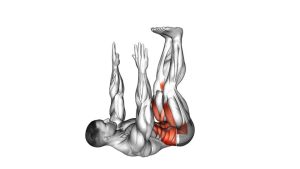
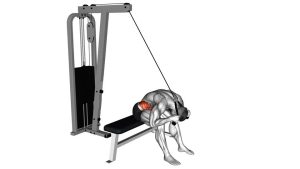
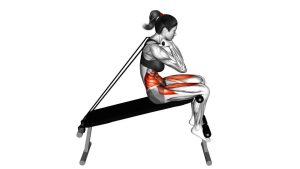
Weighted Decline Sit-Up: Proper Form, Muscles Worked, Sets & Tips
Learn how to perform the Weighted Decline Sit-Up with proper form for stronger abs and better trunk control. Includes muscles worked, setup, execution steps, sets by goal, common mistakes, FAQ, and recommended equipment.
Weighted Decline Sit-Up
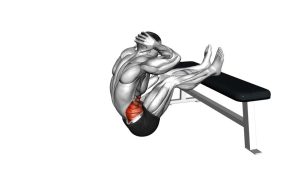
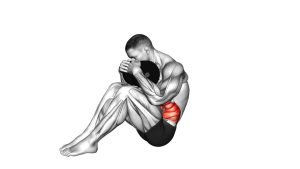
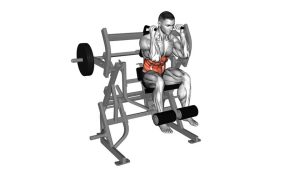
This movement is best performed with a controlled tempo and a manageable load. The goal is to lift the torso using the abs while keeping the movement smooth from start to finish. The decline angle increases difficulty, and the added weight raises the demand on the entire anterior core. To get the most from the exercise, avoid using momentum or letting the hip flexors take over too much of the work.
Quick Overview
| Body Part | Abs |
|---|---|
| Primary Muscle | Rectus abdominis |
| Secondary Muscle | Obliques, hip flexors, deep core stabilizers, anterior deltoids (isometric support) |
| Equipment | Decline bench, weight plate or medicine ball |
| Difficulty | Intermediate |
Sets & Reps (By Goal)
- Muscle growth: 3–4 sets × 8–15 reps with controlled tempo, 60–90 sec rest
- Core strength: 3–5 sets × 6–10 reps using a slightly heavier load, 75–120 sec rest
- Core endurance: 2–3 sets × 15–20 reps with lighter resistance, 45–75 sec rest
- Finisher / ab burnout: 2–3 sets × 10–15 reps after your main workout
Progression rule: First improve control, then add reps, then increase the load gradually. Avoid jumping to heavier plates if you cannot lower yourself smoothly.
Setup / Starting Position
- Adjust the bench: Set a moderate decline angle that challenges your abs without forcing sloppy reps.
- Secure your feet: Hook your feet firmly under the pads so your lower body stays stable.
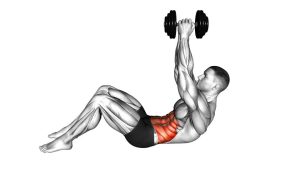
- Hold the weight: Grip a weight plate or medicine ball with both hands. You can hold it above your chest or slightly overhead depending on comfort and difficulty.
- Start in the bottom position: Lie back with your torso extended over the bench and your abs stretched.
- Brace gently: Tighten your core before starting each rep and keep your neck neutral.
Tip: A plate held slightly farther from the torso increases difficulty by lengthening the lever arm.
Execution (Step-by-Step)
- Begin from the stretched position: Let the torso extend back under control without collapsing into the lower back.
- Initiate with the abs: Curl your torso upward by contracting your abs and bringing your ribcage toward your pelvis.
- Keep the load steady: Hold the plate securely and avoid swinging it to create momentum.
- Rise to the top: Sit up until your torso reaches an upright or near-upright position while maintaining tension in the abs.
- Pause briefly: Squeeze the abs at the top without relaxing completely.
- Lower slowly: Reverse the motion under control and return to the stretched starting position.
- Repeat cleanly: Perform each rep with the same range of motion and tempo.
Pro Tips & Common Mistakes
- Control the eccentric: The lowering phase is where much of the training benefit happens.
- Use a realistic load: Heavy weight only helps if you can keep clean form.
- Keep the abs engaged: Think about curling through the torso instead of yanking yourself up.
- Do not bounce out of the bottom: That reduces tension and can stress the lower back.
- Avoid neck pulling: Keep your head neutral and don’t lead with the chin.
- Do not turn it into a hip-flexor drill: Excessive leg pulling can shift emphasis away from the abs.
- Match load to bench angle: A steeper decline plus a heavy plate can become too aggressive very quickly.
FAQ
What muscles does the weighted decline sit-up work most?
The main target is the rectus abdominis. The obliques and deep core muscles help stabilize, while the hip flexors assist during the sit-up portion.
Is this better than a regular sit-up?
It is generally harder than a regular sit-up because the decline angle increases range of motion and resistance, while the added weight raises total tension.
Should I hold the weight on my chest or overhead?
Holding the weight on the chest is usually easier. Holding it farther away from the torso or slightly overhead increases difficulty because it creates a longer lever arm.
Can beginners do weighted decline sit-ups?
Most beginners should first master bodyweight sit-ups or decline sit-ups before adding external load. Start light and focus on smooth reps.
What if I feel it more in my hip flexors than my abs?
Reduce the load, slow the tempo, and focus on curling the torso with the abs. In some cases, reducing the decline angle can also help improve abdominal emphasis.
Recommended Equipment
- Adjustable Decline Sit-Up Bench — essential for safely performing decline sit-ups with consistent body positioning
- Ab Mat — useful for additional core work and spinal support during other abdominal exercises
- Olympic Weight Plate — simple and effective resistance option for loading sit-ups
- Slam Ball / Medicine Ball — a comfortable alternative to a plate for weighted ab training
- High-Density Exercise Mat — helpful for floor-based core work and extra support in home-gym setups
Choose equipment that supports control and progression. For this exercise, a stable bench and a manageable load matter more than using the heaviest resistance possible.