Band Wrist Curl: Proper Form, Sets, Tips & Forearm Training Guide
Learn how to perform the Band Wrist Curl with proper form to build stronger forearms and wrist flexors. Includes setup, execution, sets by goal, common mistakes, FAQs, and recommended Amazon equipment.
Band Wrist Curl
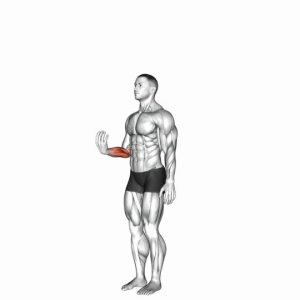
This exercise works best when the movement stays strict and isolated at the wrist joint. The forearms should stay stable while the hands curl upward against the band. At the top, focus on squeezing the forearm flexors without turning the rep into a full-arm pull. Lower the band slowly to keep tension on the target muscles.
Quick Overview
| Body Part | Forearms |
|---|---|
| Primary Muscle | Wrist flexors |
| Secondary Muscle | Finger flexors, grip stabilizers, brachioradialis (light stabilization) |
| Equipment | Resistance band |
| Difficulty | Beginner |
Sets & Reps (By Goal)
- Forearm hypertrophy: 3–4 sets × 12–20 reps with controlled tempo and 45–75 seconds rest
- Grip support / accessory work: 2–4 sets × 10–15 reps after pulling or arm training
- Endurance / burn sets: 2–3 sets × 20–30 reps using lighter band tension and smooth form
- Warm-up / activation: 1–2 sets × 15–20 easy reps before forearm or grip work
Progression rule: First add reps, then slow the eccentric, then move to a stronger band. Keep the movement strict before increasing resistance.
Setup / Starting Position
- Anchor the band: Step on the band or secure it under a stable base so tension comes from below.
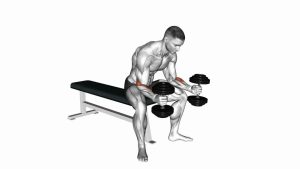
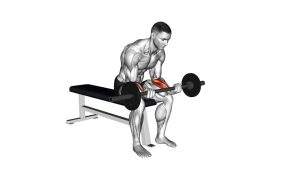
- Set your grip: Hold the band with a supinated grip (palms up).
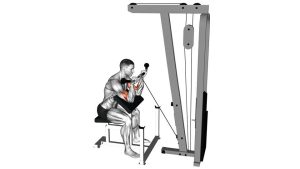
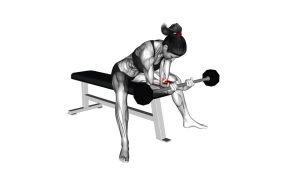
- Support the forearms: Rest them on your thighs or a bench so the wrists can move freely off the edge.
- Start stretched: Let the wrists extend slightly so the forearm flexors begin under light stretch.
- Brace everything else: Keep elbows still, shoulders relaxed, and torso quiet.
Tip: A seated setup with forearms supported usually gives the cleanest wrist-only reps.
Execution (Step-by-Step)
- Lock in position: Keep your forearms planted and your grip secure.
- Curl the wrists up: Flex the wrists upward against the band without lifting the elbows.
- Squeeze at the top: Pause briefly when the wrist flexors are fully contracted.
- Lower with control: Return slowly to the stretched bottom position while keeping band tension.
- Repeat smoothly: Maintain the same range of motion and tempo on every rep.
Pro Tips & Common Mistakes
- Keep the forearms fixed: The wrists should move; the elbows should not.
- Use full but comfortable range: Get a stretch at the bottom and a strong squeeze at the top.
- Control the eccentric: Don’t let the band snap your wrists back down.
- Don’t overload too early: Stronger band tension often shortens range and ruins isolation.
- Train both sides evenly: Match reps and tempo if performing one arm at a time.
- Pair smartly: This exercise works well after curls, rows, pull-ups, or dedicated grip training.
FAQ
What muscles does the Band Wrist Curl work?
It mainly targets the wrist flexors on the palm side of the forearm. The finger flexors and grip muscles also help stabilize the movement.
Is the Band Wrist Curl good for bigger forearms?
Yes. When done with enough weekly volume, controlled tempo, and progressive overload, it can help build the forearm flexors and improve lower-arm thickness.
Should I do this before or after my workout?
Most people do it after upper-body or arm training because pre-fatiguing the forearms can reduce grip strength for rows, pull-ups, and deadlifts.
How heavy should the band feel?
Use a band that lets you feel a strong contraction without cheating. You should be able to keep the forearms still and lower every rep under control.
Can beginners use this exercise?
Absolutely. It’s beginner-friendly because the movement is simple and the resistance can be adjusted easily by band thickness, hand position, and range of motion.
Recommended Equipment (Optional)
- Wrist Roller / Forearm Roller — direct forearm-strength accessory that complements wrist curls well
- Adjustable Hand Gripper — useful for adding crush-grip work alongside wrist-flexor training
- Finger Extensor Bands — helps balance forearm training by strengthening the opening muscles of the hand
- Resistance Bands Set — gives you multiple tension options for progression and different wrist/arm variations
- Adjustable Weight Bench — provides better forearm support for stricter seated wrist curl setups
Tip: For most people, a band set + bench support is enough to make this exercise more comfortable, repeatable, and easier to progress.