Barbell Reverse Wrist Curl: Proper Form, Sets, Tips & FAQ
Learn the Barbell Reverse Wrist Curl to strengthen the forearm extensors, improve wrist stability, and build stronger lower arms. Includes setup, step-by-step execution, sets by goal, common mistakes, FAQ, and recommended equipment.
Barbell Reverse Wrist Curl
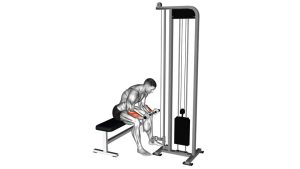
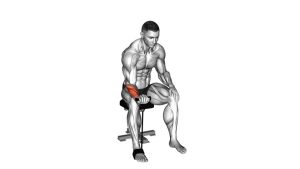
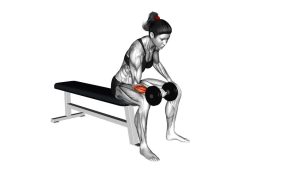
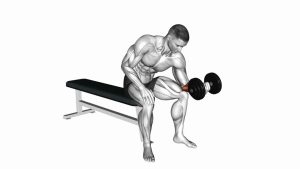
This exercise is best performed with strict form, controlled tempo, and a moderate load. Because the range of motion is short, quality matters more than weight. You should feel the work in the upper side of the forearms, especially as you lift the wrists into extension and lower the bar back down under control. Avoid turning it into an elbow curl or using momentum. Small, precise reps usually produce the best results.
Quick Overview
| Body Part | Forearms |
|---|---|
| Primary Muscle | Forearm extensors (extensor carpi radialis longus/brevis, extensor digitorum, extensor carpi ulnaris) |
| Secondary Muscle | Grip muscles, finger extensors, wrist stabilizers |
| Equipment | Barbell or light fixed bar, optional bench or thigh support |
| Difficulty | Beginner to Intermediate |
Sets & Reps (By Goal)
- Muscle growth: 3–4 sets × 12–20 reps with controlled tempo and a full stretch
- Forearm endurance: 2–4 sets × 15–25 reps using lighter weight and smooth reps
- Strength support for grip-based lifts: 3–5 sets × 8–15 reps with strict technique
- Warm-up / activation: 1–2 sets × 15–20 easy reps before pulling or arm training
Progression rule: Increase reps first, then add a small amount of weight. Because wrist extension is a small movement, even a modest load increase can feel significant.
Setup / Starting Position
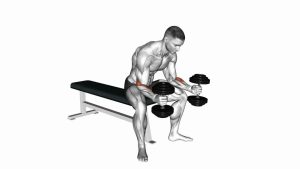
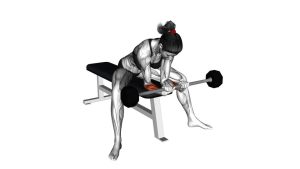
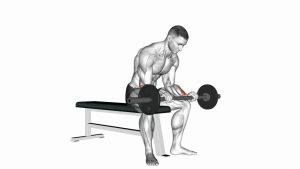
- Sit on a bench: Sit upright with your feet planted and your forearms resting securely on your thighs or a flat bench.
- Use a pronated grip: Hold the barbell with palms facing down, about shoulder-width apart or slightly narrower.
- Let the wrists hang off the edge: Your wrists should move freely beyond your knees or the bench edge so you can get a full stretch.
- Set the forearms: Keep the elbows and forearms still throughout the set. Only the wrists should move.
- Start in the bottom stretch: Let the bar roll slightly toward the fingers while the wrists drop down under control.
Tip: Using a lighter barbell, EZ curl bar, or fixed straight bar often makes it easier to stay strict and feel the target muscles.
Execution (Step-by-Step)
- Begin from the stretched position: Allow the wrists to flex downward so the forearm extensors are loaded at the bottom.
- Extend the wrists upward: Raise the back of the hands toward the forearms by curling the bar upward with the wrists only.
- Squeeze at the top: Pause briefly when the wrists reach full comfortable extension.
- Lower slowly: Reverse the motion under control and return to the stretched position without dropping the weight.
- Repeat smoothly: Keep every rep strict, using the same range and tempo from start to finish.
Pro Tips & Common Mistakes
- Use a full but controlled stretch: Let the wrists drop naturally, but do not bounce at the bottom.
- Keep the reps small and strict: This is a short-range isolation move, so precision beats heavy weight.
- Do not turn it into a curl: The forearms stay planted; the elbows should not move.
- Control the eccentric: The lowering phase is where a lot of the training effect happens.
- Avoid gripping too hard too early: Let the bar sit slightly in the fingers at the bottom so the wrist can move freely.
- Use moderate loading: Wrist extensors respond well to volume and control, not sloppy max effort.
- Balance forearm training: Pair reverse wrist curls with regular wrist curls or grip work for more complete lower-arm development.
FAQ
What muscles does the barbell reverse wrist curl work?
It mainly targets the forearm extensors, which run along the top side of the forearm and help extend the wrist. These muscles also support grip balance and wrist stability during other lifts.
Should I use heavy weight for reverse wrist curls?
Usually no. This exercise works best with light to moderate weight and clean reps. Going too heavy often reduces range of motion and causes cheating through the elbows or shoulders.
How is this different from a regular wrist curl?
A regular wrist curl uses a supinated grip (palms up) and emphasizes the wrist flexors. A reverse wrist curl uses a pronated grip (palms down) and emphasizes the wrist extensors.
Where should I feel the exercise?
You should feel it mainly on the top side of the forearms, especially near the wrist and upper forearm extensors. If you mostly feel strain in the elbows or shoulders, adjust your setup and reduce the weight.
How often can I train reverse wrist curls?
Most people can train them 1–3 times per week depending on total arm and grip volume. If your forearms are already heavily taxed by pulling, climbing, or grip work, keep volume moderate.
Recommended Equipment
- Wrist Roller / Forearm Trainer — excellent for adding direct wrist and forearm endurance work alongside reverse wrist curls
- Adjustable Hand Grip Strengthener — useful for improving grip strength so your hands keep up with your forearm training
- EZ Curl Bar — a good alternative to a straight bar if you want a slightly more comfortable wrist position
- Lifting Straps — helpful for heavier pulling days so grip fatigue does not limit your main compound lifts
- Wrist & Forearm Strengthener — a simple accessory for extra forearm volume, rehab-style work, and wrist conditioning
Tip: Reverse wrist curls respond best when you combine them with smart grip work, controlled volume, and enough recovery between heavy forearm sessions.