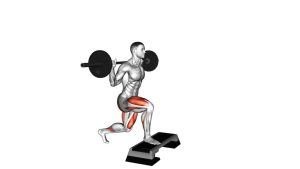
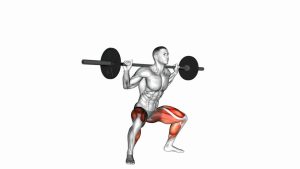
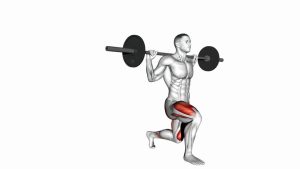
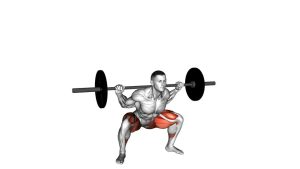
Barbell Bench Front Squat: Form, Benefits, Sets, Tips & FAQ
Learn the Barbell Bench Front Squat for stronger quads, better squat depth, upright posture, safe form, sets, mistakes, FAQs, and equipment.
Barbell Bench Front Squat
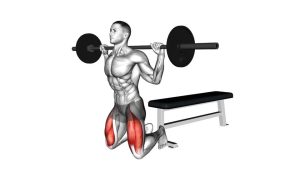
This exercise is useful for lifters who want to build stronger legs while learning consistent squat depth. Because the bar is held in the front rack position, the torso must stay more upright than in many back squat variations. This makes the movement especially effective for the quadriceps, while still training the glutes, core, and upper back.
Quick Overview
| Body Part | Legs |
|---|---|
| Primary Muscle | Quadriceps |
| Secondary Muscle | Glutes, hamstrings, core, upper back, spinal erectors |
| Equipment | Barbell, weight plates, flat bench or box, squat rack recommended |
| Difficulty | Beginner to Intermediate |
Sets & Reps (By Goal)
- Technique practice: 3–4 sets × 6–8 reps with light weight and slow control.
- Muscle growth: 3–5 sets × 8–12 reps with moderate weight and full tension.
- Strength development: 4–6 sets × 3–6 reps with heavier weight and longer rest.
- Beginner depth training: 2–4 sets × 8–10 reps using an empty bar or light load.
Progression rule: Add weight only when every rep touches the bench lightly, the torso stays upright, and the bar path remains vertical over the mid-foot.
Setup / Starting Position
- Place a flat bench or box behind you at a height that allows a controlled squat depth.
- Set the barbell in a squat rack around upper-chest height.
- Step under the bar and place it across the front of your shoulders.
- Lift your elbows forward so the upper arms stay close to parallel with the floor.
- Brace your core, keep your chest tall, and step back carefully from the rack.
- Set your feet around shoulder-width with toes slightly turned out.
Execution (Step-by-Step)
- Brace first: Take a controlled breath, tighten your core, and keep the bar stable on the front shoulders.
- Start the descent: Bend the knees and hips together while keeping the torso upright.
- Track the knees: Let the knees move in line with the toes without collapsing inward.
- Touch the bench lightly: Lower until the glutes make light contact with the bench.
- Do not sit back fully: Keep tension in the legs and core instead of relaxing onto the bench.
- Drive upward: Push through the mid-foot, extend the knees and hips together, and keep the elbows high.
- Finish tall: Stand fully upright without leaning backward or losing the front rack position.
Pro Tips & Common Mistakes
- Keep elbows high: Dropping the elbows can pull the torso forward and make the bar roll.
- Use the bench as a target: Lightly touch it, but do not fully sit, rock, or bounce.
- Stay balanced over mid-foot: Avoid shifting too far onto the toes or heels.
- Control the descent: Lower with tension instead of falling quickly onto the bench.
- Keep knees aligned: Do not let the knees cave inward during the bottom or ascent.
- Choose the right bench height: Too high limits range; too low may cause form breakdown.
- Brace before every rep: A strong core protects posture and keeps the bar path clean.
FAQ
Is the Barbell Bench Front Squat the same as a box squat?
It is similar, but this version uses a front rack position and usually emphasizes an upright torso and quad strength. The bench acts as a depth guide rather than a place to fully rest.
Should I sit completely on the bench?
No. For this version, touch the bench lightly while keeping tension in your legs and core. Fully sitting can reduce tension and encourage rocking or bouncing.
What muscles does this exercise work most?
The main target is the quadriceps. The glutes, hamstrings, core, upper back, and spinal erectors also assist with control, balance, and posture.
Is this exercise good for beginners?
Yes, when performed with light weight and proper setup. The bench helps teach consistent depth, but beginners should still learn safe front rack positioning and bracing.
Why do my elbows drop during the movement?
Elbows often drop because of weak upper-back positioning, poor front rack mobility, or too much weight. Reduce the load and focus on lifting the elbows throughout the full rep.
Recommended Equipment
- Olympic Barbell — essential for loading the front squat safely and progressively.
- Adjustable Weight Bench — useful as a controlled depth target for bench squat variations.
- Squat Rack — helps you unrack and rerack the barbell safely.
- Olympic Weight Plates — allows gradual strength progression over time.
- Weightlifting Wrist Wraps — optional support for lifters who feel wrist pressure in the front rack.
Tip: Prioritize stable equipment and correct bench height before adding heavier weight.