Smith Machine Rear Lunge: Form, Muscles, Sets, Tips & FAQ
Learn the Smith Machine Rear Lunge for stronger quads, glutes, and legs. Includes setup, form cues, sets, common mistakes, FAQs, and equipment.
Smith Machine Rear Lunge
This exercise is excellent for building leg size, strength, balance, and lower-body coordination. Because the Smith machine controls the bar path, it reduces some balance demands compared with free-weight lunges, making it useful for beginners, hypertrophy training, and controlled leg-day programming.
Quick Overview
| Body Part | Legs |
|---|---|
| Primary Muscle | Quadriceps |
| Secondary Muscle | Glutes, hamstrings, calves, adductors, and core stabilizers |
| Equipment | Smith machine |
| Difficulty | Beginner to Intermediate |
Sets & Reps (By Goal)
- Muscle growth: 3–4 sets × 8–12 reps per leg with controlled tempo.
- Strength focus: 4–5 sets × 5–8 reps per leg with heavier but stable loading.
- Beginner technique: 2–3 sets × 8–10 reps per leg using light weight.
- Glute emphasis: 3–4 sets × 10–15 reps per leg with a slightly longer stride.
- Leg-day finisher: 2–3 sets × 12–15 reps per leg with moderate weight and short rest.
Progression rule: Add reps first, then increase load slowly. Do not increase weight if your front knee caves inward, your heel lifts, or your torso loses control.
Setup / Starting Position
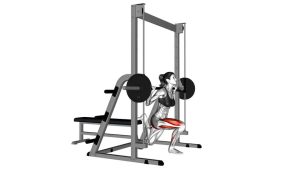
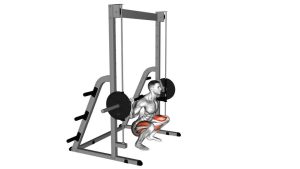
- Set the bar height: Position the Smith machine bar around upper-chest height so you can safely unrack it onto your upper traps.
- Stand under the bar: Place the bar across your upper back, not directly on your neck.
- Grip firmly: Hold the bar slightly wider than shoulder width and keep your upper back tight.
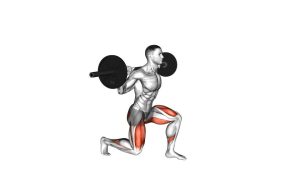
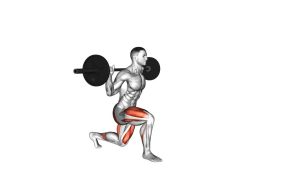
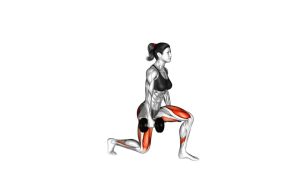
- Step one foot back: Move one leg behind you into a split stance, keeping the front foot flat.
- Find your stance: Keep the rear heel lifted and the rear foot on the ball of the foot.
- Brace your core: Keep your ribs down, chest tall, and spine neutral before lowering.
A shorter stride usually increases quad emphasis, while a slightly longer stride can increase glute involvement.
Execution (Step-by-Step)
- Unrack the bar: Rotate the bar to unlock it and stand tall in your split stance.
- Lower under control: Bend both knees and descend straight down instead of drifting forward.
- Keep the front foot grounded: Maintain pressure through the heel and midfoot of the front leg.
- Track the knee: Let the front knee move in line with your toes without collapsing inward.
- Reach the bottom position: Lower until the rear knee approaches the floor or you reach your comfortable depth.
- Drive upward: Push through the front foot and extend the front knee and hip to return to the top.
- Repeat with control: Complete all reps on one side before switching legs, or alternate sides if preferred.
Pro Tips & Common Mistakes
- Keep the front foot flat: Lifting the heel reduces stability and can place extra stress on the knee.
- Control the descent: Do not drop quickly into the bottom position.
- Avoid knee collapse: Keep the front knee tracking in the same direction as the toes.
- Do not bounce: Pause briefly near the bottom if needed to maintain clean control.
- Stay tall: A vertical torso increases quad focus and keeps the movement clean.
- Use the rear leg as support: The front leg should perform most of the work.
- Adjust stride for your goal: Shorter stance is more quad-dominant; longer stance can increase glute bias.
- Start light: The fixed bar path can make loading feel easier, but poor stance still increases joint stress.
FAQ
Is the Smith Machine Rear Lunge the same as a reverse lunge?
It is very similar. The main difference is that the Smith machine guides the bar vertically, which makes the movement more stable than a free-weight reverse lunge.
What muscles does the Smith Machine Rear Lunge work?
It mainly targets the quadriceps of the front leg. The glutes, hamstrings, calves, adductors, and core also assist with hip extension, balance, and control.
Is this exercise good for beginners?
Yes. The Smith machine provides a guided bar path, which can make the exercise easier to control. Beginners should start with light weight and focus on stance, knee tracking, and smooth tempo.
Should I feel this more in my quads or glutes?
With a more upright torso and shorter stance, you will usually feel more quad emphasis. A longer stride and stronger hip drive can increase glute involvement.
Why does my front knee hurt during Smith Machine Rear Lunges?
Knee discomfort may come from poor foot placement, the front heel lifting, the knee collapsing inward, or using too much load. Reduce weight, adjust your stance, and keep the knee aligned with the toes.
Can I use this exercise for muscle growth?
Yes. The Smith Machine Rear Lunge is effective for hypertrophy because it allows controlled unilateral loading with less balance demand than free-weight lunges.
Recommended Equipment
- Weightlifting Shoes — help improve foot stability and lower-body force transfer during Smith machine lunges.
- Barbell Pad — adds comfort when the Smith machine bar rests across the upper back.
- Weightlifting Belt — useful for heavier sets when extra trunk support is needed.
- Knee Sleeves — provide warmth and light support during lower-body training.
- Gym Floor Mat — helps protect the floor and gives a consistent surface for rear-foot placement.
Choose equipment that improves comfort and control without hiding poor technique. Clean form should always come before heavier loading.