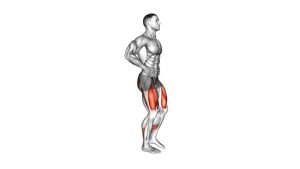
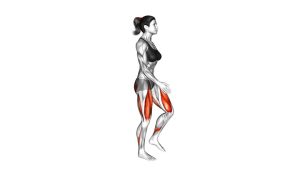
Bodyweight Jump Squat: Explosive Leg Power, Form, Sets & Tips
Build explosive leg power with the Bodyweight Jump Squat. Learn proper form, safe landing, sets, reps, common mistakes, FAQs, and gear.
Bodyweight Jump Squat
This movement works best when every rep has two clear parts: a strong loading phase and a quiet landing phase. Lower into the squat with control, explode upward through the floor, then absorb the landing by bending the ankles, knees, and hips together. Avoid rushing the descent or landing with stiff legs.
Quick Overview
| Body Part | Legs |
|---|---|
| Primary Muscle | Quadriceps, glutes, calves |
| Secondary Muscle | Hamstrings, core, hip stabilizers |
| Equipment | Bodyweight only |
| Difficulty | Intermediate because it requires power, coordination, and safe landing control |
Sets & Reps (By Goal)
- Power development: 3–5 sets × 3–6 reps with 60–120 sec rest
- Athletic conditioning: 3–4 sets × 8–12 reps with 45–75 sec rest
- Beginner plyometric practice: 2–3 sets × 4–6 reps with full control
- Fat-loss circuit training: 2–4 rounds × 10–15 reps with controlled tempo
Progression rule: Improve landing quality before increasing reps. A clean, quiet landing is more important than jump height.
Setup / Starting Position
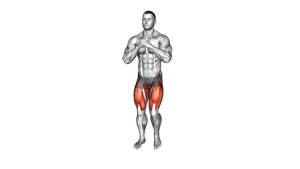
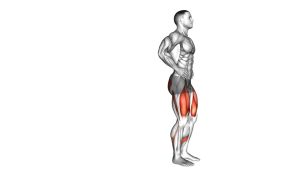
- Stand tall: Place your feet about shoulder-width apart with toes slightly turned outward.
- Brace your core: Keep your ribs stacked over your hips and your spine neutral.
- Set your arms: Hold your arms in front of the body or let them swing naturally for balance.
- Prepare the knees: Keep the knees pointing in the same direction as the toes.
- Load evenly: Keep weight balanced through the mid-foot and heel before the jump.
Start on a flat, stable surface. Avoid slippery floors or overly soft surfaces that make landing unstable.
Execution (Step-by-Step)
- Lower into a squat: Push the hips back and bend the knees until you reach a strong squat depth.
- Keep the chest controlled: Allow a slight forward torso lean while keeping the spine neutral.
- Explode upward: Drive through the floor and extend the hips, knees, and ankles powerfully.
- Leave the ground: Jump vertically while keeping the body aligned and controlled.
- Land softly: Return to the floor through the mid-foot and bend the knees immediately to absorb force.
- Reset or continue: Either pause briefly before the next rep or flow into the next squat if your landing remains clean.
Pro Tips & Common Mistakes
- Land quietly: A loud landing usually means poor force absorption.
- Do not lock the knees: Keep the joints soft when returning to the ground.
- Use full-foot pressure: Drive through the mid-foot instead of jumping only from the toes.
- Keep knees aligned: Do not allow the knees to cave inward during take-off or landing.
- Avoid excessive forward lean: The torso can lean slightly, but the chest should not collapse.
- Rest enough for power: If jump height drops quickly, rest longer between sets.
- Do not chase fatigue only: Jump squats are most valuable when reps stay explosive and controlled.
FAQ
What muscles do Bodyweight Jump Squats work?
Bodyweight Jump Squats mainly train the quadriceps, glutes, and calves. The hamstrings, core, and hip stabilizers also help control the squat and landing.
Are Jump Squats good for building leg power?
Yes. Jump squats are a strong plyometric option for developing lower-body explosiveness, vertical jump ability, and athletic power when performed with proper landing mechanics.
Should beginners do Jump Squats?
Beginners can use them only after learning a solid bodyweight squat first. If landing feels unstable, start with regular squats, squat-to-calf raises, or low-impact power squats before jumping.
How deep should I squat before jumping?
A moderate squat depth is usually best. Lower enough to load the legs, but not so deep that you lose speed, posture, or knee control.
Why do my knees hurt during Jump Squats?
Knee discomfort may come from hard landings, knee collapse, poor ankle mobility, too much volume, or weak hip control. Reduce intensity and focus on soft landings. Stop if pain continues.
Recommended Equipment (Optional)
- Exercise Mat — useful for warm-ups, mobility drills, and floor-based accessory work
- Plyometric Box — helpful for jump progressions, box jumps, and landing practice
- Resistance Bands Set — useful for glute activation, hip stability, and warm-up drills
- Cross-Training Shoes — provides stable support for jumping, landing, and lower-body training
- Foam Roller — useful for recovery work around the calves, quads, hamstrings, and glutes
Tip: Equipment is optional. The main priority is a stable surface, proper footwear, and controlled landing mechanics.