Barbell High-Bar Squat: Proper Form, Muscles Worked, Sets, Tips & FAQ
Learn the barbell high-bar squat with proper form, muscles worked, sets by goal, setup, step-by-step execution, mistakes, FAQs, and gear.
Barbell High-Bar Squat
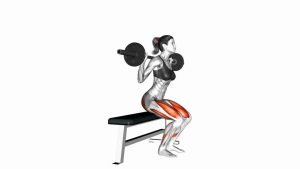
The high-bar squat is ideal for building strong quads, glutes, adductors, and total-body bracing strength. Compared with a low-bar squat, it usually uses a more upright torso and more forward knee travel, making it especially useful for leg development, athletic strength, Olympic-style lifting preparation, and general lower-body training.
Quick Overview
| Body Part | Legs |
|---|---|
| Primary Muscle | Quadriceps |
| Secondary Muscle | Glutes, adductors, hamstrings, calves, spinal erectors, and core |
| Equipment | Barbell, weight plates, squat rack, and collars |
| Difficulty | Intermediate |
Sets & Reps (By Goal)
- Strength: 3–5 sets × 3–6 reps with 2–4 minutes rest
- Muscle growth: 3–4 sets × 6–10 reps with 90–150 seconds rest
- Technique practice: 3–5 sets × 3–5 reps using light-to-moderate weight
- General fitness: 2–4 sets × 8–12 reps with controlled tempo
Progression rule: Add weight only when your depth, bracing, knee tracking, and bar path stay consistent across all reps.
Setup / Starting Position
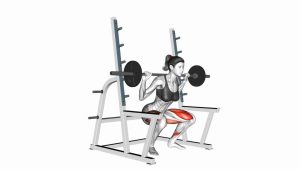
- Set the rack height: Position the bar around upper-chest height so you can unrack it without calf-raising or half-squatting.
- Place the bar high: Rest the bar on the upper traps, not on the neck. Squeeze the upper back to create a stable shelf.
- Grip the bar firmly: Use a comfortable grip width and pull the elbows slightly down to keep the torso strong.
- Unrack with control: Stand tall, step back carefully, and let the bar settle over the mid-foot.
- Set your stance: Use about shoulder-width foot placement with toes slightly turned out.
- Brace before moving: Take a breath into your trunk, tighten your core, and keep your ribs stacked over your pelvis.
Execution (Step-by-Step)
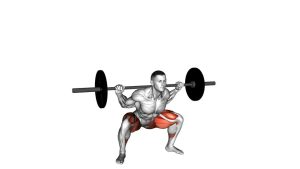
- Start tall: Keep your chest lifted, eyes forward or slightly down, and the bar balanced over the mid-foot.
- Break at knees and hips: Sit down between your legs while allowing the knees to travel forward naturally.
- Track the knees: Keep the knees in line with the toes instead of letting them collapse inward.
- Control the descent: Lower until you reach your best safe depth while keeping your heels planted and spine neutral.
- Drive upward: Push the floor away through the mid-foot and extend the knees and hips together.
- Finish strong: Stand tall without leaning back, overextending the lower back, or relaxing your brace too early.
Pro Tips & Common Mistakes
- Keep the torso upright: A high-bar squat should not turn into a deep forward hinge.
- Do not relax at the bottom: Stay braced and active even when reaching full depth.
- Avoid knee collapse: Push the knees in the same direction as the toes during the descent and ascent.
- Use the right bar position: The bar should sit on the upper traps, not directly on the cervical spine.
- Do not rush the walkout: Small, controlled steps save energy and improve stability.
- Keep the feet planted: Avoid heels lifting or weight shifting onto the toes.
- Control every rep: A fast bounce is not useful if you lose posture or depth consistency.
FAQ
What muscles does the barbell high-bar squat work?
The barbell high-bar squat mainly targets the quadriceps. It also trains the glutes, adductors, hamstrings, calves, spinal erectors, and core because the body must stabilize the bar during the full squat pattern.
Is the high-bar squat better for quads?
Yes, the high-bar position usually creates a more upright torso and more knee flexion, which increases quad demand compared with many low-bar squat styles.
How deep should I squat?
Squat as deep as you can while keeping your heels down, knees controlled, spine neutral, and bar path balanced. Many lifters aim for parallel or slightly below parallel if mobility and control allow it.
Why does the bar hurt my neck?
The bar may be too high or resting directly on the neck. It should sit on the upper traps. Create a muscular shelf by tightening the upper back and adjusting your grip.
Can beginners do the barbell high-bar squat?
Beginners can learn it, but they should start with bodyweight squats, goblet squats, or an empty bar first. Good technique matters more than adding weight quickly.
Recommended Equipment
- Barbell Collars — help secure plates and keep the bar balanced during squats
- Weightlifting Belt — useful for heavier squat sets when bracing strength is important
- Knee Sleeves — provide warmth, comfort, and light support for squat training
- Weightlifting Shoes — raised heel support can improve squat depth and upright posture
- Squat Rack Safety Arms — important for safer solo barbell squat training
Tip: Equipment can support performance, but it should not replace proper technique, controlled loading, and safe rack setup.