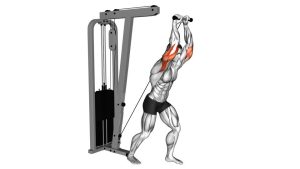
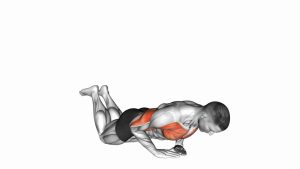
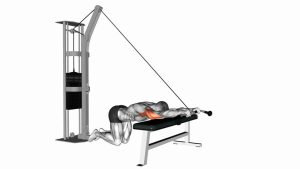
Triceps Dip: Proper Form, Sets, Tips & FAQ
Learn how to do the Triceps Dip with proper form for stronger upper arms, better lockout strength, and controlled bodyweight pressing. Includes setup, execution, sets by goal, mistakes, FAQs, and recommended equipment.
Triceps Dip
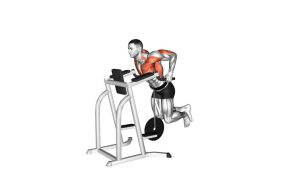
This exercise works best when each rep is smooth, vertical, and controlled. You should feel the triceps doing most of the work, especially during the push back to lockout. Keep your chest proud, core braced, and shoulders down. If you start swinging, shrugging, or dropping too deep into the shoulders, reduce the range of motion and regain control.
Quick Overview
| Body Part | Triceps |
|---|---|
| Primary Muscle | Triceps brachii |
| Secondary Muscle | Anterior deltoids, lower chest, forearms, core stabilizers |
| Equipment | Dip bars, parallel bars, or any stable parallel supports |
| Difficulty | Beginner to Intermediate (depending on bodyweight control and support setup) |
Sets & Reps (By Goal)
- Muscle building: 3–4 sets × 6–12 reps (60–90 sec rest)
- Strength focus: 4–5 sets × 4–8 reps (90–150 sec rest)
- Technique practice: 2–3 sets × 5–8 controlled reps (45–75 sec rest)
- Endurance / bodyweight capacity: 2–4 sets × 10–15 reps (45–75 sec rest)
Progression rule: First improve control and full lockout, then add reps. After that, increase difficulty with added load or a more challenging dip setup.
Setup / Starting Position
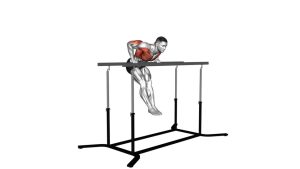
- Grip the supports firmly: Place one hand on each bar or stable edge with wrists stacked under the shoulders.
- Lift into support: Press yourself up until the arms are straight and the body is suspended or lightly assisted.
- Stand tall through the torso: Keep your chest up, core braced, and shoulders pulled down away from the ears.
- Set elbow position: Keep the elbows close to your sides rather than flaring out wide.
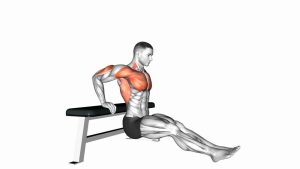
- Choose leg position: Bend the knees slightly or keep the legs under control so they do not swing.
Tip: For more triceps bias, keep the torso more upright instead of leaning far forward.
Execution (Step-by-Step)
- Start at lockout: Begin with straight arms, stable shoulders, and a braced core.
- Lower under control: Bend the elbows and descend vertically while keeping them tucked near the torso.
- Reach a safe bottom position: Lower until the elbows are around 90 degrees or slightly deeper if your shoulders tolerate it well.
- Pause briefly: Stay tight at the bottom without bouncing or collapsing into the shoulders.
- Press back up: Drive through the palms and extend the elbows until you return to a strong top position.
- Reset and repeat: Re-establish posture at the top before starting the next rep.
Pro Tips & Common Mistakes
- Stay upright for more triceps focus: Too much forward lean shifts more work toward the chest.
- Keep the elbows close: This helps maintain upper-arm emphasis and cleaner mechanics.
- Control the bottom: Don’t drop fast or bounce out of the stretched position.
- Don’t shrug the shoulders: Keep them down and stable throughout the rep.
- Use full lockout with control: Finish the rep by straightening the elbows without slamming the joints.
- Avoid swinging: A still body improves tension on the target muscles and reduces wasted motion.
- Scale the exercise when needed: Use assistance, reduced depth, or leg support before forcing ugly reps.
FAQ
What muscles do triceps dips work the most?
The triceps are the main movers, especially during the press back to the top. The front delts, chest, forearms, and core also help stabilize and assist.
Are triceps dips better for arms or chest?
With a more upright torso and elbows close to the body, dips become more triceps-focused. A bigger forward lean usually brings the chest more into the movement.
How deep should I go on dips?
Go only as deep as you can while keeping your shoulders stable and pain-free. For many lifters, stopping around a 90-degree elbow bend is a strong and safe starting point.
What if bodyweight dips are too hard?
Start with assisted dips, band-assisted variations, leg-supported versions, or partial-range reps. Build control first, then progress to full bodyweight reps.
Can I use triceps dips for hypertrophy?
Yes. Dips are excellent for upper-arm size when performed with clean technique, enough volume, and a range of motion you can control consistently.
Recommended Equipment
- Adjustable Dip Bars — the most direct tool for practicing dips safely at home
- Power Tower / Dip Station — stable full-body station for dips, pull-ups, and bodyweight strength work
- Gymnastic Rings — adds instability and body control demands for advanced dip training
- Weighted Dip Belt — useful once bodyweight reps become easy and you want to overload the movement
- Weighted Vest — convenient option for progressive overload without plates hanging from a belt
Tip: Start with the most stable setup first. Better control usually means better triceps stimulus and lower joint stress.