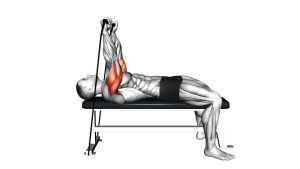
Smith Close-Grip Bench Press: Form, Muscles Worked, Sets, Tips & FAQ
Learn how to perform the Smith Close-Grip Bench Press with proper form. Build stronger triceps with setup cues, step-by-step execution, mistakes, FAQs, and recommended equipment.
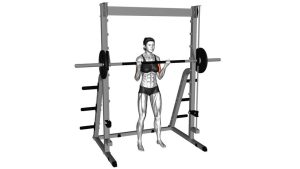
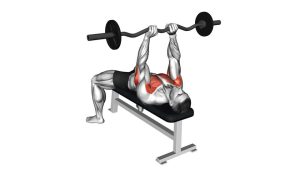
Smith Close-Grip Bench Press
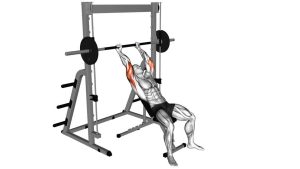
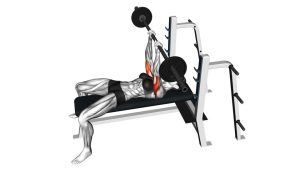
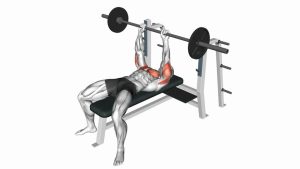
This exercise is excellent for building stronger upper arms, improving lockout strength, and adding direct triceps volume without needing as much balance as a free-weight close-grip bench press. The key is not simply using a narrow grip. Instead, the goal is to keep your elbows close to your torso, press through the triceps, and maintain a stable upper back throughout every rep.
Quick Overview
| Body Part | Triceps |
|---|---|
| Primary Muscle | Triceps brachii |
| Secondary Muscle | Chest, anterior deltoids, forearms, upper back stabilizers |
| Equipment | Smith machine, flat bench, weight plates |
| Difficulty | Intermediate |
Sets & Reps (By Goal)
- Triceps strength: 4–5 sets × 4–6 reps with 2–3 minutes rest.
- Muscle growth: 3–4 sets × 8–12 reps with 60–90 seconds rest.
- Upper-arm volume: 2–4 sets × 10–15 reps with controlled tempo.
- Pressing accessory work: 3 sets × 6–10 reps after your main chest or push movement.
Progression rule: Add reps first, then increase load gradually. Since the Smith machine provides a fixed bar path, form should stay consistent before adding heavier plates.
Setup / Starting Position
- Position the bench: Place a flat bench centered under the Smith machine bar.
- Lie back evenly: Keep your head, upper back, and hips supported on the bench.
- Plant your feet: Set both feet firmly on the floor for lower-body stability.
- Grip the bar: Use a close grip around shoulder-width or slightly narrower.
- Stack the wrists: Keep wrists directly above the elbows instead of bending them backward.
- Set the shoulders: Pull your shoulder blades back and down into the bench.
- Unrack with control: Rotate the Smith bar out of the hooks and hold it above your lower chest.
Your grip should feel narrow enough to emphasize the triceps, but not so narrow that your wrists collapse or your elbows feel compressed.
Execution (Step-by-Step)
- Start at the top: Hold the bar with arms extended, shoulders stable, and elbows slightly soft.
- Brace your body: Keep your core tight, feet planted, and shoulder blades pinned to the bench.
- Lower the bar slowly: Bend the elbows and guide the bar down toward the lower chest or upper abdomen.
- Keep elbows tucked: Let the elbows travel close to your ribs instead of flaring wide.
- Pause briefly: Stop near the bottom without bouncing the bar off your torso.
- Press upward: Drive the bar back up by extending the elbows and squeezing the triceps.
- Finish strong: Return to the top with control, avoiding an aggressive elbow snap.
Pro Tips & Common Mistakes
- Do not grip too narrow: A very close grip can irritate the wrists and elbows. Shoulder-width is usually enough.
- Keep your elbows near your ribs: Elbow flare turns the exercise into more of a chest press and reduces triceps focus.
- Lower to the correct point: Aim for the lower chest or upper abdomen, not high on the neck.
- Control the bottom: Do not bounce the bar. A short pause keeps tension on the triceps.
- Avoid shoulder rolling: Keep your upper back tight and shoulder blades pulled into the bench.
- Use a stable wrist position: The bar should sit over the base of the palm, not in the fingers.
- Do not over-arch: A small natural arch is fine, but excessive arching changes the movement and may reduce triceps tension.
- Press evenly: Even with a Smith machine, push through both arms equally to avoid uneven loading.
FAQ
What muscles does the Smith Close-Grip Bench Press work?
The main target is the triceps brachii. The chest and front shoulders assist during the press, while the upper back, forearms, and core help stabilize your position.
Is the Smith Close-Grip Bench Press good for triceps?
Yes. It is one of the best Smith machine exercises for triceps strength and upper-arm development because the close grip and tucked elbow position increase the demand on elbow extension.
How close should my grip be?
Use a grip around shoulder-width or slightly narrower. Your hands do not need to touch. A grip that is too narrow can place unnecessary pressure on the wrists and elbows.
Should the bar touch my chest?
The bar can lightly touch the lower chest or upper abdomen if your shoulders and elbows feel comfortable. However, do not bounce the bar. If touching creates discomfort, stop slightly above the torso.
Is this better than the free-weight close-grip bench press?
It is not necessarily better, but it is more controlled. The Smith machine reduces balance demands, which can help beginners and bodybuilders focus more directly on triceps tension.
Can beginners do this exercise?
Beginners can use it if they understand basic bench pressing mechanics and start light. However, total beginners may want to first learn push-ups, machine presses, or dumbbell pressing before loading this movement.
Recommended Equipment
- Smith Machine — the main machine used for fixed-path close-grip pressing.
- Flat Weight Bench — provides stable support for proper bench press positioning.
- Olympic Weight Plates — used to progressively load the Smith machine bar.
- Weightlifting Wrist Wraps — helpful for keeping wrists supported during heavier close-grip pressing.
- Barbell Collars / Clips — keep plates secure during Smith machine pressing sessions.
Choose equipment that matches your machine size and training space. For best results, prioritize a stable bench, controlled loading, and wrist comfort.