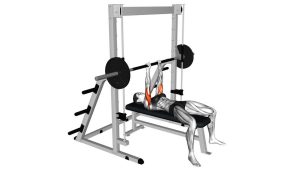
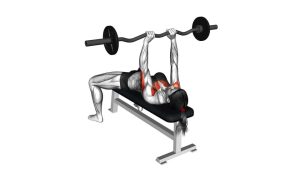
Barbell Incline Close-Grip Bench Press: Form, Sets, Tips & FAQ
Learn the Barbell Incline Close-Grip Bench Press for stronger triceps, upper chest, and pressing power. Includes setup, step-by-step form, sets, mistakes, FAQs, and equipment.
Barbell Incline Close-Grip Bench Press
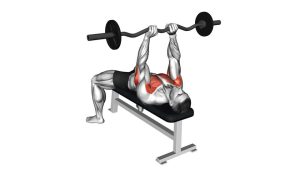
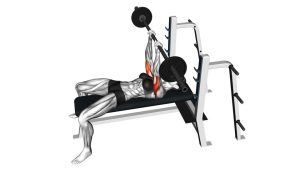
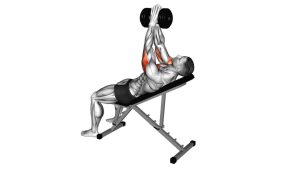
This exercise works best when the bar path is controlled, the elbows stay tucked, and the wrists remain stacked over the forearms. Instead of flaring the elbows like a wide-grip bench press, keep them slightly closer to the ribs so the triceps can drive the lift. As a result, the movement becomes more precise, more shoulder-friendly, and more effective for upper-arm strength.
Quick Overview
| Body Part | Triceps |
|---|---|
| Primary Muscle | Triceps brachii |
| Secondary Muscle | Upper chest, anterior deltoids, forearms, shoulder stabilizers |
| Equipment | Barbell, incline bench, weight plates, collars |
| Difficulty | Intermediate |
Sets & Reps (By Goal)
- Strength: 4–5 sets × 3–6 reps with 2–3 minutes rest
- Muscle growth: 3–4 sets × 6–10 reps with 90–120 seconds rest
- Triceps focus: 3–4 sets × 8–12 reps with a controlled lowering phase
- Technique practice: 2–3 sets × 8–10 reps using light-to-moderate weight
Progression rule: First, master a smooth bar path and stable wrists. Then, add weight gradually while keeping your elbows tucked and your shoulders pinned to the bench.
Setup / Starting Position
- Set the bench angle: Use a moderate incline, usually around 30–45 degrees.
- Lie back with control: Keep your upper back, head, and hips supported on the bench.
- Grip the bar close: Place your hands around shoulder-width apart or slightly narrower.
- Stack the wrists: Keep the bar over the heel of the palm, not high in the fingers.
- Set the shoulders: Pull your shoulder blades back and down before unracking.
- Brace your body: Plant your feet firmly and tighten your core before the first rep.
A close grip does not mean your hands should touch. In fact, an overly narrow grip can irritate the wrists and reduce pressing power.
Execution (Step-by-Step)
- Unrack the bar: Move it carefully over your upper chest with straight, stable arms.
- Lower with control: Bend the elbows and guide the bar toward the upper chest or lower collarbone area.
- Keep elbows tucked: Maintain roughly a 30–45 degree elbow angle instead of flaring wide.
- Pause briefly: Let the bar reach the bottom position without bouncing off the chest.
- Press upward: Drive through the palms and extend the elbows until the arms are nearly locked out.
- Finish strong: Squeeze the triceps at the top while keeping the shoulders stable.
- Repeat smoothly: Continue each rep with the same controlled path and steady tempo.
Pro Tips & Common Mistakes
- Keep your grip close, not cramped: A shoulder-width grip usually gives the best mix of triceps tension and joint comfort.
- Do not flare the elbows: Wide elbows shift more stress to the shoulders and reduce the triceps emphasis.
- Avoid wrist collapse: Keep the knuckles pointed upward and the wrists stacked over the elbows.
- Control the bottom: Do not bounce the bar off the chest. Instead, pause briefly and press with control.
- Keep the shoulders pinned: If the shoulders roll forward, lower the weight and rebuild your setup.
- Use a full but safe range: Lower until you can maintain shoulder control, then press back up without losing position.
- Do not rush lockout: Finish each rep by extending through the triceps, not by shrugging or twisting the bar.
FAQ
What muscles does the Barbell Incline Close-Grip Bench Press work?
It primarily targets the triceps brachii. However, the upper chest, front delts, forearms, and shoulder stabilizers also assist during the press.
Is this better for triceps than a regular incline bench press?
Yes, it usually places more emphasis on the triceps because the closer grip increases elbow extension demand. Meanwhile, the incline angle still keeps the upper chest involved.
How close should my grip be?
Use a grip around shoulder-width or slightly narrower. If your wrists feel strained or your elbows cannot track smoothly, your grip is probably too narrow.
Should the bar touch my chest?
The bar can lightly touch the upper chest if your shoulders stay stable and pain-free. However, do not bounce the bar or force extra range if it causes discomfort.
Is this exercise good for beginners?
It can be used by beginners who already know basic bench press technique. Still, most lifters should first learn the standard bench press and close-grip flat press before loading this variation heavily.
Recommended Equipment
- Adjustable Incline Weight Bench — essential for setting the correct incline angle and supporting a stable pressing position
- Olympic Barbell — allows smooth loading and consistent grip placement for close-grip pressing
- Barbell Collars — keeps plates secure and prevents shifting during each rep
- Weightlifting Wrist Wraps — useful for extra wrist support during heavier close-grip pressing
- Olympic Weight Plates — needed for progressive overload and long-term strength development
Choose equipment that matches your training space, bar size, and strength level. Also, use safety arms or a spotter when pressing heavy.