Barbell Front Squat: Proper Form, Muscles Worked, Sets, Tips & FAQ
Learn the Barbell Front Squat for stronger quads, core stability, and upright squat mechanics with setup, step-by-step form, tips, FAQs, and gear.
Barbell Front Squat
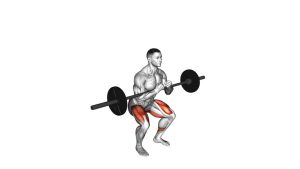
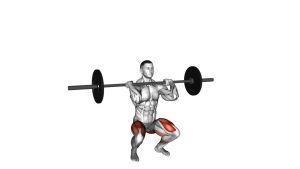
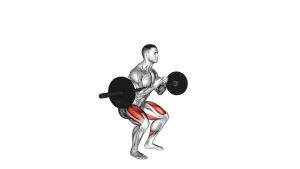
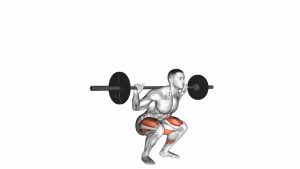
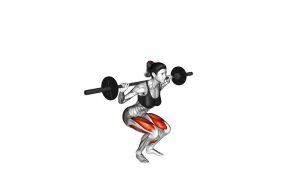
This exercise works best when the lifter combines controlled depth, strong bracing, and stable front-rack positioning. Unlike a back squat, the Barbell Front Squat naturally encourages more knee travel and a more vertical torso, which increases the demand on the quads and upper-back stabilizers. Keep the movement smooth, avoid collapsing forward, and treat each rep as a controlled squat pattern rather than a rushed drop-and-stand movement.
Quick Overview
| Body Part | Quads |
|---|---|
| Primary Muscle | Quadriceps |
| Secondary Muscle | Glutes, hamstrings, adductors, calves, core, upper back, spinal erectors |
| Equipment | Barbell, weight plates, squat rack, collars |
| Difficulty | Intermediate |
Sets & Reps (By Goal)
- Strength: 4–6 sets × 3–6 reps with 2–3 minutes rest.
- Muscle growth: 3–5 sets × 6–10 reps with 90–150 seconds rest.
- Technique practice: 3–4 sets × 5–8 reps with light-to-moderate weight.
- Conditioning: 2–4 sets × 10–15 reps with lighter weight and strict form.
Progression rule: Add weight only when you can keep the elbows lifted, torso upright, heels grounded, and bar path vertical for every rep.
Setup / Starting Position
- Set the rack height: Position the bar slightly below shoulder height so you can unrack it without standing on your toes.
- Create the front rack: Rest the bar across the front delts and upper chest, not in the hands.
- Choose your grip: Use a clean grip, cross-arm grip, or strap-assisted grip depending on wrist and shoulder mobility.
- Lift the elbows: Point the elbows forward and slightly up to create a strong shelf for the bar.
- Brace your torso: Take a deep breath, tighten the core, and keep the ribs stacked over the pelvis.
- Set your stance: Step back carefully, place feet around shoulder-width, and turn the toes slightly outward.
Tip: The hands should stabilize the bar, but the shoulders should carry it. If the bar is resting mainly in your wrists, improve your rack position before loading heavier.
Execution (Step-by-Step)
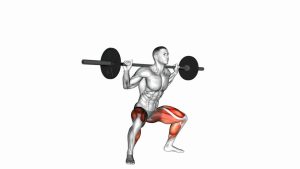
- Start tall: Stand upright with the bar across your front shoulders, elbows lifted, chest proud, and eyes forward.
- Begin the descent: Bend the knees and hips together while keeping the torso as vertical as possible.
- Track the knees: Let the knees travel forward naturally while keeping them aligned with the toes.
- Control your depth: Lower until your thighs reach parallel or slightly below, as long as your spine stays neutral.
- Keep the bar stacked: The bar should stay directly over the mid-foot, not drift forward.
- Drive up strongly: Push through the mid-foot, extend the knees and hips together, and keep the elbows high.
- Finish tall: Return to a fully standing position without leaning back or overextending the lower back.
Pro Tips & Common Mistakes
- Keep elbows high: Dropping the elbows usually causes the upper back to round and the bar to roll forward.
- Brace before every rep: A strong breath and tight core help protect the spine and improve bar control.
- Do not grip with the wrists only: The bar should sit on the shoulders, not hang from the hands.
- Avoid heel lift: Keep pressure through the mid-foot and heel while allowing controlled knee travel.
- Do not dive into the bottom: Lower with control so you can maintain balance and tension.
- Use the right depth: Squat as deep as you can while keeping a neutral spine and stable foot pressure.
- Strengthen mobility if needed: Limited wrists, lats, shoulders, or ankles can make the front squat harder to hold.
- Keep the chest tall: Think about driving the upper back into the bar as you stand up.
FAQ
What muscles does the Barbell Front Squat work?
The Barbell Front Squat mainly targets the quadriceps. It also trains the glutes, adductors, hamstrings, calves, core, upper back, and spinal erectors because the body must stabilize the bar in a front-rack position.
Is the front squat better than the back squat?
It depends on the goal. The front squat is usually more quad-dominant and requires a more upright torso, while the back squat often allows heavier loading and more hip involvement. Both are valuable when performed correctly.
Why does the bar roll forward during front squats?
The bar usually rolls forward when the elbows drop, the upper back rounds, or the torso leans too far forward. Keep the elbows high, brace the core, and reduce the weight until the rack position stays solid.
Can beginners do the Barbell Front Squat?
Beginners can learn it, but it may require practice with mobility, bracing, and rack position first. Many lifters start with goblet squats, zombie front squats, or light barbell front squats before progressing heavier.
What grip should I use for front squats?
A clean grip is common, but a cross-arm grip or strap-assisted grip can also work well. Choose the grip that lets you keep the bar stable without wrist pain or shoulder discomfort.
How deep should I squat?
Squat to parallel or slightly below if you can maintain heel contact, knee alignment, a neutral spine, and a stable front rack. Depth should be controlled, not forced.
Recommended Equipment
- Olympic Barbell — essential for performing loaded front squats with standard weight plates.
- Olympic Weight Plates — used to progressively load the exercise for strength or hypertrophy goals.
- Squat Rack — provides safe unracking and reracking for barbell front squats.
- Barbell Collars — keeps weight plates secure and helps maintain balance during each rep.
- Lifting Straps for Front Squats — useful for lifters with limited wrist or front-rack mobility.
Tip: Start with reliable basics first: a stable rack, secure collars, and a barbell you can control. Better equipment supports safer technique, but clean form should always come first.