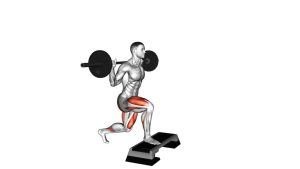
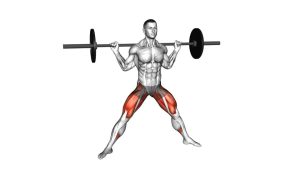
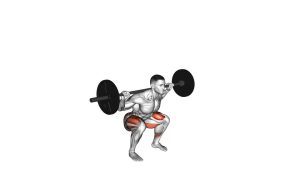
Barbell Jefferson Squat: Proper Form, Benefits, Sets, Tips & FAQ
Learn the Barbell Jefferson Squat for quads, glutes, adductors, and core strength. Includes setup, form cues, sets, mistakes, FAQs, and equipment.
Barbell Jefferson Squat
This exercise works best when the lifter treats it as a controlled straddle squat, not a rushed pull. The bar should travel almost vertically between the legs while the hips and knees extend together. Because the stance is asymmetrical, the core must work hard to keep the torso stable and prevent unwanted rotation.
Quick Overview
| Body Part | Legs |
|---|---|
| Primary Muscle | Quadriceps and glutes |
| Secondary Muscle | Adductors, hamstrings, spinal erectors, obliques, forearms, and upper back stabilizers |
| Equipment | Barbell and optional weight plates |
| Difficulty | Intermediate because of the asymmetrical stance, grip demand, and anti-rotation control |
Sets & Reps (By Goal)
- Technique practice: 2–3 sets × 6–8 reps per stance side using light weight and slow control.
- Muscle building: 3–4 sets × 8–12 reps with moderate load and a controlled lowering phase.
- Strength development: 4–5 sets × 4–6 reps with heavier load while keeping the bar path vertical.
- Core and stability focus: 3 sets × 8–10 reps per side with a 1–2 second pause at the top.
- Conditioning finisher: 2–3 rounds × 10–15 reps using lighter weight and clean form.
Progression rule: Increase load only after both stance sides feel balanced. Switch the forward foot each set to reduce asymmetrical overload and improve total-body coordination.
Setup / Starting Position
- Place the barbell on the floor: Stand over the bar so it runs between your legs from front to back.
- Set a split stance: Position one foot in front of the bar’s center and the other foot behind it. Keep both feet planted firmly.
- Turn the toes slightly outward: This helps create room for the knees and improves balance during the squat.
- Grip the bar: Reach one hand in front of the body and the other behind the body. Grip the bar firmly with straight arms.
- Brace your core: Pull the ribs down, keep the chest proud, and set the shoulders back without over-arching the spine.
- Find your center: The bar should feel balanced between both legs before you begin the lift.
Tip: If the bar feels like it is pulling you forward or backward, adjust your foot position before lifting. A good setup should feel stable before the first rep starts.
Execution (Step-by-Step)
- Begin from a braced bottom position: Keep the spine neutral, the chest controlled, and the arms long.
- Push through both feet: Drive the floor away by extending the knees and hips together.
- Keep the bar centered: Let the bar travel vertically between your legs without swinging forward or backward.
- Stand tall at the top: Finish with hips extended, glutes engaged, and shoulders stacked over the hips.
- Avoid twisting: Keep the torso square and resist rotating toward either hand.
- Lower with control: Bend the knees and hips together while keeping the bar close and centered.
- Reset each rep: Re-brace before the next lift, especially if the load is heavy or your stance shifts.
Pro Tips & Common Mistakes
- Switch stance sides: Alternate which foot is forward to keep training balanced.
- Do not yank the bar: Build tension first, then lift smoothly with the legs.
- Keep the arms straight: Your hands hold the bar, but your legs create the movement.
- Brace before every rep: This protects the spine and improves force transfer.
- Avoid knee collapse: Track both knees in line with the toes.
- Control the eccentric: Lowering too fast can pull the body out of position.
- Do not over-rotate: The asymmetrical grip may tempt the torso to twist. Resist that rotation.
- Use lighter weight first: The lift requires coordination before heavy loading becomes useful.
FAQ
What muscles does the Barbell Jefferson Squat work?
The Barbell Jefferson Squat mainly trains the quadriceps, glutes, and adductors. It also works the hamstrings, spinal erectors, obliques, forearms, and upper back because the body must stabilize against the asymmetrical bar position.
Is the Jefferson Squat more like a squat or a deadlift?
It has elements of both, but it is often performed like a straddle squat. The best version uses strong leg drive, a vertical bar path, and controlled hip and knee extension instead of pulling mainly from the lower back.
Is the Barbell Jefferson Squat safe?
It can be safe when performed with a neutral spine, controlled tempo, and balanced stance. However, because it uses an asymmetrical position, beginners should start light and avoid twisting or rushing the movement.
Should I switch sides during the Jefferson Squat?
Yes. Switching which foot is forward helps balance the movement pattern and reduces one-sided loading. A simple method is to perform one set with the right foot forward, then the next set with the left foot forward.
Can I use the Jefferson Squat for glute growth?
Yes. The glutes work strongly during hip extension, especially when you push evenly through the feet and finish tall at the top. For glute focus, use controlled reps, moderate depth, and avoid turning the lift into a rushed pull.
Recommended Equipment
- Olympic Barbell — essential for loading and performing the Jefferson Squat correctly
- Olympic Weight Plates — useful for progressive overload and lower-body strength development
- Barbell Collars — helps keep plates secure during asymmetrical barbell movement
- Weightlifting Belt — optional support for heavier sets when bracing is already solid
- Flat-Sole Lifting Shoes — improves foot stability and balance during the split straddle stance
Tip: Equipment should support clean technique, not hide poor form. Master the stance, brace, and vertical bar path before using heavier loads.