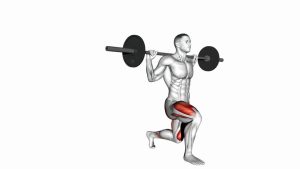
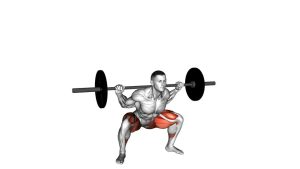
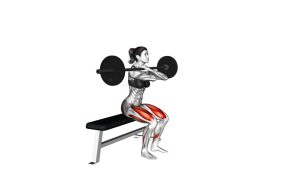
Barbell Low-Bar Back Squat: Form, Muscles, Sets, Tips & FAQ
Learn the Barbell Low-Bar Back Squat for stronger glutes, hamstrings, quads, and hips with proper setup, form cues, sets, tips, FAQs, and equipment.
Barbell Low-Bar Back Squat
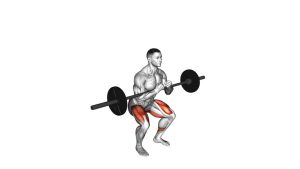
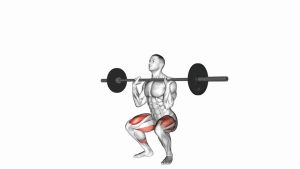
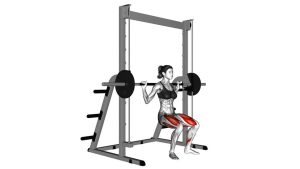
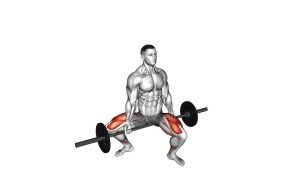
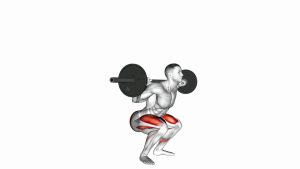
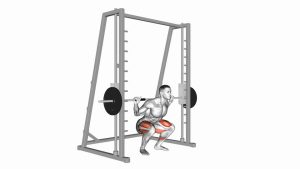
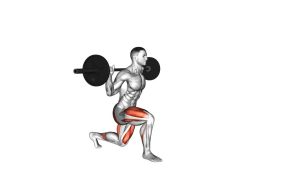
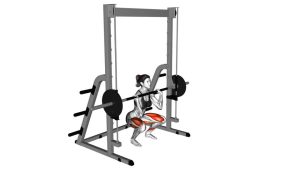
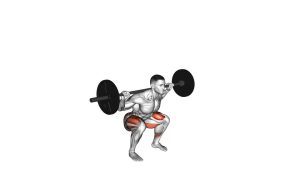
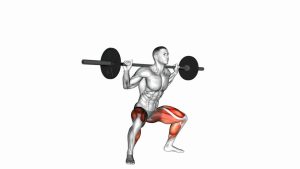
The low-bar squat is best performed with a tight upper back, firm brace, stable mid-foot balance, and controlled hip-knee movement. Unlike a high-bar squat, this variation uses more hip hinge and posterior-chain involvement. The goal is to keep the bar moving vertically over the mid-foot while the hips and shoulders rise together.
Quick Overview
| Body Part | Legs |
|---|---|
| Primary Muscle | Glutes, quadriceps, hamstrings |
| Secondary Muscle | Adductors, calves, spinal erectors, core, upper back |
| Equipment | Barbell, weight plates, squat rack, collars |
| Difficulty | Intermediate to advanced |
Sets & Reps (By Goal)
- Strength: 3–6 sets × 3–6 reps with 2–4 min rest
- Muscle growth: 3–5 sets × 6–10 reps with 90–150 sec rest
- Technique practice: 3–4 sets × 5–8 reps with light to moderate load
- Powerlifting focus: 4–8 sets × 1–5 reps with longer rest and strict setup consistency
Progression rule: Add weight only when your bar path, depth, brace, and knee tracking stay consistent across every working set.
Setup / Starting Position
- Set the rack height: Position the bar slightly below shoulder height so you can unrack without calf-raising or squatting too low.
- Place the bar low: Rest it across the rear delts, below the upper traps, not on the neck.
- Create a shelf: Pull the shoulder blades together and keep the upper back tight.
- Grip the bar firmly: Keep hands close enough to build tension, but not so close that the elbows or wrists feel strained.
- Brace before unracking: Take a deep breath, tighten your core, stand tall, and step back carefully.
- Set your stance: Stand around shoulder-width with toes slightly turned out.
Execution (Step-by-Step)
- Brace hard: Take a controlled breath into your midsection and lock your ribcage and pelvis together.
- Start with hips and knees: Push the hips back slightly while allowing the knees to bend and track outward.
- Descend under control: Keep the bar over the mid-foot as your torso leans forward naturally for the low-bar position.
- Reach proper depth: Lower until your hip crease is at least near parallel or slightly below, without losing spinal position.
- Drive upward: Push the floor away, drive through the mid-foot, and keep the knees tracking in line with the toes.
- Keep hips and shoulders together: Do not let the hips shoot up faster than the chest.
- Finish tall: Stand fully upright with hips and knees extended, then reset your breath before the next rep.
Pro Tips & Common Mistakes
- Do not place the bar too high: A high bar position changes the movement into a more upright squat pattern.
- Avoid wrist overload: The back should support the bar, not the hands.
- Keep knees out: Do not allow the knees to cave inward during the descent or ascent.
- Control the bottom: Avoid bouncing aggressively if you cannot maintain tightness.
- Do not good-morning the weight: Keep the hips and shoulders rising together.
- Brace before every rep: A weak brace often causes bar drift, back rounding, and unstable depth.
- Use safety pins: Heavy low-bar squats should be performed inside a rack whenever possible.
FAQ
What muscles does the Barbell Low-Bar Back Squat work?
It mainly works the glutes, quadriceps, and hamstrings. It also trains the adductors, calves, spinal erectors, core, and upper back because the whole body must stay tight under the bar.
Is the low-bar squat better than the high-bar squat?
It depends on the goal. The low-bar squat is often better for maximal strength and powerlifting because it uses more hip drive. The high-bar squat is usually more upright and more quad-focused.
Where should the bar sit during a low-bar squat?
The bar should sit across the rear delts, below the upper traps. It should not rest directly on the neck or roll down the back.
Why do I lean forward in a low-bar squat?
A slight forward torso lean is normal because the bar sits lower on the back. The key is keeping the spine neutral and the bar over the mid-foot.
Is the Barbell Low-Bar Back Squat safe for beginners?
Beginners can learn it, but it requires good coaching, light starting loads, and careful setup. New lifters should master bracing, bar position, and controlled depth before lifting heavy.
Recommended Equipment
- Olympic Barbell — essential for loading and progressing the low-bar squat
- Squat Rack with Safety Arms — provides safer unracking, reracking, and failed-rep protection
- Barbell Collars — keeps plates secure during heavy sets
- Weightlifting Belt — supports stronger bracing for heavy squat work
- Squat Shoes — improves foot stability and helps maintain consistent squat mechanics
Tip: Equipment should improve safety and consistency, not hide poor form. Master the movement first, then use gear to support heavier training.