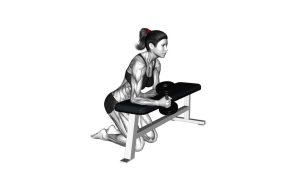
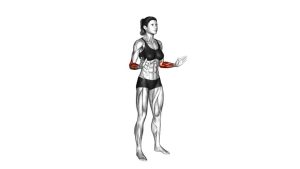
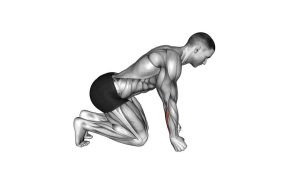
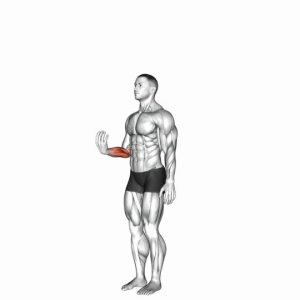
Kneeling Reverse Palm Nudges: Forearm Form, Sets, Tips & FAQ
Learn how to perform Kneeling Reverse Palm Nudges to strengthen forearm extensors, improve wrist stability, and build hand-control endurance with proper form, sets, tips, FAQs, and equipment.
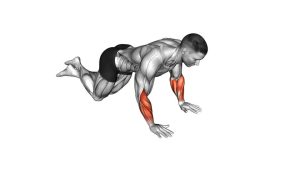
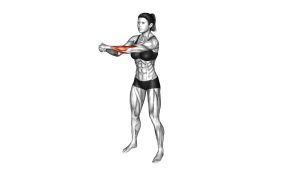
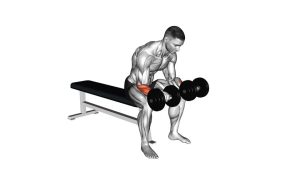
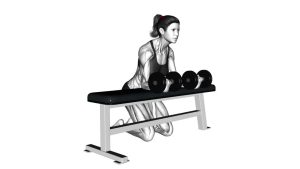
Kneeling Reverse Palm Nudges
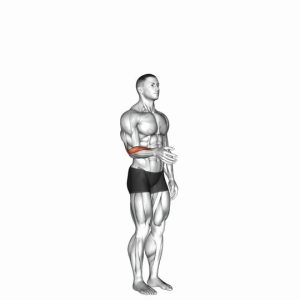
This exercise is especially useful for people who want stronger wrists, better grip support, and more balanced forearm development. Many grip-heavy exercises train the closing muscles of the hand, but the Kneeling Reverse Palm Nudge emphasizes the opposite action: opening the hand, extending the wrist, and controlling the fingers. That makes it a helpful accessory drill for lifters, climbers, desk workers, racket-sport athletes, and anyone who wants healthier wrist mechanics.
Because the movement is small, every repetition should be performed with clean positioning. Keep your elbows slightly soft, shoulders relaxed, palms facing forward, and fingers open. You should feel a clear but manageable activation through the top side of the forearms, not sharp pressure in the wrist joint or tension in the neck.
Quick Overview
| Body Part | Forearms |
|---|---|
| Primary Muscle | Wrist extensors and finger extensors |
| Secondary Muscle | Brachioradialis, wrist stabilizers, shoulder stabilizers, upper-arm stabilizers |
| Equipment | No equipment required; optional exercise mat for knee comfort |
| Difficulty | Beginner-friendly, but requires control and wrist awareness |
Sets & Reps (By Goal)
- Forearm activation: 2–3 sets × 12–20 controlled nudges, 30–45 sec rest
- Wrist endurance: 3–4 sets × 20–30 reps, smooth rhythm, 45–60 sec rest
- Warm-up before grip training: 1–2 sets × 10–15 reps before curls, pull-ups, deadlifts, or climbing
- Control and rehab-style practice: 2–3 sets × 8–12 slow reps with a 1-second pause at the end of each nudge
- Desk-break reset: 1–2 easy sets × 10–15 reps to wake up the wrist extensors after typing or mouse use
Progression rule: Progress by improving control first. Then add reps, longer pauses, or more total sets. Avoid adding resistance until you can keep the wrists stable and the shoulders relaxed through every rep.
Setup / Starting Position
- Kneel on the floor: Place both knees on the ground with your hips stacked over your knees. Use a mat if your knees need support.
- Set a tall torso: Keep your ribs stacked, spine long, and core lightly engaged so your body does not sway during the drill.
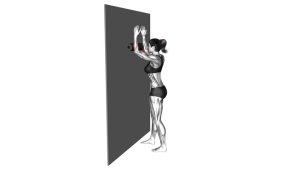
- Extend the arms forward: Raise both arms in front of your chest with elbows slightly bent. Do not lock the elbows aggressively.
- Turn the palms outward: Face the palms away from your body as if showing your palms to a wall in front of you.
- Open the fingers: Spread the fingers naturally without forcing them wide. Keep the hands active but not stiff.
- Set the wrists: Hold the wrists in extension with fingers pointing mostly upward. This pre-loads the wrist extensors.
- Relax the upper body: Keep your shoulders down, neck relaxed, and chest open. The forearms should be the main working area.
Setup cue: Imagine your palms are gently touching a glass wall. Your job is to nudge the wall without breaking your posture.
Execution (Step-by-Step)
- Start in the reverse palm position: Arms forward, palms facing away, fingers pointing up, wrists extended.
- Brace lightly: Keep your torso still and avoid leaning into the movement with your chest or shoulders.
- Nudge the palms forward: Move both palms forward a few centimeters as if pressing gently into air.
- Use the wrists, not the shoulders: Let the small pulse come mainly from wrist and hand control, not from swinging the arms.
- Keep the fingers open: Maintain finger extension throughout the rep. Do not curl the fingers or make a fist.
- Pause briefly: At the end of the nudge, hold for a split second and feel the forearm extensors engage.
- Return slowly: Let the hands come back to the starting position without letting the wrists collapse.
- Repeat with rhythm: Continue for the target reps while keeping each nudge small, controlled, and consistent.
Pro Tips & Common Mistakes
- Think “small pulse,” not “big push”: The movement should be short and precise, not a full arm press.
- Keep the elbows soft: Locked elbows can shift tension away from the forearms and into the joints.
- Do not shrug: Keep the shoulders relaxed so the upper traps do not take over the exercise.
- Keep palms facing forward: If the palms turn inward, the forearm angle changes and the drill loses its purpose.
- Do not rush the reps: Fast reps often become sloppy shoulder pulses instead of wrist-extension control.
- Maintain finger extension: Keep the fingers open so the finger extensors stay involved.
- Avoid wrist snapping: Move smoothly. The wrist should not bounce aggressively at the end range.
- Use it as a balance drill: Pair this with grip work to train both hand closing and hand opening strength.
- Reduce range if needed: If your wrists feel irritated, make the nudge smaller and lower the arms slightly.
- Breathe normally: Do not hold your breath during high-rep forearm endurance work.
FAQ
What muscles do Kneeling Reverse Palm Nudges work?
They mainly work the wrist extensors and finger extensors on the top side of the forearm. The brachioradialis, wrist stabilizers, and shoulder stabilizers assist lightly to keep the arms steady.
Where should I feel this exercise?
You should feel it through the top and outer side of the forearms. You may also feel mild shoulder stabilization, but the main sensation should not be in the traps, neck, or elbow joint.
Is this exercise good for wrist stability?
Yes. The extended wrist position and repeated small nudges help train wrist control, endurance, and awareness. It is especially useful as a warm-up or accessory drill for grip-heavy training.
Can beginners do Kneeling Reverse Palm Nudges?
Yes. It is beginner-friendly because it requires no equipment and uses a low load. Beginners should start with small, slow reps and stop before the wrists feel irritated or fatigued.
Should I do this before or after lifting?
You can use it before lifting as a wrist and forearm activation drill, especially before curls, pull-ups, deadlifts, rows, climbing, or racket sports. You can also do it after training as light endurance work.
Why do my shoulders get tired during this exercise?
Your shoulders stabilize the arms while they are held forward. If they fatigue too quickly, lower the arms slightly, soften the elbows, relax your traps, and shorten the set.
Can this help with grip training?
Yes. Grip work often emphasizes the muscles that close the hand. This exercise trains the opposite side: the wrist and finger extensors. That balance can support better forearm function and hand control.
Recommended Equipment
- Exercise Mat — adds knee comfort during kneeling forearm drills and floor-based mobility work
- Finger Extensor Trainer — helps strengthen hand-opening muscles and balances heavy gripping work
- Hand Grip Strengthener — useful for pairing extensor work with traditional grip-strength training
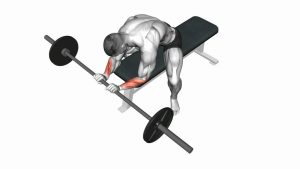
- Wrist Strengthener / Forearm Trainer — helps progress wrist flexion, wrist extension, and controlled forearm strength
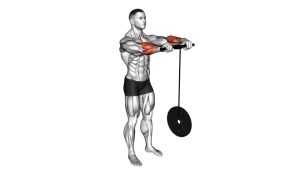
- Forearm Wrist Roller — excellent for building forearm endurance, wrist control, and grip support
Tip: You do not need equipment for Kneeling Reverse Palm Nudges, but these tools can help build a complete forearm routine when combined with controlled bodyweight wrist drills.