Dumbbell Over-the-Bench Supination: Forearm Form, Sets, Tips & FAQ
Learn the Dumbbell Over-the-Bench Supination to strengthen forearm supinators, improve wrist rotation control, and build better grip stability with proper form, sets, tips, FAQs, and equipment.
Dumbbell Over-the-Bench Supination
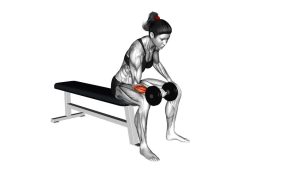
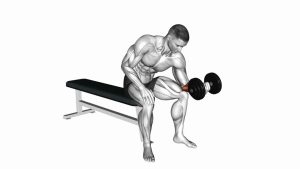
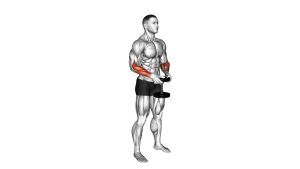
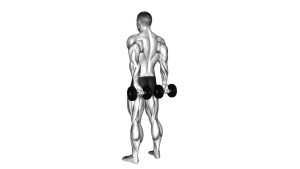
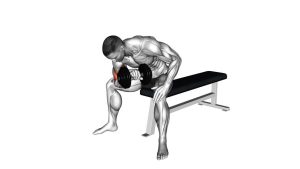
This exercise is performed with a dumbbell held in one hand while the forearm stays supported on a bench. The goal is not to lift the dumbbell up and down, but to rotate the wrist with control from a neutral grip toward a palm-up position. Because the dumbbell creates leverage, even a light weight can feel challenging when the movement is performed slowly.
Quick Overview
| Body Part | Forearms |
|---|---|
| Primary Muscle | Supinator |
| Secondary Muscle | Biceps brachii, brachioradialis, wrist stabilizers |
| Equipment | Dumbbell and flat bench |
| Difficulty | Beginner to Intermediate |
Sets & Reps (By Goal)
- Technique and control: 2–3 sets × 10–12 reps per side with a light dumbbell.
- Forearm strength: 3–4 sets × 8–10 reps per side using slow, strict rotation.
- Grip and wrist stability: 2–4 sets × 12–15 reps per side with a controlled tempo.
- Rehab-style control: 2–3 sets × 6–10 reps per side, pain-free only, with very light resistance.
Progression rule: Increase control first, then reps, then weight. Do not rush to heavier dumbbells.
Setup / Starting Position
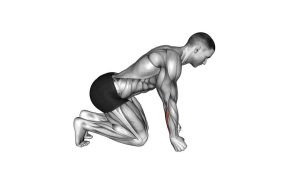
- Place a flat bench in front of you and position your working forearm across the bench.
- Let your wrist and hand hang just beyond the edge so the dumbbell can rotate freely.
- Hold a light dumbbell with a neutral grip, thumb pointing upward.
- Keep your elbow and forearm firmly supported on the bench.
- Relax your shoulder and keep your upper arm still throughout the movement.
Execution (Step-by-Step)
- Start neutral: Begin with the dumbbell vertical and your thumb pointing upward.
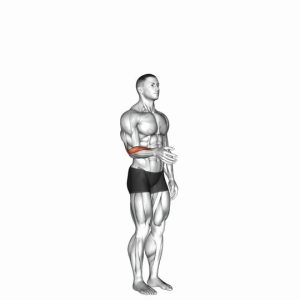
- Rotate slowly: Turn your wrist outward into supination, bringing the palm toward a more upward-facing position.
- Keep the elbow fixed: Do not let the forearm slide, lift, or roll off the bench.
- Pause briefly: Hold the end position for a moment while maintaining wrist control.
- Return with control: Rotate back to the neutral starting position without dropping the weight.
- Repeat smoothly: Perform each rep with slow, clean rotation and no swinging.
Pro Tips & Common Mistakes
- Use light weight: This is a small rotational movement, so heavy dumbbells can quickly overload the wrist.
- Keep the wrist straight: Avoid letting the wrist bend backward or collapse during the rotation.
- Control the eccentric: The return phase is just as important as the rotation upward.
- Anchor the forearm: If your elbow moves, the exercise becomes less isolated.
- Avoid momentum: Do not swing the dumbbell through the range of motion.
- Train both sides evenly: Perform the same reps and tempo on each arm to build balanced forearm strength.
FAQ
What muscles does the Dumbbell Over-the-Bench Supination work?
It primarily targets the supinator, with assistance from the biceps brachii, brachioradialis, and smaller wrist stabilizers.
Should I use a heavy dumbbell?
No. This exercise works best with light to moderate weight. Too much load can cause wrist strain and reduce control.
Where should I feel this exercise?
You should feel it around the upper forearm and rotational muscles near the elbow and wrist. You should not feel sharp pain in the wrist joint.
Is this exercise good for grip strength?
Yes. While it is not a pure gripping exercise, it improves wrist stability and forearm control, which support stronger grip performance.
Can beginners do this exercise?
Yes, beginners can perform it safely with a very light dumbbell and slow tempo. The key is control, not heavy loading.
Recommended Equipment
- Adjustable Dumbbells — useful for choosing light, precise resistance levels.
- Hex Dumbbell Set — stable and easy to grip for controlled forearm exercises.
- Flat Weight Bench — provides solid forearm support during the movement.
- Wrist Wraps — optional support for lifters who need extra wrist stability.
- Forearm Grip Strengthener — helpful for pairing rotational training with grip endurance work.
Choose equipment that allows smooth, pain-free movement. For this exercise, lighter resistance and better control are more important than maximum load.