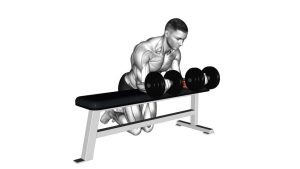
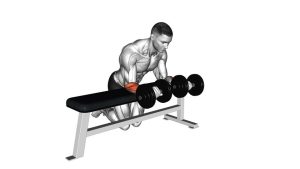
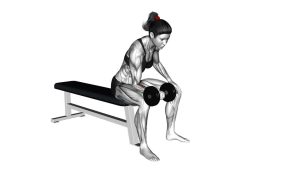
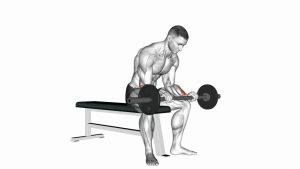
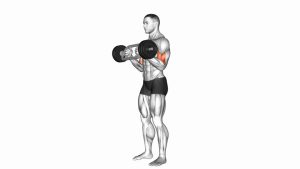
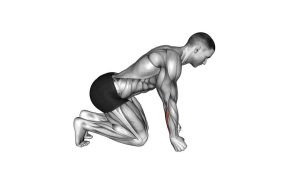
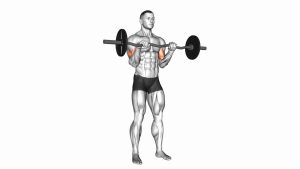
Dumbbell Over Bench One-Arm Neutral Wrist Curl: Form, Sets, Tips & FAQ
Learn the Dumbbell Over Bench One-Arm Neutral Wrist Curl to build forearm and wrist strength with strict isolation. Includes setup, step-by-step form, sets by goal, common mistakes, FAQs, and recommended equipment.
Dumbbell Over Bench One-Arm Neutral Wrist Curl
This exercise works best with strict form and moderate loading. Because the forearm is braced on the bench, the wrist has to do the work without help from the shoulder or elbow. You should feel the effort concentrated in the forearm and wrist flexors, not in the upper arm or traps. Keep the motion controlled, avoid jerking the dumbbell, and focus on squeezing through the top without losing your wrist position.
Quick Overview
| Body Part | Forearms |
|---|---|
| Primary Muscle | Wrist flexors of the forearm |
| Secondary Muscle | Brachioradialis, finger flexors, and wrist stabilizers |
| Equipment | One dumbbell and a flat bench |
| Difficulty | Beginner to Intermediate |
Sets & Reps (By Goal)
- General forearm strength: 3–4 sets × 10–15 reps per arm
- Muscle growth / hypertrophy: 3–4 sets × 12–20 reps per arm with controlled tempo
- Endurance / grip support: 2–3 sets × 15–25 reps per arm
- Warm-up / activation: 2 sets × 12–15 light reps per arm
Progression rule: Add reps first, then increase weight in small jumps. Wrist isolation work responds best to clean form, steady tempo, and manageable resistance.
Setup / Starting Position
- Position yourself beside or behind a flat bench: Kneel or stand in a stable stance so you can brace one forearm comfortably on the pad.
- Support the working forearm fully: Place the forearm on the bench with the wrist hanging just off the edge.
- Grip the dumbbell neutrally: Hold the dumbbell with your thumb pointing upward, as if doing a hammer curl.
- Keep the elbow quiet: The forearm stays planted and the elbow should not lift or slide during the set.
- Set the wrist in a controlled stretch: Begin from a neutral or slightly extended wrist position without letting the dumbbell yank the hand down.
Tip: The more stable your forearm support is, the easier it becomes to isolate the wrist and avoid cheating.
Execution (Step-by-Step)
- Brace and lock in: Keep your torso still, shoulders relaxed, and forearm pressed into the bench.
- Lift with the wrist: Curl the dumbbell upward by flexing the wrist only. Do not swing the arm or bend at the elbow.
- Squeeze at the top: Pause briefly when you reach the top of your comfortable range.
- Lower slowly: Return the dumbbell under control to the start position, letting the wrist lengthen without losing tension.
- Repeat evenly: Complete all reps on one side, then switch arms and match the same quality of movement.
Pro Tips & Common Mistakes
- Keep the forearm glued to the bench: This is what turns the movement into a true wrist curl instead of an arm swing.
- Use a slow eccentric: The lowering phase is where a lot of useful forearm tension happens.
- Do not overload it: Wrist work usually feels best with lighter weight and cleaner reps.
- Stay in your natural range: Avoid forcing extra wrist extension if it feels cranky or unstable.
- Train both sides evenly: Unilateral forearm work is great for cleaning up left-to-right strength differences.
- Avoid twisting the hand: Keep the neutral grip consistent instead of turning the palm up or down mid-rep.
- Don’t rush the top: A short pause at peak contraction improves control and makes each rep more effective.
FAQ
What does the neutral grip change in this wrist curl?
A neutral grip changes the feel of the exercise and can make it more comfortable for some lifters who do not love a fully supinated wrist curl setup. It also encourages a clean, stable hand position throughout the rep.
Where should I feel this exercise?
You should mainly feel it through the forearm on the working side, especially around the wrist flexors and supporting forearm muscles. You should not feel the upper arm doing most of the work.
Should I use heavy weight for wrist curls?
Usually no. Forearm isolation work tends to respond better to controlled reps, moderate or light loading, and strict technique rather than very heavy weights.
Can beginners use this exercise?
Yes. It is beginner-friendly as long as the load is appropriate and the forearm stays supported so the wrist can move without compensation.
When should I place this exercise in a workout?
Most people do it near the end of an upper-body or arm workout, after larger pulling and pressing exercises. It also works well as accessory forearm training on grip-focused days.
Recommended Equipment
- Adjustable Dumbbells — practical for progressing wrist curls in small weight jumps at home
- Flat Weight Bench — gives your forearm a stable surface so you can isolate the wrist properly
- Wrist Roller — a strong accessory option for adding more direct forearm and grip work
- Forearm / Wrist Strengthener — useful for extra wrist-strength practice outside of dumbbell training
- Grip Strength Trainer — helps build hand and forearm endurance that carries over to many upper-body lifts
Tip: Pick tools that let you increase tension gradually. Forearm training usually improves faster with consistent, controlled practice than with aggressive loading.