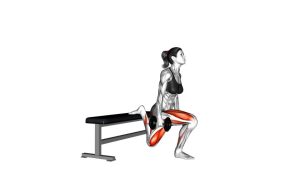
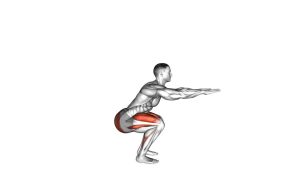
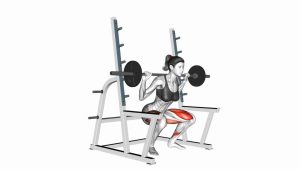
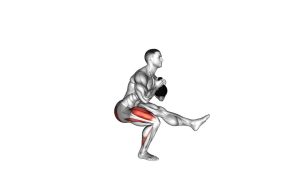
Bodyweight Pistol Squat: Single-Leg Squat Form, Benefits, Sets & Tips
Learn the Bodyweight Pistol Squat with proper single-leg form, setup, reps, common mistakes, FAQs, and equipment for balance and leg strength.
Bodyweight Pistol Squat
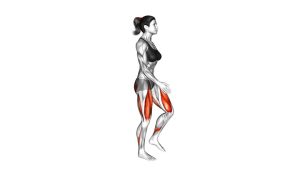
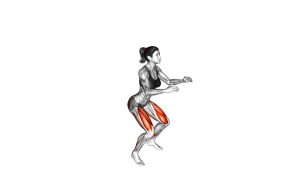
This exercise rewards patience, mobility, and precise control. A clean pistol squat is not just about going low. It is about keeping the working foot stable, the knee tracking in line with the toes, the torso controlled, and the non-working leg lifted throughout the movement.
Quick Overview
| Body Part | Legs |
|---|---|
| Primary Muscle | Quadriceps |
| Secondary Muscle | Glutes, hamstrings, calves, hip flexors, core, ankle stabilizers |
| Equipment | None; optional box, resistance band, suspension trainer, or balance support |
| Difficulty | Advanced |
Sets & Reps (By Goal)
- Skill practice: 3–5 sets × 2–5 controlled reps per leg
- Strength: 3–4 sets × 4–8 reps per leg
- Mobility and control: 2–4 sets × 3–6 slow reps per leg
- Beginner progression: 3–4 sets × 5–8 assisted reps per leg
- Conditioning: 2–3 sets × 6–10 reps per leg only if form stays clean
Progression rule: Master assisted reps first. Then reduce assistance, increase depth, slow the tempo, and only then add more reps.
Setup / Starting Position
- Stand tall: Place your weight on one foot and keep the full sole planted.
- Lift the free leg: Extend the opposite leg forward with the knee mostly straight.
- Brace your core: Keep your ribs stacked and your spine controlled.
- Reach the arms forward: Use your arms as a counterbalance before descending.
- Set the working knee: Keep it tracking in the same direction as the toes.
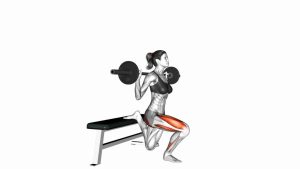
Tip: If full range is too difficult, begin with a box pistol squat or hold a stable object for light assistance.
Execution (Step-by-Step)
- Start balanced: Stand on one leg with the free leg extended forward and arms reaching out.
- Begin the descent: Bend the working knee while sending the hips slightly back and down.
- Keep the heel down: Maintain pressure through the heel, midfoot, and big toe.
- Control the bottom: Lower as far as you can without losing posture, balance, or knee alignment.
- Drive up: Push through the working foot and extend the knee and hip together.
- Finish tall: Return to standing with control before placing the free leg down.
Pro Tips & Common Mistakes
- Use your arms: Reaching forward helps balance your body during the descent.
- Do not rush depth: Partial reps with control are better than deep reps with poor alignment.
- Keep the free leg active: Letting it drop changes the movement and reduces control.
- Avoid knee collapse: The knee should track over the toes instead of falling inward.
- Stay grounded: If your heel lifts, improve ankle mobility or use a small heel elevation temporarily.
- Do not bounce: Use muscle control instead of momentum at the bottom.
- Train both sides: Compare left and right legs and give the weaker side extra quality practice.
FAQ
Is the Bodyweight Pistol Squat good for building legs?
Yes. It is excellent for building unilateral leg strength, especially in the quadriceps and glutes. It also challenges balance, mobility, and core control more than many standard bodyweight leg exercises.
Why is the pistol squat so difficult?
It combines strength, ankle mobility, hip control, balance, and coordination. Many people are strong enough for squats but still need mobility and stability work before performing a clean pistol squat.
Should my knee go past my toes?
In a pistol squat, the knee often travels forward naturally. This is not automatically wrong. The key is to keep the heel grounded, control the movement, and keep the knee tracking in line with the toes.
What is the best beginner progression?
Start with assisted pistol squats, box pistol squats, and slow single-leg squat negatives. These variations build the pattern while reducing balance and strength demands.
Can I do pistol squats every day?
Skill practice can be done often at low volume, but hard pistol squat training should allow recovery. Start with 2–3 sessions per week if you are training them for strength.
Recommended Equipment
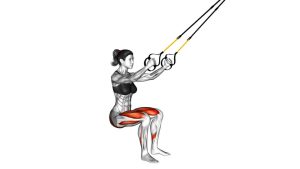
- Suspension Trainer — useful for assisted pistol squat progressions and balance support
- Resistance Bands Set — helps with assisted reps, warm-ups, and lower-body activation
- Plyometric Box — perfect for box pistol squats and controlled depth progression
- Squat Slant Board — supports ankle-limited squat practice and heel-elevated progressions
- Exercise Mat — provides comfort and grip during mobility drills and floor-based warm-ups
Tip: Equipment should make the exercise cleaner, not easier forever. Use assistance to learn control, then gradually reduce it.