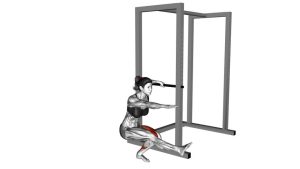
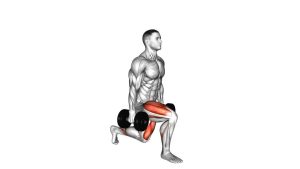
Dumbbell Split Squat: Proper Form, Muscles Worked, Sets, Tips & FAQ
Learn the Dumbbell Split Squat for stronger quads, glutes, and legs. Step-by-step form, setup tips, sets by goal, mistakes, FAQs, and equipment.
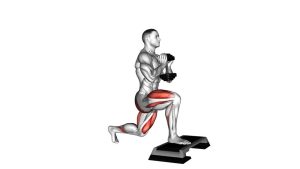
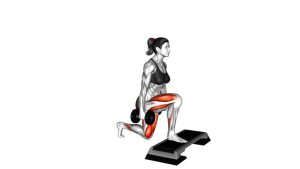
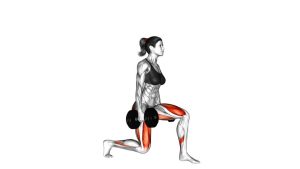
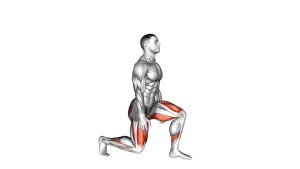
Dumbbell Split Squat
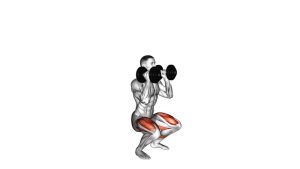
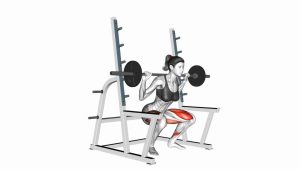
This exercise is excellent for building unilateral leg strength, improving balance, correcting side-to-side strength differences, and developing better lower-body control. Because each leg works separately, the Dumbbell Split Squat can expose weaknesses that regular squats may hide. It is also a strong choice for home workouts because it requires only a pair of dumbbells and enough space for a split stance.
Quick Overview
| Body Part | Legs |
|---|---|
| Primary Muscle | Quadriceps and gluteus maximus |
| Secondary Muscle | Hamstrings, calves, glute medius, adductors, and core stabilizers |
| Equipment | Pair of dumbbells |
| Difficulty | Beginner to intermediate, depending on load and depth |
Sets & Reps (By Goal)
- Beginner technique: 2–3 sets × 8–10 reps per leg using light dumbbells or bodyweight.
- Muscle growth: 3–4 sets × 8–12 reps per leg with a controlled 2–3 second lowering phase.
- Strength focus: 4–5 sets × 5–8 reps per leg using heavier dumbbells and full control.
- Balance and control: 2–3 sets × 10–15 reps per leg using moderate load and slower tempo.
- Finisher / burn set: 1–2 sets × 15–20 reps per leg with light dumbbells and clean form.
Progression rule: Add reps first, then increase dumbbell weight. Do not increase load if your front heel lifts, your knee collapses inward, or your rear leg begins pushing too much.
Setup / Starting Position
- Hold the dumbbells: Stand tall with one dumbbell in each hand, arms relaxed at your sides.
- Set your split stance: Step one foot forward and the other foot back. Keep your stance long enough to lower smoothly without crowding the front knee.
- Keep width for balance: Place your feet about hip-width apart, not directly on the same line.
- Plant the front foot: Keep the heel, big toe, and little toe connected to the floor.
- Lift the rear heel: The back foot should rest on the ball of the foot with the rear heel elevated.
- Brace your core: Keep your ribs stacked, spine neutral, and shoulders relaxed.
- Look forward: Keep your head neutral and your chest controlled without over-arching your lower back.
Tip: Before adding heavy dumbbells, test your stance with bodyweight reps. A good stance allows the rear knee to travel down while the front foot stays fully stable.
Execution (Step-by-Step)
- Start tall: Hold the dumbbells still at your sides and keep your front foot firmly planted.
- Lower under control: Bend both knees and let your rear knee travel down toward the floor.
- Keep the front knee aligned: Allow the front knee to bend naturally while tracking in the same direction as your toes.
- Control the bottom: Stop when your rear knee is close to the floor or when you reach your comfortable depth.
- Drive through the front leg: Push through the front heel and midfoot to rise back up.
- Keep dumbbells steady: Avoid swinging the weights forward or using momentum to stand.
- Repeat all reps: Finish the target reps on one side before switching legs, or alternate sides if preferred.
Pro Tips & Common Mistakes
- Use the front leg as the main driver: The rear leg should help with balance, not dominate the lift.
- Do not step too narrow: A tight “tightrope” stance makes balance harder and can cause hip shifting.
- Avoid bouncing at the bottom: Pause briefly or stay controlled before driving upward.
- Keep the knee tracking clean: Do not let the front knee cave inward during the descent or ascent.
- Control torso position: A slight forward lean is fine, but avoid rounding your back or collapsing your chest.
- Do not rush reps: Slow, stable reps build better strength and reduce joint stress.
- Keep dumbbells quiet: Swinging weights usually means the load is too heavy or the tempo is too fast.
- Match both sides: Use the same stance length, depth, and tempo on each leg.
FAQ
What muscles does the Dumbbell Split Squat work?
The Dumbbell Split Squat mainly works the quadriceps and glutes. It also trains the hamstrings, calves, adductors, glute medius, and core because your body must stabilize each rep in a split stance.
Is the Dumbbell Split Squat the same as a lunge?
No. A split squat is usually stationary, meaning the feet stay planted while you move up and down. A lunge often includes a stepping motion forward, backward, or sideways. Both train similar muscles, but the split squat is often easier to control.
Should my front knee go past my toes?
Some forward knee travel is normal, especially when training the quads. The key is that your front heel stays grounded, your knee tracks with your toes, and the movement feels controlled and pain-free.
Why do I lose balance during split squats?
Balance issues usually happen because the stance is too narrow, the feet are too close together, or the dumbbells are too heavy. Widen your stance slightly, slow down the reps, and start with lighter weight.
Is the Dumbbell Split Squat good for glutes?
Yes. The glutes work strongly when you control the descent and drive upward through the front leg. A slightly longer stance can increase hip involvement, while a shorter stance often emphasizes the quads more.
Can beginners do Dumbbell Split Squats?
Yes, but beginners should first master the bodyweight split squat. Once balance and depth are consistent, light dumbbells can be added gradually.
Recommended Equipment
- Adjustable Dumbbells — ideal for progressive overload without needing many dumbbell pairs.
- Rubber Hex Dumbbells — stable, durable, and easy to grip for lower-body dumbbell exercises.
- Exercise Mat — useful for comfort and floor grip during setup and warm-up drills.
- Weightlifting Shoes — provide a stable base and may help lifters maintain better lower-body alignment.
- Resistance Bands Set — helpful for glute activation, warm-ups, and knee-tracking drills before leg training.
Tip: Choose equipment that supports control first. Heavy dumbbells are useful only when your stance, balance, knee tracking, and depth stay consistent on both legs.