Bodyweight Kneeling Single-Leg Hamstring Curl: Form, Sets, Tips & FAQ
Learn the Bodyweight Kneeling Single-Leg Hamstring Curl to strengthen hamstrings, improve knee-flexion control, and build lower-body stability.
Bodyweight Kneeling Single-Leg Hamstring Curl
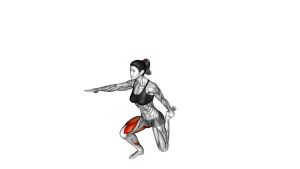
This exercise works best when the movement stays slow, strict, and focused. The goal is to curl one heel toward the glutes while keeping the thigh stable, the hips square, and the torso upright. Because there is no external resistance, quality matters more than speed. A smooth curl, a brief squeeze at the top, and a controlled return make the hamstrings work harder through a clean and safe range of motion.
Quick Overview
| Body Part | Hamstrings |
|---|---|
| Primary Muscle | Hamstrings — biceps femoris, semitendinosus, and semimembranosus |
| Secondary Muscle | Glutes, calves, hip stabilizers, and core stabilizers |
| Equipment | None — bodyweight only |
| Difficulty | Beginner to Intermediate — simple setup, but requires controlled single-leg hamstring isolation |
Sets & Reps (By Goal)
- Hamstring activation: 2–3 sets × 10–15 reps per leg with a light squeeze at the top.
- Muscle control: 3–4 sets × 8–12 reps per leg using a slow 2–3 second lowering phase.
- Endurance: 2–3 sets × 15–20 reps per leg with smooth continuous tension.
- Warm-up preparation: 1–2 sets × 8–12 reps per leg before leg training or running drills.
- Left-right balance: Start with the weaker side first and match the same reps and tempo on the stronger side.
Progression rule: First improve control, then increase reps or slow the eccentric phase. Do not rush the curl or swing the leg to create momentum.
Setup / Starting Position
- Kneel on a comfortable surface: Use the floor, a mat, or a padded surface so both knees feel supported.
- Set your posture tall: Keep your torso upright, ribs controlled, and shoulders relaxed.
- Stack the hips: Keep your hips over your knees and avoid leaning too far forward or backward.
- Choose the working leg: Keep one knee on the ground and prepare to curl that lower leg toward your glutes.
- Square the pelvis: Both hip bones should face forward. Avoid rotating toward the working side.
- Brace lightly: Tighten your core enough to prevent lower-back arching during the curl.
- Use support if needed: You may place your hands on a wall, bench, or stable surface only for balance, not to pull yourself through the movement.
Setup note: The cleaner your kneeling position, the easier it is to feel the hamstrings. If your hips shift or your lower back arches, reduce the range and move slower.
Execution (Step-by-Step)
- Start stable: Hold a tall kneeling posture with the core lightly braced and hips facing forward.
- Begin the curl: Bend the working knee and bring the heel toward the glutes using hamstring control.
- Keep the thigh steady: Avoid swinging the upper leg forward or backward as the lower leg moves.
- Curl through a clean range: Move as far as you can while keeping the knee comfortable and the pelvis stable.
- Squeeze briefly: Pause near the top for 1 second and feel the hamstring contract.
- Lower with control: Slowly return the foot toward the starting position without dropping the leg.
- Maintain posture: Keep the ribs down, shoulders relaxed, and hips square throughout each rep.
- Repeat on both sides: Complete all reps on one leg, then switch and match the same tempo and range.
Pro Tips & Common Mistakes
- Move from the knee: The lower leg should curl because the hamstring bends the knee, not because the hip swings.
- Control the lowering phase: A slow return makes the bodyweight version more effective.
- Keep the hips square: Do not twist the pelvis to help the heel move higher.
- Avoid arching the lower back: Brace your core and keep your ribs stacked over your pelvis.
- Do not rush the reps: Fast reps often reduce hamstring tension and increase compensation.
- Use a comfortable range: Do not force the heel toward the glutes if it causes knee or hamstring discomfort.
- Keep the thigh quiet: The upper leg should remain mostly still during the curl.
- Pause at the top: A short squeeze helps improve hamstring activation and control.
- Compare both sides: Watch for differences in range, smoothness, and stability between legs.
- Use padding when needed: Knee comfort helps you stay focused on proper form.
FAQ
What muscles does the Bodyweight Kneeling Single-Leg Hamstring Curl work?
It mainly targets the hamstrings, especially through knee flexion. The glutes, calves, hip stabilizers, and core also help keep the body steady during the movement.
Does this exercise require any equipment?
No. This version uses bodyweight only. A mat or knee pad can be used for comfort, but it is not required for the movement itself.
Is this exercise good for beginners?
Yes, beginners can use it to learn hamstring activation and knee-flexion control. Start with a small range of motion and slow tempo before increasing reps.
Why do I feel my lower back during the exercise?
Lower-back tension usually happens when the ribs flare, the pelvis tips forward, or the leg swings. Brace lightly, keep the hips stacked, and move only through the knee.
Should my heel touch my glutes?
Not necessarily. Curl only as far as you can while keeping good form and no knee discomfort. Range should improve naturally as control and flexibility improve.
How can I make the bodyweight version harder?
Use a slower lowering phase, add a longer top squeeze, increase reps, or perform the movement with stricter hip stability. Avoid adding difficulty by swinging or rushing.
Can this help with hamstring activation before leg workouts?
Yes. It works well as a light activation drill before squats, lunges, hip hinges, running, or lower-body strength sessions.
Recommended Equipment (Optional)
- Exercise Knee Pad — cushions the knees and improves comfort during kneeling exercises.
- Thick Yoga Mat — provides a stable padded surface for bodyweight floor training.
- Foam Balance Pad — adds knee comfort and can increase stability challenge for advanced users.
- Full-Length Workout Mirror — helps check hip alignment, knee position, and overall form quality.
- Hamstring Stretching Strap — useful for hamstring mobility work before or after training.
Tip: These items are optional. The exercise itself requires no equipment, but knee padding and form feedback can make the movement more comfortable and consistent.