Half Plyo Squat Twist: Form, Sets, Core Tips & FAQ
Learn the Half Plyo Squat Twist for legs, glutes, and obliques. Improve squat control, rotation, coordination, and cardio with clear form tips.
Half Plyo Squat Twist
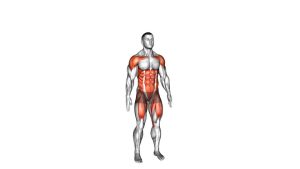
This exercise works best when the squat stays steady and the twist comes mainly from the torso. Because the movement is faster than a basic squat, control matters more than depth. Therefore, keep your knees tracking outward, your chest lifted, and your core braced as you rotate. Although the name includes “plyo,” the visible version does not show a clear jump; instead, it uses a quick, athletic rhythm while the feet remain grounded.
Quick Overview
| Body Part | Plyometrics |
|---|---|
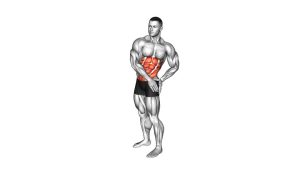
| Primary Muscle | Quadriceps, glutes, and obliques |
| Secondary Muscle | Adductors, hamstrings, calves, hip stabilizers, and deep core muscles |
| Equipment | None |
| Difficulty | Beginner to intermediate, depending on speed and squat depth |
Sets & Reps (By Goal)
- Technique practice: 2–3 sets × 8–10 twists per side with slow control
- Core and leg endurance: 3–4 sets × 12–16 twists per side
- Cardio finisher: 3–5 rounds × 20–30 seconds with 30–45 seconds rest
- Warm-up activation: 1–2 sets × 10 controlled twists per side
Progression rule: First improve balance and knee control. Then increase speed, time, or total reps only when your squat position stays stable.
Setup / Starting Position
- Stand wide: Place your feet wider than hip-width, with toes slightly turned outward.
- Set your hands: Place your hands behind your head and keep your elbows open.
- Brace your core: Keep your ribs controlled and your torso tall before lowering.
- Lower into a half squat: Bend the knees and sit the hips slightly back without dropping too deep.
- Keep your feet planted: Maintain full foot contact and avoid bouncing onto the toes.
Tip: A wider stance gives you more room to rotate while keeping your knees aligned over your toes.
Execution (Step-by-Step)
- Start tall: Stand with your hands behind your head and your feet set wide.
- Drop into the half squat: Bend your knees and lower until your thighs are partially bent, not fully parallel.
- Rotate to one side: Turn your torso and elbows together while keeping your hips and feet mostly stable.
- Return to center: Bring your chest back to the middle without standing fully upright.
- Rotate to the opposite side: Twist through the torso again while maintaining the same squat depth.
- Continue alternating: Move side to side with a steady rhythm while keeping your knees controlled.
- Finish with control: Return to center, then stand up smoothly when the set is complete.
Pro Tips & Common Mistakes
- Keep the squat shallow and strong: A half squat helps you rotate without losing balance.
- Twist from the torso: Let the shoulders and rib cage rotate, but avoid yanking with the neck.
- Control the knees: Keep both knees tracking in the same direction as the toes.
- Avoid excessive bouncing: Stay athletic, but do not turn the exercise into an uncontrolled hop.
- Do not round the back: Keep the chest lifted as you rotate from side to side.
- Use your core to brake the motion: Each return to center should feel controlled, not loose.
- Reduce speed if needed: Better control creates better results and lowers injury risk.
FAQ
What muscles does the Half Plyo Squat Twist work?
The exercise mainly works the quadriceps, glutes, and obliques. It also involves the adductors, hamstrings, calves, hip stabilizers, and deep core muscles because the body must hold a squat while rotating.
Is the Half Plyo Squat Twist a leg exercise or a core exercise?
It is both. The half squat challenges the legs and glutes, while the alternating twist trains the obliques and rotational core control. As a result, it works well as a lower-body cardio drill or a core-focused warm-up movement.
Should I jump during this exercise?
In the uploaded video, no clear jump is visible. The feet stay planted while the torso rotates. Therefore, start with the grounded version first. Once you control the pattern well, you can use a faster rhythm if it stays safe and smooth.
How deep should the squat be?
Use a comfortable half squat. You do not need to squat deeply. Instead, choose a depth where your knees stay aligned, your heels stay down, and your torso can rotate without lower-back strain.
Why do my knees move inward during the twist?
Your knees may move inward if you rotate too fast, squat too deep, or lose foot pressure. Slow down, widen your stance slightly, and push the knees gently outward in line with the toes.
Recommended Equipment (Optional)
- Exercise Mat — useful for warm-ups, mobility work, and floor-based core training
- Mini Resistance Bands — helpful for glute activation before squat-based movements
- Supportive Training Shoes — improves grip and stability during fast bodyweight drills
- Interval Timer — ideal for timed cardio rounds and circuit workouts
- Foam Roller — useful for post-workout quad, glute, and hip mobility recovery
Tip: Equipment is optional for this exercise. However, shoes with good traction and a clear interval timer can make the movement safer and easier to program.