BOSU Ball Squat: Form, Benefits, Sets, Tips & FAQ
Learn the BOSU Ball Squat for leg strength, balance, and core stability. Includes setup, execution, sets, mistakes, FAQs, and gear.
BOSU Ball Squat
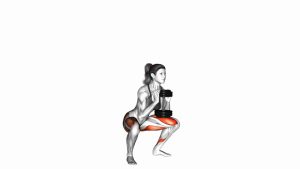
This exercise is best used for balance, coordination, proprioception, and controlled leg strength. Because the BOSU ball creates an unstable surface, every rep requires small corrections from the ankles, knees, hips, and core. Move slowly, keep your weight centered, and avoid bouncing at the bottom.
Quick Overview
| Body Part | Legs |
|---|---|
| Primary Muscle | Quadriceps |
| Secondary Muscle | Glutes, hamstrings, calves, hip stabilizers, ankle stabilizers, and core |
| Equipment | BOSU ball or balance trainer |
| Difficulty | Intermediate because of the unstable surface and balance demand |
Sets & Reps (By Goal)
- Balance control: 2–3 sets × 6–10 slow reps
- Lower-body endurance: 2–4 sets × 10–15 reps
- Warm-up activation: 1–2 sets × 8–12 controlled reps
- Functional stability training: 3 sets × 8–12 reps with a smooth tempo
Progression rule: Improve control before increasing reps. Do not add external weight until you can perform every rep without wobbling, knee collapse, or rushing.
Setup / Starting Position
- Place the BOSU ball on a flat surface: Make sure it does not slide before stepping on.
- Step onto the BOSU carefully: Position your feet about shoulder-width apart.
- Find your balance first: Stand tall and allow the ankles to settle before squatting.
- Extend the arms forward: Use your arms as a counterbalance to help control your center of mass.
- Brace lightly: Keep the ribs down, chest open, and core active without holding your breath.
Tip: Perform the first few reps near a wall, rack, or stable support if you are still learning the balance requirement.
Execution (Step-by-Step)
- Start tall: Keep your feet planted, arms forward, and eyes focused ahead.
- Begin the descent: Push the hips slightly back while bending the knees under control.
- Lower slowly: Descend until you reach a comfortable squat depth without losing balance.
- Keep the knees controlled: Let the knees track in line with the toes and avoid letting them cave inward.
- Pause briefly: Hold the bottom position for a moment while staying centered over the BOSU.
- Drive upward: Press through the feet and extend the knees and hips together.
- Finish balanced: Return to standing without snapping the knees or leaning backward.
Pro Tips & Common Mistakes
- Control the tempo: A slow squat is safer and more effective than a fast, unstable rep.
- Keep the heels planted: Avoid rolling onto the toes or shifting too far forward.
- Do not chase depth: Squat only as low as you can while staying balanced.
- Avoid knee collapse: Keep the knees aligned with the toes during the descent and ascent.
- Use the arms for balance: Keeping the arms forward helps counterbalance the hips.
- Do not add weight too early: Master bodyweight control before using dumbbells or kettlebells.
- Stay centered: Think about keeping your weight over the middle of both feet.
FAQ
What muscles does the BOSU Ball Squat work?
The BOSU Ball Squat mainly works the quadriceps, while also training the glutes, hamstrings, calves, core, ankles, and hip stabilizers. The unstable surface increases the balance and control demand.
Is the BOSU Ball Squat good for beginners?
It is better for people who already have a solid bodyweight squat. Beginners should first master squats on the floor, then progress to supported BOSU squats before performing full reps without assistance.
Should I use the flat side or dome side of the BOSU?
Both versions are possible, but they feel different. The version shown uses the BOSU as an unstable platform. Start with the safer and more controlled setup before trying harder balance variations.
How deep should I squat on a BOSU ball?
Squat only as deep as you can while keeping the feet planted, knees aligned, and torso controlled. A clean half squat is better than a deep rep with poor balance.
Can I add dumbbells to BOSU Ball Squats?
Yes, but only after you can perform bodyweight reps with excellent control. If you add load too soon, the exercise becomes riskier and less useful for balance training.
Recommended Equipment
- BOSU Ball Balance Trainer — the main tool for performing BOSU squats and balance drills
- Non-Slip Exercise Mat — helps create a safer training area under or around the BOSU
- Mini Resistance Bands — useful for glute activation and knee-tracking drills
- Adjustable Dumbbells — optional progression after mastering bodyweight balance
- Stable Training Shoes — helps improve foot support and control during balance-based leg training
Tip: For this exercise, equipment quality matters. Use a stable BOSU-style trainer and avoid slippery floors.