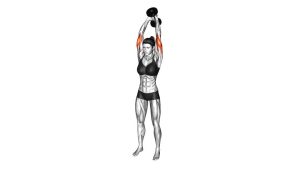
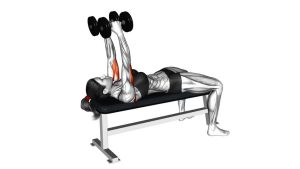
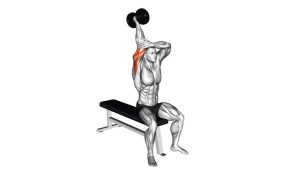
Cable High Triceps Extension: Proper Form, Sets, Tips & FAQ
Learn the Cable High Triceps Extension for bigger, stronger triceps with constant cable tension. Includes proper setup, step-by-step form, sets by goal, common mistakes, FAQ, and recommended equipment.
Cable High Triceps Extension
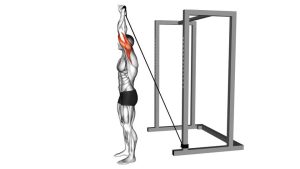
This exercise works best when performed with a controlled tempo and a full but comfortable range of motion. The goal is to create a deep stretch behind the head, then extend the elbows until the arms are nearly straight without turning the movement into a shoulder press. Done correctly, you should feel strong tension in the back of the upper arms, not strain in the elbows, neck, or lower back.
Quick Overview
| Body Part | Triceps |
|---|---|
| Primary Muscle | Triceps brachii (long head emphasis) |
| Secondary Muscle | Lateral head, medial head, anterior delts and core stabilizers (supporting) |
| Equipment | Cable machine with rope or similar cable attachment |
| Difficulty | Intermediate |
Sets & Reps (By Goal)
- Muscle growth: 3–4 sets × 8–15 reps with 45–75 seconds of rest
- Strength-focused accessory work: 3–5 sets × 6–10 reps with 75–120 seconds of rest
- Technique and joint-friendly pump work: 2–3 sets × 12–20 reps with controlled tempo
- Finisher after presses or pushdowns: 2–3 sets × 10–15 reps with short rests and strict form
Progression rule: Add reps before adding load. Only increase the weight when you can keep the elbows steady, reach a deep stretch, and finish each rep without swinging or arching hard through the spine.
Setup / Starting Position
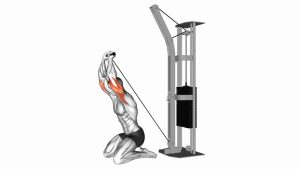
- Set the pulley high: Attach a rope or suitable cable handle to a high pulley.
- Grab the attachment securely: Step into position so the cable lines up behind or above you for an overhead path.
- Raise the arms overhead: Bring the hands behind the head with the elbows bent and pointing mostly forward.
- Set your stance: Take a split stance or shoulder-width stance for balance.
- Brace the torso: Keep the ribs down, core engaged, and avoid excessive low-back arching.
- Tuck the elbows in: The upper arms should stay relatively fixed throughout the set.
Tip: A slight forward lean is fine if it helps you line up the cable path, but your torso should stay stable from rep to rep.
Execution (Step-by-Step)
- Start from the stretched position: Let the elbows bend so the attachment lowers behind the head under control.
- Lock in the upper arms: Keep the elbows pointed in and avoid letting them flare wide.
- Extend the elbows: Press the handle upward and forward by straightening the arms.
- Squeeze at the top: Reach near full extension and contract the triceps hard without snapping the elbows.
- Lower slowly: Return to the stretched position with control, resisting the cable the whole way down.
- Repeat smoothly: Maintain the same elbow path, tempo, and torso position on every rep.
Pro Tips & Common Mistakes
- Keep the elbows tucked: Small movement at the shoulder is normal, but the elbows should not drift wide on every rep.
- Use the full stretch: The long head responds well when you control the bottom and do not rush out of it.
- Do not overload too early: Heavy weight often turns this into a sloppy shoulder-and-back movement.
- Brace the core: Prevent excessive lumbar extension by keeping the ribs stacked over the pelvis.
- Control the eccentric: Lowering slowly improves tension, technique, and elbow comfort.
- Choose the right attachment: A rope often allows a more natural wrist path and better lockout comfort.
- Avoid partial reps: Cutting the range short usually removes the best stretch advantage of the exercise.
- Do not jam the lockout: Finish the rep by squeezing the triceps, not by snapping the elbows aggressively.
FAQ
What part of the triceps does the Cable High Triceps Extension emphasize most?
It strongly emphasizes the long head of the triceps because the arms are overhead, placing that portion of the muscle in a stretched position.
Is this better than a standard cable pushdown?
It is not necessarily better, but it is different. Pushdowns are great for general triceps work, while overhead cable extensions usually provide a bigger stretch and often hit the long head more directly.
Should I use a rope or a straight bar?
Most lifters prefer a rope attachment because it allows a more natural wrist position and a smoother finish at lockout. A straight bar can still work well if it feels comfortable on your joints.
How heavy should I go on this exercise?
Use a load that lets you control the stretch and extension without swinging. For most people, moderate weight with strict form works better than chasing very heavy reps.
Can beginners do this exercise?
Yes, but beginners should start light and learn how to keep the elbows stable, the core braced, and the tempo controlled before increasing resistance.
Recommended Equipment
- Tricep Rope Cable Attachment — the most practical attachment for comfortable overhead triceps extensions
- Heavy-Duty Tricep Rope — useful if you want a durable rope with secure end caps and better grip
- Single-Arm Cable Handle / Single Tricep Rope — great for unilateral variations and fixing left-to-right imbalances
- Resistance Bands Set — a useful backup for triceps pump work and home-based accessory sessions
- Adjustable Weight Bench — helpful for broader upper-body programming that complements triceps training
Tip: For this specific exercise, prioritize a quality rope attachment first. It usually gives the best blend of wrist comfort, cable path freedom, and strong end-range contraction.