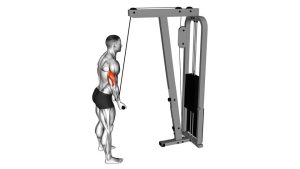
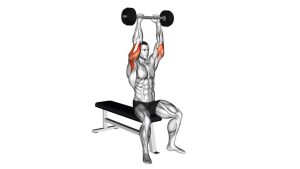
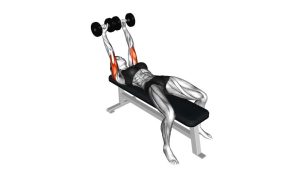
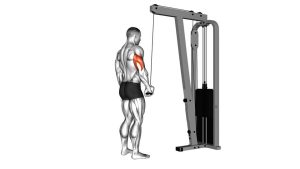
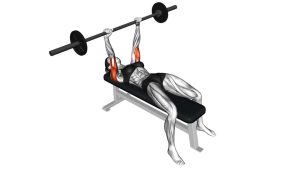
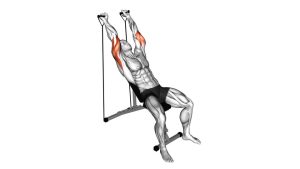
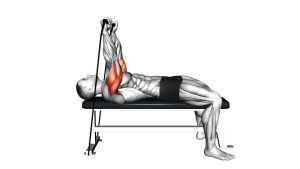
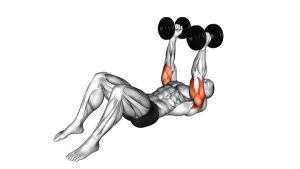
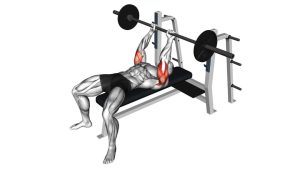
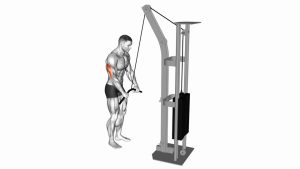
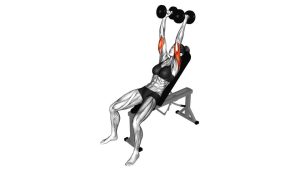
Cable Incline Skull Crusher: Proper Form, Triceps Stretch, Sets, Tips & FAQ
Learn how to perform the Cable Incline Skull Crusher with proper form to target the triceps, especially the long head. Includes setup, execution, sets by goal, common mistakes, FAQs, and recommended equipment.
Cable Incline Skull Crusher
This exercise works best when the load is controlled and the elbows stay fixed in space. A clean rep starts with the arms extended above and slightly behind the head, lowers the attachment toward the forehead or behind the head, then finishes by extending the elbows until the triceps squeeze hard at the top. The incline bench supports the torso, which helps reduce momentum and makes it easier to focus on elbow extension.
Quick Overview
| Body Part | Triceps |
|---|---|
| Primary Muscle | Triceps brachii, especially the long head |
| Secondary Muscle | Lateral head and medial head of the triceps, shoulder stabilizers, core stabilizers |
| Equipment | Cable machine, incline bench, rope attachment or EZ-bar cable attachment |
| Difficulty | Intermediate because it requires shoulder stability, elbow control, and cable setup accuracy |
Sets & Reps (By Goal)
- Muscle growth: 3–4 sets × 8–12 reps with a controlled 2–3 second lowering phase.
- Triceps pump / finisher: 2–3 sets × 12–20 reps with constant tension and short rest.
- Strength-focused accessory work: 3–5 sets × 6–10 reps using strict form and full range.
- Long-head triceps emphasis: 3–4 sets × 10–15 reps, allowing a deep stretch behind the head.
- Technique practice: 2–3 sets × 10–12 reps with light weight and a slow tempo.
Progression rule: Add reps first, then increase cable weight gradually. Maintain the same elbow path and stretch depth before moving heavier.
Setup / Starting Position
- Set the bench: Place an incline bench at roughly 30–45 degrees facing away from the cable stack.
- Adjust the pulley: Position the cable behind the bench so the resistance pulls from behind your head.
- Choose the attachment: Use a rope for a natural wrist angle or an EZ-bar attachment for a more fixed grip.
- Sit or lie back: Keep your back supported by the bench, feet planted, ribs controlled, and shoulders stable.
- Start extended: Hold the attachment above and slightly behind your head with elbows pointing forward.
- Lock in the upper arms: Keep the upper arms mostly still so the movement happens through the elbows.
Setup tip: Move the bench far enough from the cable stack to create tension even when your elbows are bent at the bottom.
Execution (Step-by-Step)
- Brace lightly: Keep your torso still against the bench and avoid arching your lower back.
- Begin the descent: Bend your elbows slowly and let the attachment travel toward your forehead or slightly behind your head.
- Control the stretch: Lower until you feel a strong but comfortable stretch through the back of the upper arms.
- Pause briefly: Hold the bottom position for a moment without bouncing or letting the elbows flare wide.
- Extend the elbows: Drive the attachment upward by contracting the triceps, not by moving the shoulders.
- Squeeze at the top: Finish with near-full elbow extension while avoiding aggressive elbow hyperextension.
- Repeat smoothly: Keep cable tension constant and maintain the same elbow position every rep.
Pro Tips & Common Mistakes
- Keep the elbows narrow: Slight natural flare is fine, but wide elbows reduce triceps isolation.
- Control the bottom: The deepest stretch is valuable only if you can reach it without bouncing.
- Avoid shoulder pressing: Do not let the upper arms swing forward to move the weight.
- Use full but safe extension: Straighten the elbows enough to contract the triceps without snapping into lockout.
- Keep wrists neutral: Bent wrists can shift stress away from the triceps and into the joints.
- Choose a moderate load: Too much weight usually causes elbow flare, short range, and shoulder compensation.
- Use the cable advantage: Let the cable provide constant tension instead of rushing through the easiest part of the rep.
- Match attachment to comfort: A rope may feel better for the wrists, while an EZ-bar can make the path more consistent.
FAQ
What muscle does the Cable Incline Skull Crusher target most?
It primarily targets the triceps brachii, with special emphasis on the long head. The incline and overhead arm position place the long head in a stretched position, making it a strong choice for complete triceps development.
Is the Cable Incline Skull Crusher better than dumbbell skull crushers?
It is not automatically better, but it offers a different advantage. The cable provides more consistent tension through the full range of motion, while dumbbells often feel hardest in only part of the movement.
Should I lower the cable attachment to my forehead or behind my head?
Both can work. Lowering slightly behind the head usually creates a stronger triceps stretch, but the range should remain controlled and pain-free. Avoid forcing extra depth if your elbows or shoulders feel irritated.
Why do my elbows hurt during this exercise?
Elbow discomfort often comes from using too much weight, lowering too fast, flaring the elbows, or locking out aggressively. Reduce the load, slow down the eccentric phase, and use a rope attachment if a fixed bar bothers your joints.
Can beginners do the Cable Incline Skull Crusher?
Beginners can use it if they already understand basic cable triceps extensions. However, the incline setup and overhead arm angle require more control, so lighter weight and slower reps are recommended at first.
Where should I place this exercise in my workout?
Use it after heavier pressing movements such as bench press, dips, or close-grip presses. It also works well near the end of an arm workout as a long-head triceps isolation movement.
Recommended Equipment
- Cable Rope Triceps Attachment — allows a comfortable neutral grip and smooth triceps extension path.
- EZ Curl Cable Attachment — provides a fixed angled grip for consistent skull crusher mechanics.
- Adjustable Incline Weight Bench — supports the torso and lets you set the correct incline angle.
- Weightlifting Wrist Wraps — useful if you need extra wrist support during cable triceps work.
- Home Cable Pulley System — a practical option for performing cable extensions in a home gym setup.
Equipment tip: Prioritize a smooth cable setup and an attachment that keeps your wrists comfortable. Better control usually builds better triceps than heavier weight with poor elbow mechanics.