Resistance Band Triceps Pushdown: Proper Form, Sets, Tips & FAQ
Learn how to do the Resistance Band Triceps Pushdown with proper form for stronger, more defined upper arms. Includes setup, step-by-step execution, sets by goal, common mistakes, FAQs, and recommended equipment.
Resistance Band Triceps Pushdown
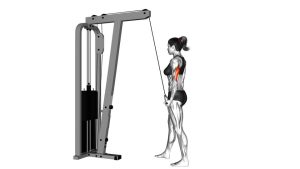
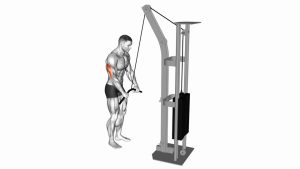
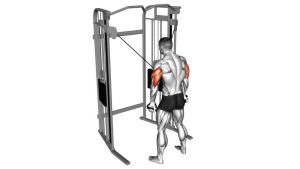
This exercise works best when you treat it like a strict isolation movement. Your upper arms should stay mostly fixed while your forearms move through elbow extension. At the bottom, focus on a hard triceps squeeze without locking out aggressively or letting the shoulders roll forward. Because band tension increases as the band stretches, the bottom half of each rep often feels the hardest.
Quick Overview
| Body Part | Triceps |
|---|---|
| Primary Muscle | Triceps brachii |
| Secondary Muscle | Forearms, anterior delts, core stabilizers |
| Equipment | Resistance band, overhead anchor point, optional handles or door anchor |
| Difficulty | Beginner to Intermediate |
Sets & Reps (By Goal)
- Muscle growth: 3–5 sets × 10–20 reps with 45–75 seconds rest
- Endurance / pump work: 2–4 sets × 15–25 reps with 30–60 seconds rest
- General toning / home fitness: 2–4 sets × 12–18 reps with controlled tempo
- Accessory after pressing workouts: 2–3 sets × 12–15 reps
Progression rule: First increase total reps with clean form, then move to a thicker band or step farther from the anchor to increase tension.
Setup / Starting Position
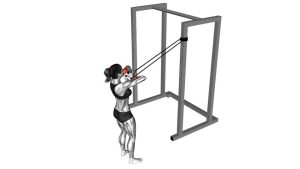
- Anchor the band high: Secure the resistance band above head level using a sturdy rack, pull-up bar, or door anchor.
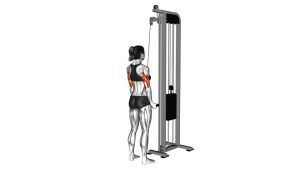
- Face the anchor: Stand tall with feet about hip-width apart and grab the band ends or handles.
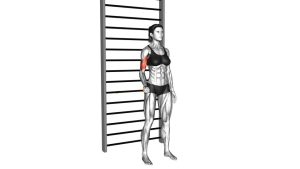
- Tuck the elbows: Bring your elbows close to your sides and bend them so your forearms point upward.
- Set posture: Keep your chest up, core braced, and shoulders down and back.
- Find tension: Step back slightly until the band has light tension in the start position.
Tip: A slight forward lean is okay, but avoid turning the movement into a full-body press using momentum.
Execution (Step-by-Step)
- Start with elbows bent: Keep your upper arms still and wrists neutral.
- Press downward: Extend your elbows and drive the hands down until your arms are nearly straight.
- Squeeze the triceps: Pause briefly at the bottom and contract the back of the upper arms.
- Control the return: Slowly let the band rise as you bend the elbows back to the start.
- Repeat without swinging: Keep your torso stable and avoid letting the elbows drift forward.
Pro Tips & Common Mistakes
- Keep elbows glued near your sides: This keeps the tension on the triceps instead of the shoulders.
- Use full but controlled range: Straighten the arms hard at the bottom, then return under control.
- Do not rush the eccentric: The return phase helps build tension and control.
- Avoid torso rocking: Swinging to move the band reduces isolation.
- Do not flare the elbows: Flaring makes the movement less strict and less efficient.
- Pick the right band strength: Too much resistance usually causes shortened reps and poor posture.
- Keep wrists neutral: Don’t excessively curl or bend the wrists during the pushdown.
FAQ
What muscles does the resistance band triceps pushdown work?
It mainly targets the triceps brachii, especially as you fully extend the elbows. The forearms, shoulders, and core also help stabilize the movement.
Is this as good as a cable triceps pushdown?
It can be very effective, especially for home training. The main difference is that band resistance increases more at the bottom, while cable tension tends to feel more even through the range.
Should I lock out at the bottom?
You should reach near-full elbow extension and squeeze the triceps, but avoid jamming the elbows aggressively into lockout.
Can beginners use this exercise?
Yes. It is beginner-friendly as long as you use a manageable band and a secure anchor. Start light and focus on elbow control first.
Why do I feel this more in my shoulders than triceps?
That usually happens when the elbows drift forward, the band is too heavy, or you use momentum. Tuck the elbows, slow the rep down, and reduce resistance if needed.
Recommended Equipment
- Resistance Bands with Handles — ideal for pushdowns, curls, presses, and full upper-body home workouts
- Door Anchor for Resistance Bands — creates a convenient high anchor point for triceps pushdowns at home
- Stackable Resistance Bands Set — lets you adjust total resistance as you get stronger
- Exercise Band Handles — useful if your current bands do not have comfortable grips
- Fitness Exercise Mat — optional for home training comfort and better footing on slippery floors
Tip: Choose bands that let you reach full extension with control. If you cannot pause at the bottom without body swing, the setup is too heavy.