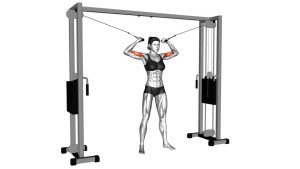
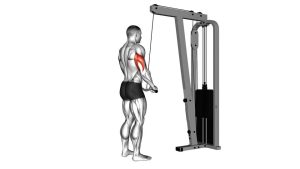
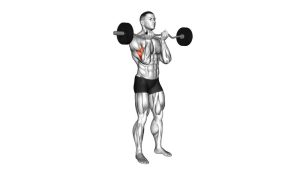
Cable One-Arm Inner Biceps Curl: Form, Sets, Tips & FAQ
Learn the Cable One-Arm Inner Biceps Curl to target the inner biceps with constant cable tension. Includes proper form, setup, execution steps, sets by goal, mistakes to avoid, FAQs, and recommended equipment.
Cable One-Arm Inner Biceps Curl
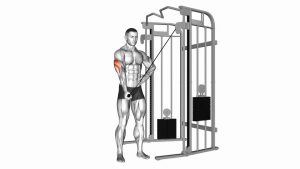
This variation works best when you treat it like a precision curl instead of a heavy ego lift. The cable’s resistance encourages a smooth rep path and a strong contraction, while the single-arm setup lets you focus on keeping the working side honest. You should feel the biceps doing most of the work, with minimal help from the shoulder, traps, or torso.
Quick Overview
| Body Part | Biceps |
|---|---|
| Primary Muscle | Biceps brachii (short head emphasis) |
| Secondary Muscle | Brachialis, brachioradialis, forearm flexors |
| Equipment | Cable machine with single handle attachment |
| Difficulty | Beginner to Intermediate |
Sets & Reps (By Goal)
- Muscle growth: 3–4 sets × 8–12 reps per arm, 45–75 sec rest
- Arm definition / pump: 2–4 sets × 12–15 reps per arm, 30–60 sec rest
- Technique / mind-muscle connection: 2–3 sets × 10–12 slow reps per arm, light-to-moderate load
- Finisher after heavier curls: 2–3 sets × 12–15 reps per arm with strict form and strong top squeeze
Progression rule: Increase reps first, then add small weight increments only when you can keep the elbow stable, the wrist neutral, and the tempo controlled from start to finish.
Setup / Starting Position
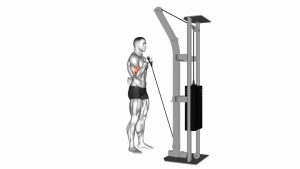
- Attach a single handle: Set the cable at about chest height or slightly below, depending on your machine and limb length.
- Stand sideways to the machine: Position yourself so the working arm is farther from the cable stack and can move across the body under tension.
- Take a supinated grip: Hold the handle with your palm facing up and your wrist kept straight.
- Set your posture: Stand tall with your chest up, core braced, and feet about shoulder-width apart for balance.
- Raise and fix the elbow: Keep the working elbow slightly lifted and stable so the biceps stay loaded without the shoulder taking over.
Tip: Step out just enough to create cable tension at the start, but not so far that the machine pulls your shoulder out of position.
Execution (Step-by-Step)
- Start under tension: Begin with the working arm extended but not hyperlocked, keeping the biceps lengthened and ready to contract.
- Curl with the biceps: Pull the handle inward by bending the elbow and bringing the hand toward the shoulder or upper chest.
- Keep the elbow position honest: Do not let it swing wildly forward, drop downward, or flare into a completely different path.
- Squeeze at the top: Pause briefly in the contracted position and focus on a hard biceps squeeze without shrugging the shoulder.
- Lower slowly: Return the handle under control until the arm is nearly straight again while maintaining cable tension.
- Repeat smoothly: Perform all reps on one side, then switch arms and match the same quality and tempo.
Pro Tips & Common Mistakes
- Use a full squeeze: The top contraction is one of the biggest benefits of this exercise, so do not rush through it.
- Keep your wrist neutral: Excessive wrist curling reduces clean biceps loading and may irritate the forearm.
- Don’t swing the body: Torso lean and rotation turn a strict curl into a sloppy full-body movement.
- Control the eccentric: The lowering phase is where cable curls shine, so resist the pull instead of letting the stack snap back.
- Avoid shrugging: The upper traps should stay relaxed while the biceps perform the curl.
- Train both sides evenly: Because it is unilateral, this movement is excellent for spotting and correcting left-right strength differences.
- Don’t overload too early: This exercise is most effective with controlled tension, not with the heaviest handle you can move.
FAQ
What part of the biceps does the Cable One-Arm Inner Biceps Curl target?
It mainly emphasizes the short head of the biceps, often described as the inner biceps. The exact feel depends on your elbow position, grip, and how strictly you keep tension on the muscle.
Is this better than a dumbbell curl?
Not necessarily better in every situation, but different. A cable provides more consistent tension through the rep, while dumbbells are simple and versatile. Both can be useful in a balanced arm program.
Should I do this exercise one arm at a time?
Yes. This variation is designed as a unilateral curl, which helps you focus on one side at a time, improve symmetry, and reduce momentum.
How heavy should I go?
Use a load that lets you keep a strict curl path, controlled lowering phase, and strong top contraction. For most lifters, this works best with moderate weight and clean reps rather than maximal loading.
Where should I feel this exercise?
You should mostly feel it in the biceps of the working arm, especially during the squeeze at the top and the slow return. If you mostly feel the front shoulder or wrist, adjust your setup and reduce the weight.
Recommended Equipment
- Single D-Handle Cable Attachment — the essential handle for comfortable single-arm cable curls and other unilateral exercises
- Cable Machine Attachments Set — useful if you want multiple grip options for biceps, triceps, and back training
- Lifting Straps — optional support if grip fatigue limits your focus during higher-volume cable arm work
- Elbow Sleeves — may provide warmth and support during arm sessions if your elbows feel cranky
- Adjustable Weight Bench — useful for pairing this exercise with preacher curls, incline curls, and other arm-building movements
Tip: For this exercise, the best equipment upgrade is usually a comfortable single-handle attachment that lets your wrist and elbow stay in a natural position.