Cable Rope Hammer Preacher Curl: Form, Muscles Worked, Sets, Tips & FAQ
Learn the Cable Rope Hammer Preacher Curl for strict arm isolation, better brachialis development, and constant cable tension. Includes setup, step-by-step form, sets by goal, mistakes, FAQs, and recommended equipment.
Cable Rope Hammer Preacher Curl
This variation works best when you treat it like a precision movement instead of a heavy cheat curl. The preacher pad limits momentum, the rope lets your wrists stay in a strong neutral position, and the cable keeps tension on the arms from bottom to top. It is especially useful for lifters who want cleaner elbow flexion, better arm detail, and more brachialis-focused work without swinging the shoulders.
Quick Overview
| Body Part | Biceps |
|---|---|
| Primary Muscle | Brachialis |
| Secondary Muscle | Biceps brachii, brachioradialis, forearm flexors |
| Equipment | Low cable machine, rope attachment, preacher bench |
| Difficulty | Beginner to Intermediate |
Sets & Reps (By Goal)
- Muscle growth: 3-4 sets × 8-12 reps with 60-90 sec rest
- Strict isolation / mind-muscle focus: 2-4 sets × 10-15 reps with slow eccentrics
- Strength-support arm work: 3-5 sets × 6-8 reps with clean form and no body English
- Finisher / pump work: 2-3 sets × 12-20 reps with moderate load and continuous tension
Progression rule: Add reps before adding load. Once you can hit the top of your rep range with the same clean tempo and no shoulder drift, increase the weight slightly.
Setup / Starting Position
- Set the cable low: Attach a rope handle to a low pulley so the line of pull matches the preacher bench angle.
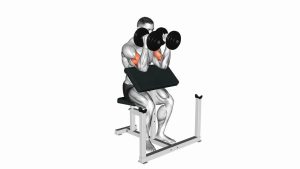
- Position your chest and arms: Sit or brace into the preacher bench with the upper arms fully supported on the pad.
- Take a neutral grip: Grab the rope with palms facing each other and wrists stacked naturally.
- Align the elbows: Keep both elbows planted in a comfortable, stable position near the top half of the pad.
- Start near full extension: Lower the rope until the arms are almost straight, but do not relax completely into the joints.
Tip: Before your first rep, pull the slack out of the rope so the arms are already under light tension.
Execution (Step-by-Step)
- Brace and stay still: Keep the chest connected to the pad and the shoulders quiet.
- Curl the rope upward: Flex the elbows and bring the rope toward your upper chest or shoulders without lifting the elbows off the pad.
- Maintain the hammer grip: Keep palms facing each other and let the rope move naturally without bending the wrists back.
- Squeeze at the top: Pause briefly when your forearms are fully flexed and the biceps and brachialis are contracted.
- Lower with control: Extend the elbows slowly back to the start, keeping tension on the cable the whole time.
- Repeat smoothly: Use the same path every rep and avoid bouncing at the bottom.
Pro Tips & Common Mistakes
- Keep the elbows pinned: The preacher pad should lock the upper arms in place so the curl stays strict.
- Lead with elbow flexion, not shoulder movement: Don’t let the shoulders drift forward to finish the rep.
- Use a full working range: Get a deep stretch at the bottom without jamming into hard lockout.
- Control the eccentric: Lowering too fast wastes one of the biggest benefits of cable tension.
- Don’t over-curl the wrists: Keep the rope secure, but avoid turning the movement into a forearm curl.
- Slight rope separation is fine: At the top, letting the rope ends separate naturally can improve the squeeze.
- Choose load carefully: Heavy weight often causes shortened reps, shoulder compensation, and elbow irritation.
FAQ
What muscles does the Cable Rope Hammer Preacher Curl work most?
The main emphasis is on the brachialis, with strong assistance from the biceps brachii and brachioradialis. The neutral hammer grip helps shift more work toward the upper arm thickness muscles compared with a fully supinated curl.
Is this better than a regular preacher curl with a straight bar or EZ bar?
It is not automatically better, but it is different. The rope grip is often more wrist-friendly, keeps tension very consistent, and can feel better for lifters who want more brachialis and brachioradialis emphasis.
Should I fully lock out at the bottom?
You can get very close to full extension, but avoid dropping into a hard lockout. Keep a small amount of muscular control at the bottom so the elbows stay comfortable and the cable tension stays active.
How heavy should I go on this exercise?
Use a load that lets you keep the upper arms fixed on the pad and the lowering phase controlled. If the rope flies back down or your elbows shift position, reduce the weight.
Where should I place this in my workout?
It works well after heavier pulling work or as a main biceps accessory in an arm session. Many lifters place it in the middle or later part of the workout when they want stricter isolation and a strong contraction.
Recommended Equipment
- Rope Cable Attachment — the core attachment for neutral-grip cable curls and hammer-style arm work
- Preacher Curl Pad — useful for stricter arm support if you do not have a full preacher bench
- Preacher Curl Attachment — a bench add-on option for home gym setups that want better biceps isolation
- Arm Blaster — helps keep the elbows fixed and reduces torso cheating on other curl variations
- Resistance Bands Set — useful for warm-ups, elbow prep, and extra arm volume when cable access is limited
Tip: If you train arms frequently, prioritize a comfortable rope handle and stable preacher support before chasing heavier loads.