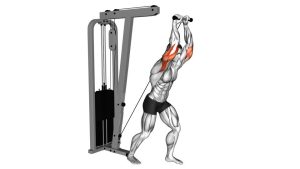
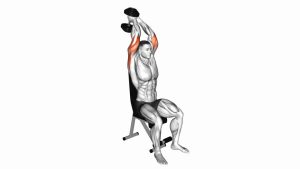
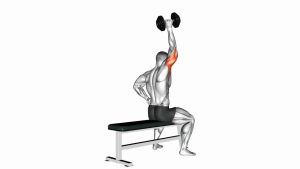
Cable Rope High Pulley Overhead Triceps Extension: Form, Sets, Tips & FAQ
Learn the Cable Rope High Pulley Overhead Triceps Extension for bigger, stronger triceps with extra long-head emphasis. Step-by-step form, sets by goal, common mistakes, FAQs, and recommended equipment.
Cable Rope High Pulley Overhead Triceps Extension
This exercise works best when you treat it like a strict elbow-extension movement rather than a full-body effort. A good rep creates a deep but comfortable stretch behind the head, followed by a smooth extension as the rope separates slightly at the top. You should feel the triceps doing most of the work while the core stays braced and the ribcage stays down. If the lower back starts arching hard or the elbows drift too much, the load is probably too heavy.
Quick Overview
| Body Part | Triceps |
|---|---|
| Primary Muscle | Triceps brachii (long head emphasis) |
| Secondary Muscle | Lateral head and medial head of the triceps, core stabilizers, shoulders for stabilization |
| Equipment | High pulley cable machine with rope attachment |
| Difficulty | Beginner to Intermediate |
Sets & Reps (By Goal)
- Muscle growth: 3-4 sets × 8-15 reps, 45-75 seconds rest
- Strength-focused accessory work: 3-5 sets × 6-10 reps, 75-120 seconds rest
- Technique and control: 2-3 sets × 10-15 reps with moderate load and slower tempo
- High-volume finisher: 2-3 sets × 12-20 reps with strict form and shorter rest
Progression rule: Add reps first while keeping the elbows stable and the tempo controlled. Increase the weight only when you can hit your target reps without leaning excessively or losing the stretched bottom position.
Setup / Starting Position
- Attach the rope to a high pulley and select a weight you can control through a full range of motion.
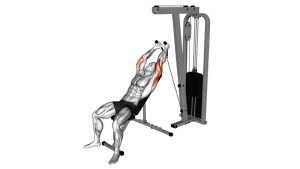
- Face away from the machine and bring the rope behind your head so the cable tracks from above and behind you.
- Take a staggered or stable split stance for balance, and brace your core to avoid leaning back excessively.
- Raise your elbows so your upper arms are beside your head, with the elbows bent and pointing generally upward.
- Keep your chest tall and ribs down so the movement comes from elbow extension, not spinal extension.
Tip: A small forward torso lean is normal, but you should still feel stacked and stable rather than pulled backward by the cable.
Execution (Step-by-Step)
- Start from the stretched position: Let the rope sit behind your head with your elbows bent and your triceps loaded under tension.
- Brace and lock in: Keep your core tight, upper arms mostly fixed, and shoulders stable.
- Extend the elbows: Push the rope upward and slightly forward until your arms are nearly straight.
- Separate the rope ends: At the top, allow the rope to split naturally to maximize triceps contraction.
- Squeeze briefly: Pause for a moment at lockout without hyperextending the elbows.
- Lower under control: Bend the elbows and guide the rope back behind your head slowly, keeping tension on the triceps.
- Repeat smoothly: Use a consistent tempo and avoid bouncing out of the bottom stretch.
Pro Tips & Common Mistakes
- Keep the elbows high: Letting them drop too much reduces tension on the target area and changes the line of pull.
- Do not rush the stretch: The bottom position is where a lot of the exercise’s value comes from, so control it.
- Use the rope correctly: Let the ends separate at the top instead of keeping the hands glued together.
- Do not overload too early: Too much weight usually causes torso swinging and elbow drift.
- Keep the core braced: Avoid turning the rep into a standing backbend.
- Move through the elbows: Your shoulders should stabilize, not dominate the exercise.
- Use full but comfortable range: A deep stretch is great, but not if it irritates the elbows or shoulders.
FAQ
What part of the triceps does this exercise emphasize most?
This variation strongly emphasizes the long head of the triceps because the arms are positioned overhead, placing that portion of the muscle under a greater stretch.
Should I keep my elbows completely fixed?
They should stay mostly fixed. A tiny amount of natural movement is fine, but large elbow drift usually means you are using too much weight or losing tension.
Is this better than a regular pushdown?
It is not automatically better, but it is different. Overhead extensions usually bias the long head more, while pushdowns can feel easier to stabilize and load. Many lifters benefit from using both.
Should I lock out hard at the top?
You should reach a strong contraction and near-full extension, but avoid snapping violently into lockout. Think controlled squeeze, not elbow jamming.
What if this bothers my shoulders or elbows?
Reduce the load, shorten the range slightly, improve your setup, or switch to a variation your joints tolerate better. If pain is sharp or persistent, stop and reassess before continuing.
Recommended Equipment
- Tricep Rope Cable Attachment — the key attachment for comfortable overhead extensions, pushdowns, face pulls, and other cable arm work
- Heavy-Duty Cable Machine Attachment — useful if you want a sturdier upgrade for higher-load triceps training on commercial or home cable systems
- Elbow Wraps for Weightlifting — optional support for lifters who want extra warmth and compression during heavier arm sessions
- Resistance Bands Set — great for warm-ups, triceps activation, and backup arm work when you do not have a cable station available
- Resistance Band Exercise Cards / Training Guide — useful for adding warm-up ideas, recovery drills, and extra arm-finisher variations to your routine
Tip: For most people, the best first purchase is a quality rope attachment. Good elbow support and bands are useful extras, but the attachment itself has the biggest direct impact on this movement.