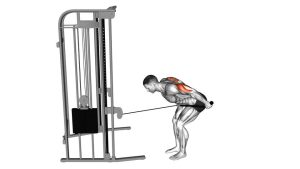
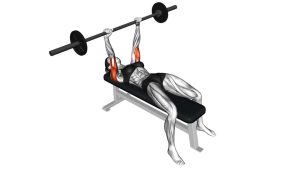
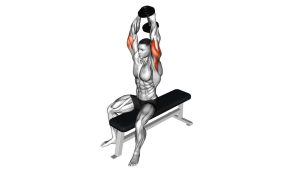
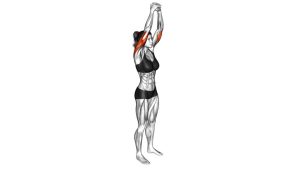
Cable Overhead Triceps Extension (Rope): Form, Sets, Muscles Worked & Tips
Learn the Cable Overhead Triceps Extension with a rope attachment for bigger, stronger triceps. Discover proper form, muscles worked, sets and reps by goal, mistakes to avoid, FAQs, and recommended equipment.
Cable Overhead Triceps Extension (Rope Attachment)
This exercise is ideal for lifters who want more complete triceps development, better lockout strength, and a joint-friendly cable option for arm training. The rope attachment allows a more natural wrist path and lets you slightly separate the hands at the finish for a stronger squeeze. Performed with control, it creates excellent tension through both the stretch and contraction.
Quick Overview
| Body Part | Triceps |
|---|---|
| Primary Muscle | Triceps brachii (long head emphasis) |
| Secondary Muscle | Lateral head and medial head of the triceps, core stabilizers, shoulders for support |
| Equipment | Cable machine, rope attachment |
| Difficulty | Beginner to Intermediate |
Sets & Reps (By Goal)
- Muscle growth: 3–4 sets × 8–15 reps with controlled tempo and full range of motion
- Strength-focused accessory work: 3–5 sets × 6–10 reps using stricter loading and longer rest
- Technique and mind-muscle connection: 2–3 sets × 12–20 reps with lighter weight and clean execution
- Finisher / pump work: 2–3 sets × 15–20 reps with short rest and continuous tension
Progression rule: Add reps first, then increase load in small steps. Only move up when you can keep the elbows stable, reach full stretch, and lock out without leaning or swinging.
Setup / Starting Position
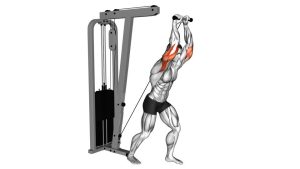
- Attach the rope: Set a rope attachment to a low cable pulley.
- Grab both rope ends: Use a neutral grip and turn away from the machine.
- Step out for tension: Bring the rope behind your head with elbows bent and pointing mostly forward/up.
- Set your stance: Stand in a split stance or shoulder-width stance for balance.
- Brace the torso: Keep ribs down, glutes lightly engaged, and avoid excessive lower-back arch.
- Start in the stretch: The rope should sit behind the head with the triceps loaded before each rep begins.
Tip: A staggered stance often makes it easier to stay balanced and keep tension directed into the triceps rather than the lower back.
Execution (Step-by-Step)
- Lock in your upper arms: Keep the elbows relatively fixed and pointed forward rather than flaring out wide.
- Extend the elbows: Press the rope upward and slightly forward until your arms are nearly straight overhead.
- Separate the rope slightly: At the top, let the hands move apart naturally to increase triceps contraction.
- Squeeze briefly: Pause for a short moment without hyperextending the elbows.
- Lower under control: Bend the elbows slowly and bring the rope back behind your head into a full stretch.
- Repeat smoothly: Keep the motion controlled, with no torso rocking or rushing through the eccentric.
Pro Tips & Common Mistakes
- Use a full stretch: The overhead position is valuable because it lengthens the long head of the triceps.
- Do not flare the elbows excessively: A little natural movement is fine, but wide elbows reduce isolation.
- Avoid lumbar overextension: Keep the core engaged so the lower back does not compensate.
- Control the eccentric: Lowering slowly improves tension and keeps the cable pulling where you want it.
- Do not chase too much weight: Heavy cheating usually turns this into a shoulder and torso movement.
- Let the rope separate naturally: This often improves the contraction compared with forcing the hands together.
- Keep wrists neutral: Do not excessively curl or bend the wrists during the extension.
FAQ
What part of the triceps does the cable overhead triceps extension target most?
This variation strongly emphasizes the long head of the triceps because the arms are positioned overhead, placing that portion of the muscle under more stretch than many standard pushdown variations.
Is the rope attachment better than a straight bar for overhead triceps extensions?
For many lifters, yes. The rope usually allows a more natural wrist and elbow path and makes it easier to separate the hands at the top for a stronger contraction. Some people also find it more comfortable on the elbows.
Should my elbows stay completely still?
They should stay mostly fixed, but a small amount of natural movement is normal. What matters is that the motion is driven by elbow extension rather than shoulder swinging or torso rocking.
How heavy should I go on this exercise?
Use a load that lets you maintain a full stretch, smooth lockout, and stable posture. If you have to lean, arch hard, or jerk the weight, it is too heavy for productive triceps isolation.
Can beginners use this exercise?
Yes. Beginners can use it effectively with light-to-moderate weight and strict control. It is often a great cable-based isolation option once the setup and posture are understood.
Recommended Equipment
- Tricep Rope Cable Attachment — the main attachment used for this exercise and the most direct equipment match
- Extra-Long Tricep Rope — gives more range of motion and can improve comfort for taller lifters or deeper extensions
- Cable Machine Attachment Set — useful if you want rope, straight-bar, and single-handle options for complete cable arm training
- Adjustable Workout Bench — useful for seated or supported arm work and for building a more complete home-gym setup
- Resistance Band Set — a simple backup option for triceps extensions when you do not have access to a cable stack
Tip: Prioritize a sturdy rope attachment first. After that, an adjustable bench and extra cable accessories can make your triceps training more versatile.