Cable Standing Crunch: Proper Form, Abs Tips, Sets & FAQ
Learn the cable standing crunch with rope attachment for stronger abs. Includes setup, step-by-step form, sets, mistakes, FAQs, and gear.
Cable Standing Crunch (With Rope Attachment)
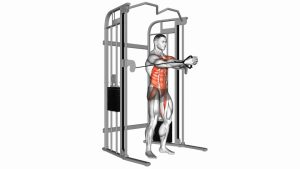
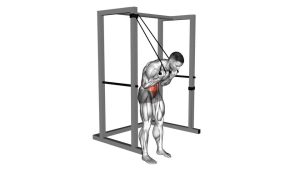
This exercise works best when the movement comes from the midsection rather than from the shoulders, elbows, or hips. First, set the cable high and hold the rope beside your head. Then, keep your lower body stable while your spine rounds forward under control. As a result, your abs create the crunching motion instead of your arms simply pulling the attachment down.
In the video, the movement shows a smooth standing crunch pattern. The lifter starts tall, keeps the rope near the head, flexes the torso forward, and returns slowly without losing cable tension. Therefore, the exercise becomes a clean abdominal isolation drill rather than a full-body pulling motion.
Quick Overview
| Body Part | Abs |
|---|---|
| Primary Muscle | Rectus abdominis |
| Secondary Muscle | Obliques, transverse abdominis, deep core stabilizers |
| Equipment | Cable machine and rope attachment |
| Difficulty | Beginner to Intermediate |
Sets & Reps (By Goal)
- Muscle growth: 3–4 sets of 10–15 reps with a controlled squeeze at the bottom.
- Core strength: 4–5 sets of 6–10 reps using heavier resistance while keeping strict form.
- Technique practice: 2–3 sets of 12–18 reps with light weight and slower tempo.
- Finisher: 2–3 sets of 15–25 reps after your main workout for high-tension ab work.
Progression rule: Add weight only after you can keep the hips stable, the rope fixed near your head, and the crunch driven by your abs on every rep.
Setup / Starting Position
- Attach the rope: Connect a rope attachment to a high cable pulley.
- Choose the load: Start light enough to control the full movement without pulling with your arms.
- Grip the rope: Hold each end of the rope and bring your hands beside your temples or upper chest.
- Set your stance: Stand facing away from or slightly under the pulley, depending on cable angle and comfort.
- Stabilize your base: Keep your feet about hip-width to shoulder-width apart with soft knees.
- Brace your core: Lock your ribs down slightly and keep your pelvis steady before starting the crunch.
- Fix the arms: Keep your elbows bent and avoid changing arm position during the rep.
Tip: The rope should act like a handle, not the main driver. Your hands stay close, while your torso performs the crunch.
Execution (Step-by-Step)
- Start tall: Stand upright with the rope near your head, your ribs stacked over your pelvis, and your abs lightly braced.
- Begin the crunch: Exhale and curl your upper body forward by bringing your ribs down toward your hips.
- Keep the hips quiet: Allow a small torso fold, but do not turn the movement into a hip hinge.
- Pull through the abs: Let your spine round under control while your elbows travel down naturally.
- Squeeze the bottom: Pause briefly when your abs are fully contracted.
- Return slowly: Inhale and rise back to the starting position without letting the weight stack slam.
- Repeat with tension: Start the next rep before fully relaxing so the abs stay engaged.
Pro Tips & Common Mistakes
Pro Tips
- Use a full exhale: Exhaling during the crunch helps you shorten the abs and improve the contraction.
- Keep the rope fixed: Your hands should stay close to your head instead of drifting far forward.
- Think ribs to pelvis: This cue helps you avoid pulling with your arms or bending only from the hips.
- Control the negative: Return slowly because the eccentric phase adds valuable tension.
- Pause at peak contraction: A short squeeze makes the exercise more effective without needing excessive weight.
Common Mistakes
- Using too much weight: Heavy loads often cause swinging, arm pulling, and poor abdominal control.
- Turning it into a hip hinge: Bending mostly at the hips reduces direct ab tension.
- Pulling with the arms: The elbows should move because the torso crunches, not because the lats pull down.
- Overextending at the top: Leaning too far back may irritate the lower back and reduce core control.
- Rushing reps: Fast reps usually create momentum instead of clean abdominal tension.
FAQ
What muscles does the cable standing crunch work?
The cable standing crunch primarily targets the rectus abdominis, which is the main “six-pack” muscle. In addition, the obliques and deep core muscles help stabilize your trunk during the movement.
Is the standing cable crunch good for building abs?
Yes. Because the cable allows progressive resistance, this exercise can help build stronger and thicker abs. However, visible definition also depends on total training, nutrition, and body-fat levels.
Should I go heavy on cable standing crunches?
You can use moderate to heavy resistance, but only if your form stays strict. If your hips swing, your arms pull, or your lower back takes over, the weight is too heavy.
Where should I feel this exercise?
You should feel the strongest contraction through the front of your abs. You may also feel light tension in your obliques. However, you should not feel sharp pain in your lower back or neck.
Is the cable standing crunch better than the kneeling cable crunch?
Neither version is automatically better. The standing version may feel more athletic and easier to set up for some lifters, while the kneeling version may make it easier to limit hip movement. Therefore, choose the version that lets you feel your abs most clearly.
Recommended Equipment
- Cable Rope Attachment — essential for comfortable hand positioning during rope cable crunches.
- Home Cable Pulley System — useful for performing cable crunch variations without a full gym machine.
- Adjustable Cable Machine — provides consistent resistance for abs, rows, pulldowns, and other cable exercises.
- Weight Lifting Gloves — helps improve grip comfort when holding rope attachments under tension.
- Exercise Mat — useful for warm-ups, core finishers, and kneeling cable crunch variations.
Tip: A smooth cable system and a comfortable rope attachment make it easier to keep constant tension on the abs without irritating the hands, wrists, or shoulders.