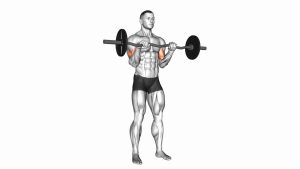
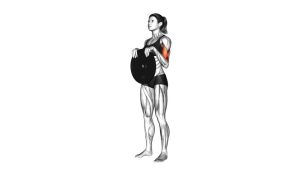
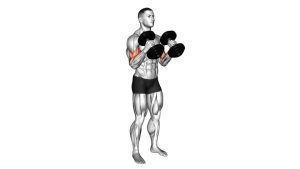
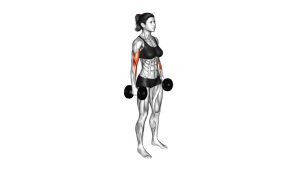
Cable Standing Reverse-Grip Curl: Forearm Form, Sets, Tips & FAQ
Learn the Cable Standing Reverse-Grip Curl with a straight bar to build stronger forearms, brachioradialis, and grip control. Includes setup, execution, mistakes, FAQs, and equipment.
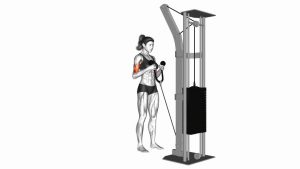
Cable Standing Reverse-Grip Curl (Straight Bar)
This exercise is especially useful for lifters who want stronger forearms, better grip endurance, and more balanced arm development. The reverse grip reduces the mechanical advantage of the biceps and forces the forearm muscles to work harder during the curl. Because the cable provides smooth resistance, it is often easier to control than a heavy barbell reverse curl, especially for beginners.
The goal is not to swing the bar up with momentum. The goal is to keep the body still, lock the elbows near the sides, curl the straight bar upward with control, pause briefly near the top, then lower slowly while keeping tension on the forearms. A clean rep should feel strong through the top of the forearms without wrist pain, shoulder shrugging, or backward leaning.
Quick Overview
| Body Part | Forearms |
|---|---|
| Primary Muscle | Brachioradialis |
| Secondary Muscle | Brachialis, wrist extensors, biceps brachii, grip muscles |
| Equipment | Cable machine, low pulley, straight bar attachment |
| Difficulty | Beginner to Intermediate |
Sets & Reps (By Goal)
- Forearm muscle growth: 3–4 sets × 10–15 reps with a controlled 2–3 second lowering phase.
- Grip endurance: 2–4 sets × 15–20 reps using lighter weight and constant tension.
- Strength focus: 3–5 sets × 6–10 reps with strict form and no swinging.
- Arm-day finisher: 2–3 sets × 12–18 reps near the end of your workout.
- Beginner technique practice: 2–3 sets × 10–12 reps with light weight and a slow tempo.
Progression rule: Add reps first, then increase cable weight. If your wrists lose position or the bar path becomes jerky, the weight is too heavy for clean reverse-curl mechanics.
Setup / Starting Position
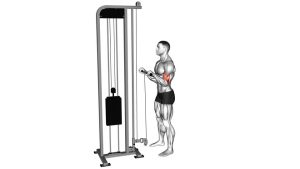
- Set the pulley low: Attach a straight bar to the low cable pulley.
- Stand facing the machine: Step back slightly so the cable is taut before the first rep.
- Grip the bar overhand: Palms face down, hands around shoulder-width apart.
- Stand tall: Keep feet about hip-to-shoulder width apart, ribs down, and core lightly braced.
- Position the elbows: Keep elbows close to your sides and slightly in front of the hips.
- Start with straight wrists: Avoid bending the wrists backward or letting the bar roll into the fingers.
Your start position should feel stable and quiet. The arms are extended, the cable is under tension, and the shoulders are relaxed before you begin curling.
Execution (Step-by-Step)
- Brace lightly: Stand tall and keep the torso still before starting the rep.
- Curl the bar upward: Bend the elbows and pull the straight bar toward the upper abdomen or lower chest.
- Keep the grip pronated: Maintain palms-down hand position throughout the curl.
- Control the elbows: Keep the upper arms close to the body without letting the elbows swing forward excessively.
- Pause at the top: Hold briefly when the forearms are strongly contracted.
- Lower slowly: Return the bar to the start position under control while resisting the cable pull.
- Reset tension: Stop just before the weight stack fully rests, then begin the next rep.
Pro Tips & Common Mistakes
- Keep wrists neutral: Do not let the wrists collapse backward. A neutral wrist keeps tension on the forearms safely.
- Do not swing: Momentum turns this into a sloppy body curl instead of a forearm exercise.
- Use a lighter load than regular curls: Reverse grip curls are usually weaker than palms-up curls.
- Control the eccentric: The lowering phase is where a lot of forearm-building tension happens.
- Avoid elbow flare: Keep elbows close to the torso to maintain a strong curling path.
- Do not overgrip painfully: Hold the bar firmly, but avoid crushing tension that causes wrist discomfort.
- Use full range: Extend the elbows at the bottom and curl high enough to fully challenge the brachioradialis.
- Pair with regular curls: Use reverse curls alongside standard curls for more complete arm development.
FAQ
What muscles does the Cable Standing Reverse-Grip Curl work?
It mainly targets the brachioradialis, a major forearm muscle that assists elbow flexion. It also trains the brachialis, wrist extensors, grip muscles, and the biceps to a smaller degree.
Is this better than a barbell reverse curl?
It depends on your goal. The cable version gives smoother, more constant tension and can be easier to control. The barbell version may allow heavier loading, but it can also encourage swinging if the weight is too heavy.
Should I use heavy weight?
Use enough weight to challenge the forearms, but not so much that your wrists bend, elbows swing, or torso leans back. Most lifters get better results with moderate weight, strict form, and slow lowering.
Why do my wrists hurt during reverse curls?
Wrist discomfort usually comes from using too much weight, gripping too wide or too narrow, or letting the wrists extend backward. Try reducing the load, keeping the wrists straight, and using a comfortable shoulder-width grip.
Can beginners do this exercise?
Yes. Beginners can use the cable version because the resistance is smooth and adjustable. Start light, learn the overhand grip position, and focus on controlled reps before adding weight.
Recommended Equipment
- Cable Straight Bar Attachment — the main attachment needed for a strict reverse-grip cable curl.
- Adjustable Cable Machine / Home Gym Pulley System — useful for performing low-pulley curls and other cable exercises at home.
- Weightlifting Wrist Wraps — optional support for lifters who need extra wrist stability during cable curls.
- Gym Chalk / Liquid Chalk — helps improve grip on the straight bar without over-squeezing.
- Forearm Wrist Roller — a great accessory tool for building additional forearm and grip strength.
Choose equipment that supports clean technique. Accessories can help, but the most important factor is controlled execution, neutral wrist position, and steady cable tension.