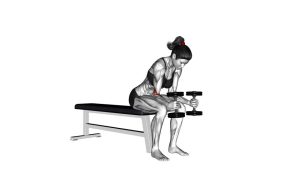
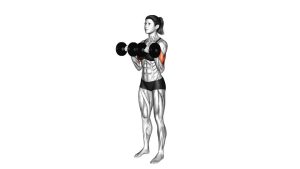
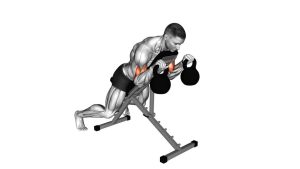
Dumbbell Standing One-Arm Reverse Curl: Form, Sets, Tips & FAQ
Learn the Dumbbell Standing One-Arm Reverse Curl for stronger forearms, better grip, and improved elbow flexor control. Includes proper form, sets by goal, mistakes, FAQs, and recommended equipment.
Dumbbell Standing One-Arm Reverse Curl
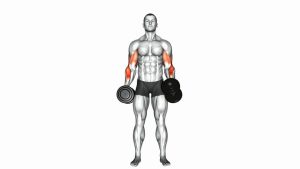
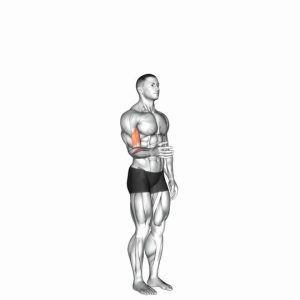
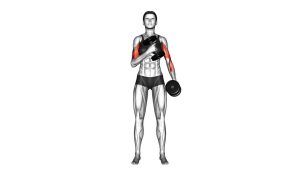
This exercise works best when you keep the movement strict and let the forearm do the work. You should feel the effort mostly through the top side of the forearm and around the brachioradialis near the upper forearm. Since it is performed one arm at a time, it also helps you clean up side-to-side imbalances and improve control without relying on momentum.
Quick Overview
| Body Part | Forearms |
|---|---|
| Primary Muscle | Brachioradialis |
| Secondary Muscle | Brachialis, forearm extensors, biceps (assisting) |
| Equipment | Single dumbbell |
| Difficulty | Beginner to Intermediate |
Sets & Reps (By Goal)
- Forearm muscle growth: 3–4 sets × 8–15 reps per arm, 45–75 sec rest
- Grip and arm accessory work: 2–4 sets × 10–15 reps per arm, controlled tempo
- Technique and control: 2–3 sets × 8–12 reps per arm using light weight and strict form
- End-of-workout forearm finisher: 2–3 sets × 12–20 reps per arm with moderate load
Progression rule: Add reps first, then increase the dumbbell slightly once you can keep the elbow tucked, avoid torso sway, and lower every rep under control.
Setup / Starting Position
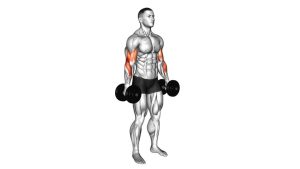
- Stand tall: Keep your chest up, core lightly braced, and feet about hip- to shoulder-width apart.
- Hold one dumbbell: Use a pronated grip so your palm faces backward/downward rather than up.
- Start with the arm extended: Let the dumbbell hang at your side with the elbow close to the torso.
- Set the wrist: Keep it neutral or only slightly extended—do not let it fold backward excessively.
- Square the shoulders: Avoid rotating or leaning away from the working arm before the rep even begins.
Tip: Think of the upper arm as an anchor. The less it drifts forward, the more honest the curl becomes.
Execution (Step-by-Step)
- Brace and lock in: Stand tall, keep your shoulder down, and keep the elbow close to your side.
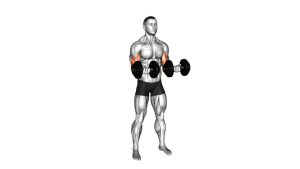
- Curl the dumbbell upward: Flex the elbow while maintaining the pronated grip.
- Keep the wrist steady: Don’t let the hand curl dramatically upward or collapse backward.
- Lift until the forearm is near vertical: Bring the dumbbell up with control without letting the elbow shoot forward.
- Pause briefly: Squeeze at the top for a moment to reinforce forearm tension.
- Lower slowly: Return to the start under control until the arm is nearly straight.
- Repeat evenly: Maintain the same path and tempo on every rep before switching sides.
Pro Tips & Common Mistakes
- Use less weight than a regular curl: The pronated grip is mechanically weaker, so strict form matters more than load.
- Keep the elbow pinned: Excessive shoulder movement turns it into a sloppy front-arm swing.
- Control the lowering phase: A slow eccentric builds more forearm tension and cleaner mechanics.
- Don’t bend the wrist aggressively: Too much wrist motion shifts focus away from the intended elbow-flexion pattern.
- Avoid torso lean: If you have to rock back to finish reps, the dumbbell is too heavy.
- Train both arms evenly: Start with the weaker side if one forearm lags behind the other.
- Use a full but comfortable range: Straighten at the bottom without snapping the elbow hard into lockout.
FAQ
What muscles does the Dumbbell Standing One-Arm Reverse Curl work?
It mainly targets the brachioradialis, with help from the brachialis, forearm extensors, and some contribution from the biceps. The pronated grip shifts more emphasis to the forearm side than a standard supinated curl.
Is this better for forearms than a regular dumbbell curl?
For forearm emphasis, yes. A regular curl usually favors the biceps more, while the reverse curl makes the forearm and brachioradialis work harder because of the palm-down grip.
Should I do this one arm at a time or both arms together?
One arm at a time is excellent for focus, balance, and identifying side-to-side strength differences. It also makes it easier to keep the rep strict and avoid compensating with body swing.
How heavy should I go?
Use a weight you can control for the full set without leaning back, twisting, or losing wrist position. Most people will use less weight here than they do for standard curls.
Where should I place this in my workout?
It works well after rows, pulldowns, or regular curls as an accessory movement for forearms and elbow flexors. It can also be used near the end of an arm day as a focused unilateral forearm builder.
Recommended Equipment
- Adjustable Dumbbell — ideal if you want to progress load gradually for unilateral curls
- Lifting Wrist Wraps — useful if your wrists feel unstable during pronated curling work
- Fat Grip Attachments — can increase grip demand and make forearm-focused dumbbell work even tougher
- Hand Grip Strengthener — good for adding extra grip and forearm work outside your main lifting sessions
- Adjustable Workout Bench — useful for other curl variations and broader arm-training setup options
Tip: For this exercise, the dumbbell matters most. Everything else is optional support gear depending on your setup and comfort.