Dumbbell Hammer Curl: Proper Form, Muscles Worked, Sets, Tips & FAQ
Learn how to perform the Dumbbell Hammer Curl with proper form to build thicker upper arms and stronger forearms. Includes muscles worked, setup, step-by-step execution, sets by goal, common mistakes, FAQ, and recommended equipment.
Dumbbell Hammer Curl
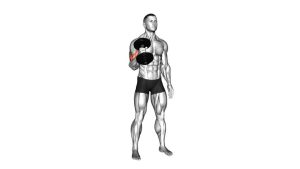
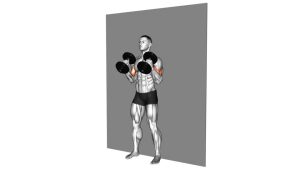
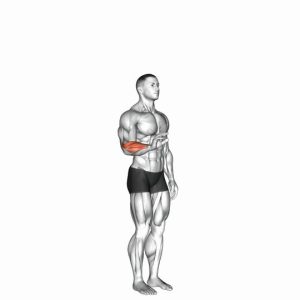
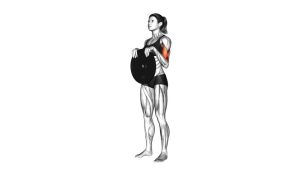
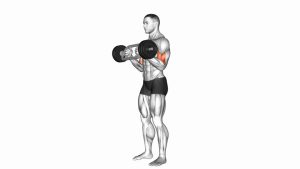
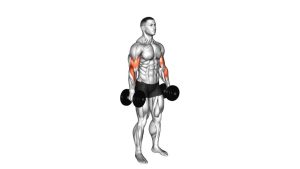
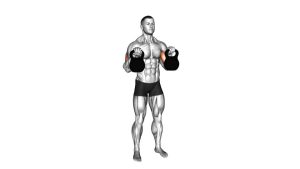
This exercise works best when you keep the movement simple and controlled. Start from a tall standing position, hold the dumbbells at your sides with a neutral grip, and curl them without swinging the torso or letting the shoulders take over. You should feel the work mainly in the upper arms and forearms, especially through the middle of the curl and during the controlled lowering phase.
Quick Overview
| Body Part | Biceps |
|---|---|
| Primary Muscle | Brachialis |
| Secondary Muscle | Brachioradialis and Biceps Brachii |
| Equipment | Dumbbells |
| Difficulty | Beginner to Intermediate |
Sets & Reps (By Goal)
- Muscle growth: 3–4 sets × 8–12 reps with controlled lowering and 60–90 seconds rest
- Strength focus: 4–5 sets × 5–8 reps with heavier dumbbells and 90–120 seconds rest
- Endurance / pump work: 2–3 sets × 12–20 reps with lighter weight and 30–60 seconds rest
- Beginner technique practice: 2–3 sets × 10–12 reps using moderate weight and strict form
Progression rule: Increase reps first, then add load once you can complete every rep without swinging, elbow flare, or losing control on the eccentric.
Setup / Starting Position
- Stand tall: Keep your chest up, core braced, and feet around shoulder-width apart.
- Hold the dumbbells at your sides: Use a neutral grip so your palms face inward toward each other.
- Keep the elbows close: Let the arms hang naturally with the elbows tucked near the torso.
- Set the shoulders: Pull them slightly back and down without shrugging.
- Start from full control: Arms should be extended at the bottom, but avoid an aggressive lockout.
Tip: Choose a weight you can curl without rocking backward. Hammer curls work best when the body stays quiet.
Execution (Step-by-Step)
- Brace and stay upright: Keep your torso still and your wrists straight.
- Curl the dumbbells upward: Bend at the elbows and lift the weights while maintaining the neutral grip.
- Keep elbows pinned: Avoid letting them drift too far forward as the dumbbells rise.
- Squeeze near the top: Bring the dumbbells toward shoulder height without shrugging.
- Lower under control: Slowly return to the starting position and keep tension through the full range.
- Repeat smoothly: Begin the next rep without bouncing or using momentum.
Pro Tips & Common Mistakes
- Keep a true hammer grip: Don’t rotate the palms upward during the rep.
- Control the eccentric: Lowering slowly builds more tension than dropping the dumbbells quickly.
- Don’t lean back: Swinging the body turns the movement into a momentum curl.
- Keep wrists neutral: Avoid bending them backward or inward at the top.
- Use full usable range: Get a strong contraction at the top and a controlled stretch at the bottom.
- Don’t let the shoulders dominate: The elbows should drive the motion, not the front delts.
- Match both arms: If doing both sides together, keep the tempo and range even.
FAQ
What muscles do dumbbell hammer curls work?
Hammer curls mainly target the brachialis and brachioradialis, while the biceps brachii still assists. This makes them excellent for building arm thickness and forearm strength.
Are hammer curls better than regular biceps curls?
They are not necessarily better, but they emphasize the arms differently. Hammer curls are especially useful for brachialis development, grip-friendly training, and extra forearm involvement.
Should I do hammer curls with both arms together or alternating?
Both options work. Curling both arms together can save time and increase tension, while alternating reps may help you focus on form and reduce body sway.
How heavy should I go on hammer curls?
Use a weight that lets you keep your elbows close, wrists neutral, and torso still. If you have to swing the dumbbells or lean backward to finish reps, the load is too heavy for strict form.
Do hammer curls help build bigger arms?
Yes. Hammer curls are excellent for adding upper-arm thickness because the brachialis sits underneath the biceps and contributes to a fuller overall arm look.
Recommended Equipment
- Adjustable Dumbbells — versatile option for progressive overload without needing a full rack
- Rubber Hex Dumbbells — stable, durable, and easy to use for strict standing curls
- Weightlifting Gloves — can improve grip comfort during higher-volume arm sessions
- Wrist Wraps for Lifting — useful if you want extra wrist support while keeping a neutral curl path
- Adjustable Weight Bench — helpful if you want to pair hammer curls with seated or incline dumbbell arm work
Tip: For hammer curls, the most important investment is a pair of dumbbells that allows smooth progression while preserving strict technique.