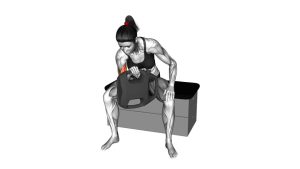
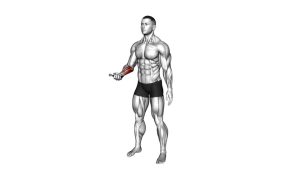
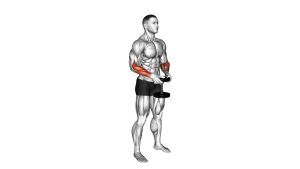
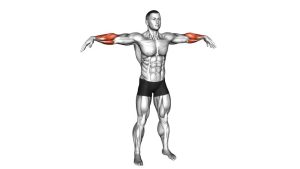
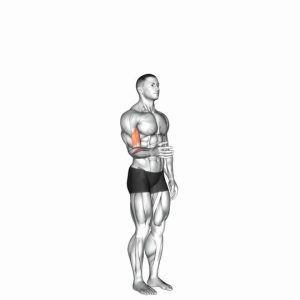
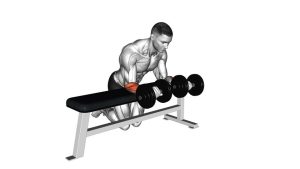
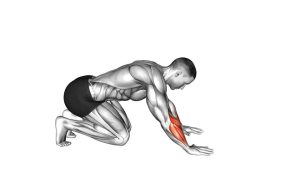
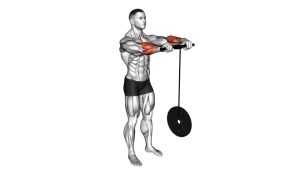
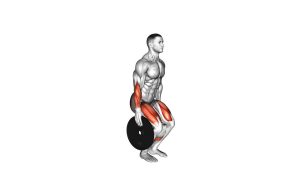
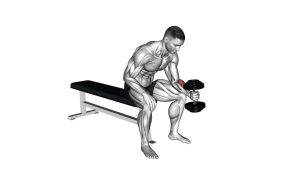
Dumbbell Behind-the-Back Finger Curl: Form, Sets, Tips & FAQ
Learn how to do the Dumbbell Behind-the-Back Finger Curl for stronger forearms, grip, and finger flexors. Includes proper form, sets by goal, common mistakes, FAQs, and recommended equipment.
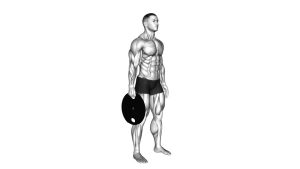
Dumbbell Behind-the-Back Finger Curl
This movement works best when you use a deliberate roll through the fingers rather than turning it into a fast wrist curl. At the bottom, the dumbbell sits closer to the fingertips to lengthen the finger flexors. At the top, you close the hand firmly and secure the dumbbell back into the palm. The range is usually small, but the muscular demand on the forearms can be intense when every rep is controlled.
Quick Overview
| Body Part | Forearms |
|---|---|
| Primary Muscle | Finger flexors (especially flexor digitorum profundus and flexor digitorum superficialis) |
| Secondary Muscle | Wrist flexors, grip stabilizers, and supporting forearm musculature |
| Equipment | One dumbbell |
| Difficulty | Beginner to Intermediate |
Sets & Reps (By Goal)
- Grip strength: 3–4 sets × 8–12 reps per hand with a controlled 2–3 second lowering phase
- Forearm hypertrophy: 3–5 sets × 10–15 reps per hand with a full finger roll and hard squeeze at the top
- Endurance / pump work: 2–4 sets × 15–20 reps per hand using lighter weight and continuous control
- Finisher after arm training: 2–3 sets × 12–20 reps per hand with short 30–45 second rest periods
Progression rule: First improve control and range through the fingers, then add reps, then increase the dumbbell weight. Do not rush to heavier loading if the dumbbell drops too deep into the fingertips or the wrist starts taking over.
Setup / Starting Position
- Stand tall: Keep your chest up, shoulders relaxed, and core lightly braced.
- Hold one dumbbell behind your body: Let the arm hang naturally with the dumbbell just behind the hip or glute area.
- Use a loose but controlled grip: The handle should rest mainly in the fingers, not buried deep in the palm.
- Keep the wrist mostly neutral: A slight natural extension is fine, but avoid excessive bending.
- Stay still: Do not swing the shoulder, lean the torso, or use momentum to move the dumbbell.
Tip: This exercise usually feels best with a moderate dumbbell that allows the handle to roll smoothly through the fingers without slipping out of control.
Execution (Step-by-Step)
- Start with the dumbbell in your hand behind the body: Let it sit securely but not too deep in the palm.
- Lower into the stretch: Gradually open the fingers and allow the dumbbell to roll downward toward the fingertips.
- Control the bottom position: Stop before losing the handle. You want a deep stretch across the finger flexors, not a dropped dumbbell.
- Close the hand forcefully: Curl the fingers back around the handle and roll the dumbbell into the palm.
- Squeeze the top: Briefly contract hard once the dumbbell is fully secured in the hand.
- Repeat smoothly: Lower again under control and keep the forearm doing the work rather than the shoulder or torso.
Pro Tips & Common Mistakes
- Let the fingers do the work: Think about rolling the handle through the hand, not just flexing the wrist.
- Keep the eccentric slow: The lowering phase is where a lot of the training value comes from.
- Do not go too heavy too soon: If you cannot control the bottom stretch, the load is too much.
- Avoid jerking the dumbbell upward: Momentum reduces tension on the forearms and increases slip risk.
- Do not shrug the shoulder: The upper body should stay quiet while the hand and forearm work.
- Train both sides evenly: Perform the same reps and tempo on each hand to avoid grip imbalances.
- Use it late in the workout: This exercise is often best after bigger pulling or arm exercises so fatigue does not reduce your main lifts.
FAQ
What does the Dumbbell Behind-the-Back Finger Curl mainly work?
It mainly targets the finger flexors and supporting forearm flexors. It is especially useful for improving grip strength, hand control, and forearm development.
Is this the same as a wrist curl?
Not exactly. A wrist curl emphasizes wrist flexion more directly, while this variation puts more focus on the fingers rolling and closing around the dumbbell. A little wrist motion may happen naturally, but the key action is finger flexion.
How heavy should I go?
Use a weight you can fully control through the entire finger roll. If the dumbbell slips, drops suddenly, or forces you to cheat with the shoulder, go lighter.
Can this help with grip strength for lifting?
Yes. It can support stronger hand and forearm function for exercises like rows, deadlifts, carries, and other grip-demanding lifts. It is most useful as an accessory movement rather than a replacement for heavy compound gripping work.
When should I place it in my workout?
Usually near the end of an upper-body, arm, or forearm session. Doing it too early may fatigue your grip and reduce performance on bigger lifts.
Recommended Equipment (Optional)
- Adjustable Dumbbell — practical for progressing the load gradually while keeping one handle style for repeated forearm work
- Hand Gripper / Grip Strengthener — useful for extra crush-grip work that complements finger curl training
- Hand / Finger Exerciser — helpful for extra finger-specific resistance and lighter recovery-style hand work
- Forearm Roller — adds more time-under-tension for wrist and forearm endurance
- THERABAND FlexBar — good for additional forearm, wrist, and elbow-support work alongside grip training
Tip: Choose tools that improve control and consistency. The best accessory gear for this movement is usually simple: a good dumbbell, a grip trainer, and one extra forearm tool for volume.