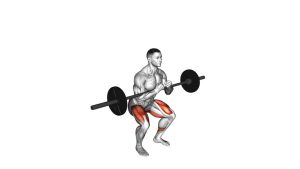
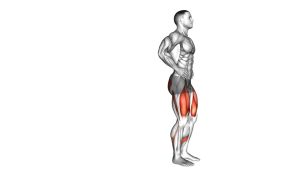
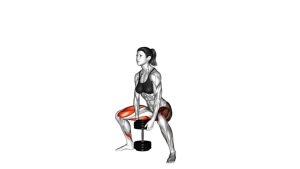
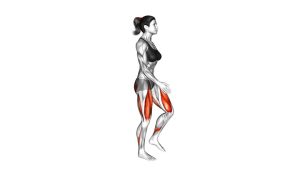
Smith Machine Full Squat: Proper Form, Benefits, Sets & Tips
Learn the Smith Machine Full Squat to build stronger quads, glutes, and legs with safe form, full-depth technique, sets, tips, FAQs, and equipment.
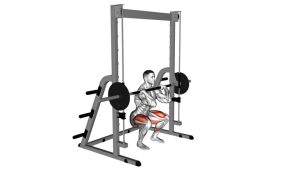
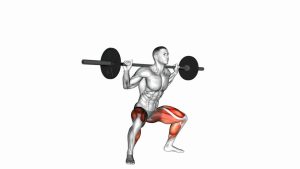
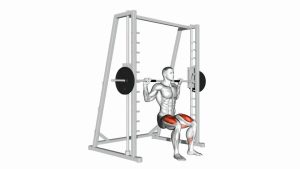
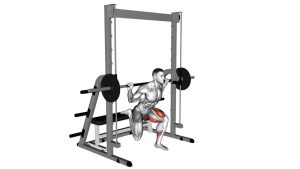
Smith Machine Full Squat
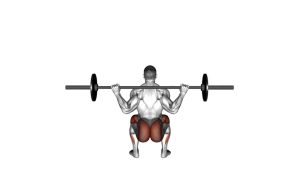
This movement is best performed with a smooth tempo, a stable foot position, and strong control at the bottom. The goal is not to bounce out of the squat, but to descend under control, reach full depth safely, and drive upward through the mid-foot while keeping the torso tall.
Quick Overview
| Body Part | Legs |
|---|---|
| Primary Muscle | Quadriceps |
| Secondary Muscle | Glutes, adductors, hamstrings, calves, and core stabilizers |
| Equipment | Smith machine, barbell plates, optional lifting shoes or knee sleeves |
| Difficulty | Beginner to Intermediate |
Sets & Reps (By Goal)
- Muscle growth: 3–5 sets × 8–12 reps with controlled depth and moderate-to-heavy load.
- Strength development: 4–6 sets × 4–8 reps with longer rest and strict bracing.
- Beginner technique: 2–4 sets × 10–15 reps using light weight and slow tempo.
- Quad focus: 3–4 sets × 10–15 reps with an upright torso and controlled knee travel.
Progression rule: Add weight only when every rep reaches consistent depth without knee collapse, heel lift, lower-back rounding, or loss of control.
Setup / Starting Position
- Set the bar height: Position the Smith machine bar around upper-chest height so you can unrack it without standing on your toes.
- Place the bar: Rest the bar across your upper traps, not directly on your neck.
- Set your feet: Stand with feet about shoulder-width apart, slightly forward of the bar path, with toes turned out naturally.
- Brace your core: Keep your ribs down, chest lifted, and spine neutral before unlocking the bar.
- Unrack safely: Stand tall, rotate the bar off the hooks, and stabilize before beginning the first rep.
Execution (Step-by-Step)
- Begin the descent: Bend your knees and hips together while keeping your torso upright.
- Track the knees: Let your knees travel in the same direction as your toes without caving inward.
- Reach full depth: Lower until your hips move below knee level, or as deep as you can control safely.
- Stay tight at the bottom: Keep your heels down, core braced, and chest tall without bouncing.
- Drive upward: Push through your mid-foot and extend your knees and hips together.
- Finish tall: Return to a strong standing position without overextending the lower back.
Pro Tips & Common Mistakes
- Use a stable foot position: Feet slightly forward usually works best because the Smith bar path is fixed.
- Control the bottom: Do not bounce aggressively out of full depth.
- Keep the knees aligned: Avoid letting the knees cave inward during the descent or ascent.
- Do not lift the heels: Keep pressure through the mid-foot and heel for better control.
- Avoid excessive forward lean: The Smith squat works best when the torso stays tall and controlled.
- Do not lock out harshly: Finish each rep with control instead of snapping the knees back.
- Brace before moving: A strong core protects your spine and improves force transfer.
FAQ
Is the Smith Machine Full Squat good for building legs?
Yes. The Smith Machine Full Squat is effective for building the quadriceps, glutes, and overall lower-body strength. The fixed bar path can help beginners stay balanced while advanced lifters can use it for controlled hypertrophy work.
Should my feet be forward during a Smith machine squat?
A slightly forward foot position is common because the bar path is fixed. This helps you stay balanced and allows a smooth descent without forcing your body into an awkward position.
How deep should I squat?
Squat as deep as you can while keeping your heels grounded, knees aligned, and spine neutral. Full depth is useful, but only when you can control it safely.
Is this more quad-focused or glute-focused?
This version is usually more quad-focused, especially when the torso stays upright and the knees travel forward. The glutes still contribute strongly from the bottom position.
Can beginners do the Smith Machine Full Squat?
Yes. Beginners can use this exercise if they start light, learn proper depth, and focus on controlled movement. It is important not to overload the bar before mastering basic squat mechanics.
Recommended Equipment
- Weightlifting Shoes — helps improve squat stability, heel support, and upright posture.
- Knee Sleeves — provides warmth, compression, and joint support during heavy leg training.
- Weightlifting Belt — useful for bracing support during heavier squat sets.
- Barbell Squat Pad — adds comfort if the Smith bar feels uncomfortable across the upper traps.
- Squat Wedge / Ankle Mobility Wedge — helps lifters with limited ankle mobility reach better squat depth.
Tip: Equipment can improve comfort and stability, but proper technique, consistent depth, and controlled loading are still the most important parts of the Smith Machine Full Squat.