Dumbbell Incline Curl: Proper Form, Muscles Worked, Sets, Tips & FAQ
Learn how to do the Dumbbell Incline Curl with proper form to build bigger biceps through a deep stretch and strict range of motion. Includes muscles worked, setup, execution, sets by goal, common mistakes, FAQs, and recommended equipment.
Dumbbell Incline Curl
This exercise works best when you keep the movement smooth, controlled, and strict from bottom to top. The deep stretch at the bottom is one of its biggest advantages, but only if you avoid shoulder rolling, elbow drifting, and using momentum. A clean incline curl should feel like the biceps are doing the work through the full range of motion—not your shoulders, lower back, or wrists.
Quick Overview
| Body Part | Biceps |
|---|---|
| Primary Muscle | Biceps brachii (especially the long head) |
| Secondary Muscle | Brachialis, brachioradialis, forearm flexors |
| Equipment | Incline bench and a pair of dumbbells |
| Difficulty | Beginner to Intermediate |
Sets & Reps (By Goal)
- Muscle growth: 3–4 sets × 8–12 reps with 60–90 sec rest
- Technique and control: 2–3 sets × 10–15 reps with slow tempo and light-to-moderate load
- Biceps finisher: 2–3 sets × 12–15 reps with short rest and strict form
- Strength-focused hypertrophy: 3–4 sets × 6–8 reps with full control and longer rest
Progression rule: Increase reps before increasing weight. If you lose the stretch position, start swinging, or shorten the range, the load is too heavy.
Setup / Starting Position
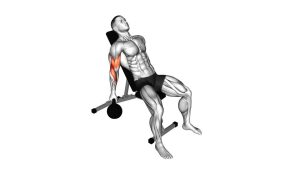
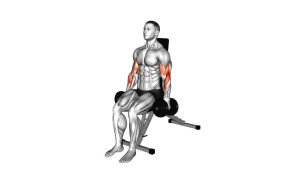
- Set the bench: Adjust an incline bench to roughly 45–60 degrees.
- Sit back fully: Keep your head, upper back, and shoulders supported by the bench.
- Plant your feet: Place both feet flat on the floor for full-body stability.
- Let the arms hang naturally: Hold a dumbbell in each hand with palms facing forward.
- Start from a deep stretch: Allow the arms to hang down with the elbows slightly behind the torso.
- Brace lightly: Keep the chest up, shoulders back, and wrists neutral before starting the curl.
Tip: Keep your shoulders packed down instead of rolling them forward at the bottom. That helps maintain tension on the biceps and protects the shoulder position.
Execution (Step-by-Step)
- Begin the curl: Flex the elbows and bring the dumbbells upward in a smooth arc.
- Keep the upper arm quiet: Do not let the elbows shoot forward early in the rep.
- Stay supinated: Keep palms facing up as you curl to maximize biceps involvement.
- Lift to full contraction: Bring the dumbbells near shoulder level without losing posture.
- Squeeze briefly: Pause for a moment at the top and contract the biceps hard.
- Lower slowly: Control the eccentric all the way back to the stretched bottom position.
- Reset and repeat: Start the next rep without swinging or bouncing out of the bottom.
Pro Tips & Common Mistakes
- Use the stretch: One of the biggest benefits of incline curls is the loaded bottom position. Do not cut it short.
- Do not swing: If the torso starts moving, you are turning a strict curl into a cheat curl.
- Keep wrists neutral: Avoid excessive wrist flexion or extension as the dumbbells rise.
- Don’t rush the lowering phase: Slow eccentrics make this exercise much more effective.
- Avoid elbow drift: A small amount is natural, but excessive forward movement shifts tension away from the intended pattern.
- Choose moderate weight: This exercise punishes ego lifting. Strict reps beat heavy sloppy reps.
- Bench angle matters: Too upright reduces the stretch; too flat may feel awkward at the shoulder.
FAQ
What muscles does the Dumbbell Incline Curl work most?
It mainly targets the biceps brachii, with a strong emphasis on the long head because the arms begin slightly behind the torso. The brachialis and forearms also assist.
Why does the incline position make this curl harder?
The incline bench increases the stretch at the bottom and makes it harder to use momentum. That means the biceps have to work harder from a disadvantaged starting position.
Should I curl both dumbbells together or alternate them?
Both work. Curling together is efficient and symmetrical, while alternating can help you focus on one arm at a time and keep each rep controlled.
How heavy should I go on incline curls?
Usually lighter than standing dumbbell curls. The stretched starting position makes this variation more demanding, so prioritize full range of motion and tempo over load.
What are the most common mistakes?
The most common mistakes are swinging the weight, shortening the bottom range, letting the elbows drift too far forward, and curling with bent wrists instead of focusing on elbow flexion.
Recommended Equipment
- Adjustable Incline Weight Bench — essential for setting the proper angle and creating the deep starting stretch
- Adjustable Dumbbells — convenient for progressive overload without needing multiple dumbbell pairs
- Wrist Wraps — useful if heavier curls make your wrists feel unstable
- Lifting Straps — optional grip support if forearm fatigue limits your biceps work
- Dumbbell Rack — helps organize your training space and keeps weight changes fast and safe
Tip: For most people, the best upgrades for this exercise are a solid adjustable bench and dumbbells with manageable weight jumps.