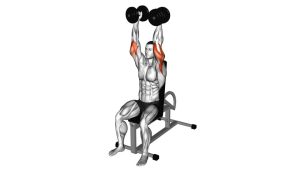
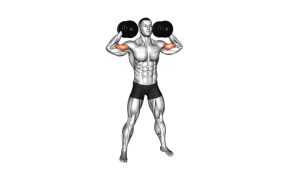
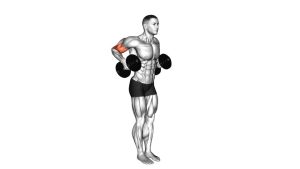
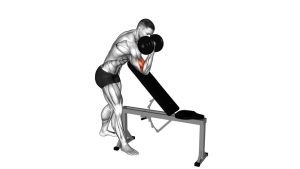
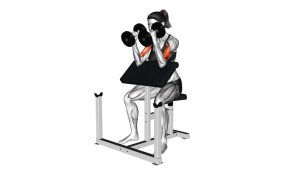
Dumbbell Prone Incline Curl: Form, Muscles Worked, Sets, Tips & FAQ
Learn how to do the Dumbbell Prone Incline Curl with strict form to isolate the biceps through a deep stretch and strong peak contraction. Includes muscles worked, setup, execution, sets by goal, mistakes, FAQ, and recommended equipment.
Dumbbell Prone Incline Curl
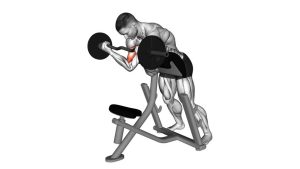
This variation is excellent for lifters who want cleaner curling mechanics and better tension on the upper arms. Because your chest stays supported on the bench, it becomes harder to cheat the weight up with body swing. Focus on a full stretch at the bottom, a smooth curl through the middle, and a strong but controlled peak contraction.
Quick Overview
| Body Part | Arms |
|---|---|
| Primary Muscle | Biceps brachii |
| Secondary Muscle | Brachialis, brachioradialis, forearm flexors |
| Equipment | Dumbbells, incline bench |
| Difficulty | Intermediate (strict isolation with limited momentum) |
Sets & Reps (By Goal)
- Muscle growth: 3–4 sets × 8–12 reps with slow lowering and full range of motion
- Strength-focused arm work: 3–5 sets × 6–8 reps using strict form and longer rest periods
- Mind-muscle connection / pump: 2–4 sets × 12–15 reps with moderate weight and strong peak squeeze
- Finisher after pulling work: 2–3 sets × 10–15 reps with controlled tempo and minimal swinging
Progression rule: Increase reps first, then load. Only add weight when you can maintain chest support, fixed elbows, and a smooth eccentric on every rep.
Setup / Starting Position
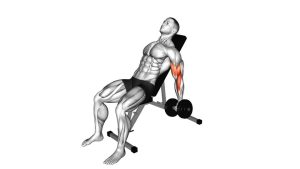
- Set the bench: Adjust an incline bench to roughly 30–45 degrees.
- Lie prone: Place your chest firmly against the bench with your head neutral and feet planted for stability.
- Hold the dumbbells: Let your arms hang straight down with a supinated or near-supinated grip.
- Fix the elbows: Keep the upper arms vertical and avoid letting the shoulders roll forward.
- Brace lightly: Keep your torso still and prepare to curl without using momentum.
Tip: Choose a weight that allows a full stretch without losing shoulder position at the bottom.
Execution (Step-by-Step)
- Start from the stretch: Begin with arms extended and the dumbbells hanging directly below the shoulders.
- Curl upward: Flex the elbows and bring the dumbbells up in a smooth arc toward your upper chest.
- Keep the elbows pinned: Do not let them drift forward as the weights rise.
- Squeeze at the top: Pause briefly when your biceps are fully contracted.
- Lower with control: Slowly return to the start position until the arms are fully extended again.
Pro Tips & Common Mistakes
- Keep your chest glued to the bench: Lifting the torso reduces isolation and turns the rep into a cheat curl.
- Use a full stretch: The bottom position is one of the biggest benefits of this variation, so do not cut it short.
- Control the eccentric: Lowering slowly improves tension and helps protect the elbows.
- Don’t go too heavy: Excess load usually causes shoulder movement and ruins the purpose of the exercise.
- Keep wrists neutral: Avoid excessive wrist curling to keep tension on the biceps instead of the forearms.
- Avoid elbow drift: If the elbows slide forward, the front delts start assisting too much.
FAQ
What makes the dumbbell prone incline curl different from a regular dumbbell curl?
The incline chest-supported position reduces momentum and places the biceps under more stretch at the bottom. That makes the exercise stricter and often more effective for targeted arm hypertrophy.
Should I curl both dumbbells at the same time or alternate arms?
Both methods work. Curling both arms together is efficient, while alternating can help you focus more on control and symmetry.
Where should I feel this exercise most?
You should feel it primarily in the biceps, especially through the lower-to-mid range and near the peak contraction. Some forearm involvement is normal, but the shoulders should not dominate the rep.
Is this exercise good for building bigger biceps?
Yes. It combines strict form, long muscle length at the bottom, and strong peak tension, which makes it a valuable hypertrophy exercise.
What are the most common mistakes?
The most common issues are using too much weight, lifting the chest off the bench, shortening the range of motion, and letting the elbows travel forward during the curl.
Recommended Equipment
- Adjustable Weight Bench — essential for setting the incline angle needed to perform this exercise correctly
- Adjustable Dumbbell Set — practical for progressive overload without needing multiple fixed dumbbell pairs
- Weightlifting Wrist Wraps — helpful if your wrists feel unstable during strict curling variations
- High-Density Foam Roller — useful for upper-arm and shoulder recovery between arm sessions
- Curl Bench / Arm Training Bench — optional extra for dedicated arm work if you want more direct biceps isolation tools
Tip: For most lifters, an adjustable bench and adjustable dumbbells are the most useful core purchases.