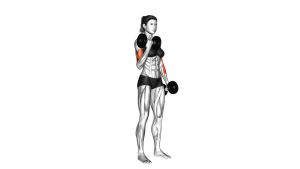
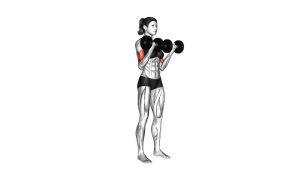
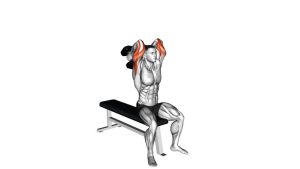
Dumbbell Lying Triceps Extension: Proper Form, Sets, Tips & FAQ
Learn how to do the Dumbbell Lying Triceps Extension with proper form. Discover setup tips, execution steps, sets and reps by goal, common mistakes, FAQs, and recommended equipment.
Dumbbell Lying Triceps Extension
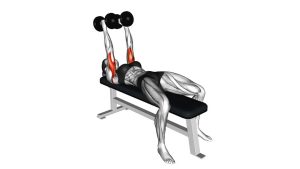
This movement is excellent for building triceps size, especially when you focus on a full range of motion and strict elbow mechanics. Because each arm works independently, dumbbells can also help improve left-to-right balance and reduce the tendency to let one side dominate the lift. The exercise works best with moderate loads, smooth tempo, and consistent control from top to bottom.
Quick Overview
| Body Part | Triceps |
|---|---|
| Primary Muscle | Triceps brachii |
| Secondary Muscle | Forearms, shoulder stabilizers |
| Equipment | Dumbbells, flat bench |
| Difficulty | Beginner to Intermediate |
Sets & Reps (By Goal)
- Muscle growth: 3–4 sets × 8–12 reps with 60–90 seconds rest
- Strength-focused accessory work: 3–5 sets × 6–8 reps with 90–120 seconds rest
- Technique and control: 2–3 sets × 10–15 reps with light to moderate weight
- High-volume finisher: 2–3 sets × 12–15 reps with shorter rest and strict form
Progression rule: Add reps first, then increase weight in small increments once you can keep your elbows stable, lower the dumbbells under control, and complete every rep without turning it into a chest press.
Setup / Starting Position
- Lie flat on a bench: Plant your feet firmly on the floor and keep your head, upper back, and glutes in contact with the bench.
- Hold a dumbbell in each hand: Press the weights above your chest so your arms are extended and balanced.
- Set your elbow position: Keep your elbows pointed generally upward and fairly close together rather than flaring wide.
- Brace your torso: Maintain a stable ribcage and avoid excessive arching just to move the weights.
- Keep wrists neutral: Don’t let the dumbbells fold your wrists backward as you begin the rep.
Tip: A slightly tucked elbow position usually helps keep more tension on the triceps and reduces unnecessary shoulder movement.
Execution (Step-by-Step)
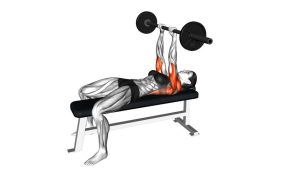
- Start at lockout: Hold both dumbbells above your chest with your arms extended and upper arms steady.
- Lower the dumbbells slowly: Bend only at the elbows and bring the dumbbells down toward the sides of your head in a controlled arc.
- Reach the stretched position: Stop when your triceps are fully loaded and you still feel in control of the weights.
- Extend the elbows: Reverse the motion by driving the dumbbells back up through elbow extension, keeping the upper arms mostly fixed.
- Finish under control: Return to the top without banging the dumbbells together or locking out aggressively.
Pro Tips & Common Mistakes
- Keep upper arms quiet: Too much shoulder movement takes tension away from the triceps.
- Use control on the descent: The lowering phase is where a lot of muscle-building tension happens.
- Don’t flare the elbows too wide: Excessive flare can stress the elbows and reduce mechanical efficiency.
- Avoid turning it into a press: The movement should be driven by elbow extension, not chest or shoulder involvement.
- Use a manageable range: Lower the dumbbells deep enough for a stretch, but not so far that you lose control.
- Train with moderate loads: Heavy cheating usually reduces isolation quality and increases joint stress.
FAQ
What muscles does the dumbbell lying triceps extension work?
It primarily targets the triceps brachii, with extra emphasis on elbow extension strength and upper-arm hypertrophy. The forearms and shoulder stabilizers also help control the dumbbells.
Is this the same as a dumbbell skull crusher?
Yes, most people use the terms interchangeably. The dumbbell lying triceps extension is essentially a skull crusher performed with dumbbells instead of an EZ-bar or barbell.
How low should I lower the dumbbells?
Lower them until you feel a strong triceps stretch while still maintaining full control. For most lifters, this means bringing the dumbbells near the sides of the head without letting the elbows collapse out of position.
Should my elbows stay completely fixed?
They should stay mostly fixed, but a small natural adjustment is normal. The goal is to avoid excessive shoulder movement or turning the lift into a press.
Is this exercise good for building bigger arms?
Absolutely. When paired with presses, pushdowns, and overhead extensions, this movement can be very effective for increasing triceps size and improving arm development.
Recommended Equipment
- Adjustable Dumbbells — ideal for progressive overload and convenient weight changes at home
- Flat Weight Bench — provides the stable base needed for lying triceps extension variations
- Weightlifting Gloves — can improve dumbbell grip comfort during higher-volume arm training
- Elbow Sleeves for Weightlifting — helpful for warmth and joint comfort during pressing and extension workouts
- Adjustable Workout Bench — useful if you want to rotate between flat, incline, and other dumbbell arm variations
Tip: Prioritize a stable bench and dumbbells with secure handles. Better setup quality usually means better control and safer reps.