Dumbbell Standing Kickback: Proper Form, Sets, Tips & FAQ
Learn the Dumbbell Standing Kickback for stronger, more defined triceps. Step-by-step form guide, sets by goal, common mistakes, FAQs, and recommended equipment.
Dumbbell Standing Kickback
This movement is most effective when performed with strict form and a moderate load. Instead of swinging the weight, focus on keeping the upper arm fixed beside the torso and moving only through the elbow. You should feel the triceps doing the work from start to finish, especially in the fully extended position.
Quick Overview
| Body Part | Triceps |
|---|---|
| Primary Muscle | Triceps brachii |
| Secondary Muscle | Rear deltoids, forearms, core stabilizers |
| Equipment | Dumbbell |
| Difficulty | Beginner to Intermediate |
Sets & Reps (By Goal)
- Muscle growth: 3–4 sets × 10–15 reps per arm with 45–75 seconds rest
- Muscle endurance: 2–4 sets × 15–20 reps per arm with 30–45 seconds rest
- Technique and control: 2–3 sets × 8–12 reps per arm using slow, strict form
- Finisher for arm day: 2–3 sets × 12–20 reps with a strong squeeze on every rep
Progression rule: Increase reps first, then move up in weight only when you can keep the elbow fixed and finish each rep without swinging the dumbbell.
Setup / Starting Position
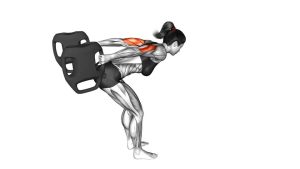
- Hold one dumbbell: Stand tall with a dumbbell in one hand using a neutral grip.
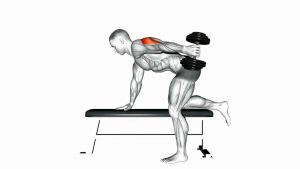
- Hinge at the hips: Lean your torso forward while keeping your chest up and spine neutral.
- Set your stance: Keep your feet about hip- to shoulder-width apart for balance.
- Bring the elbow up: Position the working upper arm close to your torso with the elbow bent to about 90 degrees.
- Brace the body: Tighten your core and keep your shoulders square without twisting.
Tip: The upper arm should stay slightly higher than the forearm at the start so the triceps can fully contract at the top.
Execution (Step-by-Step)
- Lock in the upper arm: Keep the elbow pinned close to the torso and stable throughout the rep.
- Extend the elbow: Push the dumbbell backward by straightening your arm until it is almost fully extended.
- Squeeze at the top: Pause briefly and contract the triceps hard without swinging the shoulder.
- Lower under control: Slowly bend the elbow and return to the start position.
- Repeat smoothly: Perform all reps with the same body angle and strict tempo before switching arms.
Pro Tips & Common Mistakes
- Keep the elbow still: The elbow should act like a hinge point, not drift up and down during the rep.
- Do not swing: Momentum reduces triceps tension and turns the movement into a partial-body exercise.
- Use a full squeeze: The best part of the rep is the locked-out contraction at the top.
- Maintain a neutral spine: Avoid rounding your back or cranking your neck upward.
- Choose the right load: A lighter dumbbell with strict control is more effective than a heavy one with sloppy form.
- Control the lowering phase: The eccentric portion helps build better tension and muscle control.
FAQ
What muscle does the dumbbell standing kickback target most?
It mainly targets the triceps brachii, especially during the fully extended top position where the elbow straightens completely.
Should I use a heavy or light dumbbell for kickbacks?
Most people get better results with a light to moderate dumbbell because the exercise depends heavily on control and strict elbow positioning.
Why do I feel this more in my shoulder than my triceps?
That usually happens when the upper arm is moving too much or the dumbbell is being swung. Keep the elbow fixed and reduce the load.
Can beginners do dumbbell standing kickbacks?
Yes. This is a beginner-friendly isolation exercise as long as you use manageable weight and focus on form before intensity.
Is this exercise good for arm definition?
Yes. When combined with a full training plan and proper nutrition, kickbacks can help build stronger, more defined triceps.
Recommended Equipment
- Adjustable Dumbbells — ideal for progressing triceps work without needing a full rack of weights
- Weightlifting Bench — useful for support during one-arm kickback variations and other arm exercises
- Workout Gloves — can improve grip comfort when training with higher reps
- Resistance Bands Set — great for adding extra triceps and upper-arm accessory work
- Home Gym Mirror — helps you monitor elbow position and prevent torso swinging during reps
Tip: For this exercise, form quality matters more than heavy loading. Use equipment that helps you stay stable and consistent.