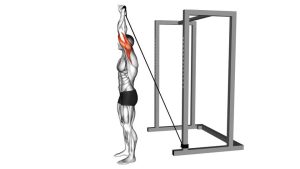
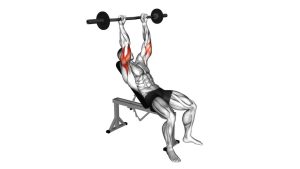
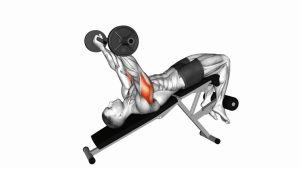
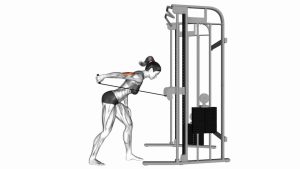
Cable Lying Triceps Extension: Proper Form, Sets, Tips & FAQ
Learn the Cable Lying Triceps Extension for stronger, fuller triceps with constant cable tension. Discover proper form, setup, sets by goal, common mistakes, FAQs, and recommended equipment.
Cable Lying Triceps Extension
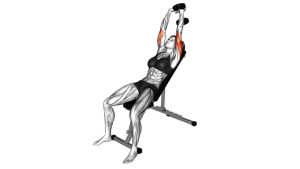
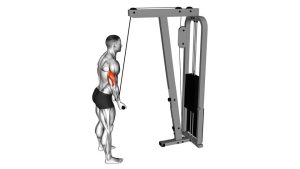
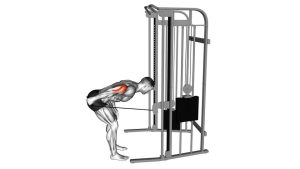
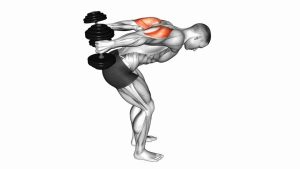
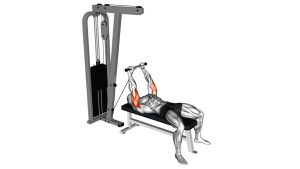
This exercise works best when performed with a controlled tempo and strict elbow mechanics. You should feel the triceps doing the majority of the work, especially in the stretched bottom position and during the extension back to lockout. Because the cable line of pull stays active, this variation can feel smoother on the elbows than some free-weight versions while still delivering a strong hypertrophy stimulus.
Quick Overview
| Body Part | Triceps |
|---|---|
| Primary Muscle | Triceps brachii (especially the long head) |
| Secondary Muscle | Anconeus, forearm stabilizers, shoulder stabilizers |
| Equipment | Cable machine, flat bench, cable attachment (rope or straight bar) |
| Difficulty | Intermediate |
Sets & Reps (By Goal)
- Muscle growth: 3–4 sets × 8–12 reps with controlled eccentrics and full triceps tension
- Strength-focused accessory work: 3–5 sets × 6–8 reps using strict form and moderate-to-heavy resistance
- Joint-friendly pump / higher volume: 2–4 sets × 12–15 reps with smooth tempo and no elbow pain
- Finisher after pressing workout: 2–3 sets × 10–15 reps with short rest and a deep stretch emphasis
Progression rule: First improve control, range, and elbow stability. Then add reps before increasing load. If shoulder involvement increases, the weight is probably too heavy.
Setup / Starting Position
- Place a flat bench in line with the cable machine: Position yourself so the cable can pull from behind your head or slightly above head level depending on machine setup.
- Choose your attachment: A rope often allows more wrist freedom, while a straight bar can feel more stable for some lifters.
- Lie flat on the bench: Keep your head, upper back, and glutes supported, with feet planted firmly on the floor.
- Start with arms extended: Hold the attachment above you with elbows pointing upward and slightly back, not flared out wide.
- Brace lightly: Keep your ribs down and shoulders steady so the motion comes mainly from elbow flexion and extension.
Tip: A slight backward angle of the upper arms usually helps keep better tension on the triceps than stacking the elbows perfectly vertical over the shoulders.
Execution (Step-by-Step)
- Lock in the top position: Begin with the elbows extended and the cable under tension. Keep the wrists neutral and shoulders quiet.
- Lower with control: Bend the elbows and allow the attachment to travel toward your forehead or slightly behind your head, depending on the cable angle and your comfort.
- Reach the stretch: Pause briefly when the elbows are deeply flexed and the triceps are fully lengthened without losing control.
- Extend the elbows: Reverse the motion by straightening the arms and driving through the triceps until you return to the top.
- Finish under tension: Squeeze the triceps at the top without slamming into lockout or turning the exercise into a chest press.
Pro Tips & Common Mistakes
- Keep elbows tucked but natural: Too much flare shifts stress away from the triceps and can irritate the elbows.
- Use a slow eccentric: The lowering phase is where a lot of the growth stimulus happens, especially with cables.
- Don’t turn it into a press: If the shoulders start moving a lot, you lose the isolation effect.
- Lower to a comfortable stretch: Going too deep without control can irritate the elbows instead of improving the exercise.
- Choose the best attachment for your joints: Rope for freedom, straight bar for stability.
- Keep wrists stacked: Bent wrists can reduce force transfer and create unnecessary strain.
- Avoid rushing lockout: Finish the rep smoothly and keep tension on the triceps.
FAQ
What muscles does the Cable Lying Triceps Extension work?
It primarily targets the triceps brachii, with strong emphasis on the long head. The forearms and shoulders also help stabilize the movement.
Is this better than regular skull crushers?
For many lifters, yes. The cable provides more consistent tension through the rep and can feel smoother on the elbows than a barbell version. Both can be effective, but the cable variation is excellent for constant triceps loading.
Should I use a rope or a straight bar?
Both work well. A rope usually allows a more natural wrist path and a stronger contraction at the top, while a straight bar may feel more stable and easier to control for some lifters.
How heavy should I go on this exercise?
Use a load that allows you to keep the elbows controlled and feel the triceps through the full range of motion. If your shoulders take over or you lose the bottom stretch position, reduce the weight.
Where should the attachment lower?
Usually toward the forehead or slightly behind the head, depending on machine setup and comfort. The best path is the one that gives you a deep triceps stretch without elbow pain or loss of control.
Recommended Equipment
- Tricep Rope Cable Attachment — great for a more natural wrist path and strong lockout contraction
- Straight Bar Cable Attachment — useful for lifters who prefer a fixed grip and stable rep path
- Wrist Wraps — helpful if heavy arm training makes wrist position harder to maintain
- Resistance Bands Set — useful for warm-ups, elbow prep, and extra triceps volume
- Flat Weight Bench — essential for a stable and comfortable lying setup when doing this movement properly
Tip: The best setup is the one that lets you keep smooth elbow mechanics, a deep stretch, and steady cable tension without joint irritation.