Dumbbell Zottman Curl: Proper Form, Muscles Worked, Sets, Tips & FAQ
Learn how to perform the Dumbbell Zottman Curl with proper form to build bigger biceps and stronger forearms. Includes muscles worked, sets and reps by goal, step-by-step execution, common mistakes, FAQs, and recommended equipment.
Dumbbell Zottman Curl
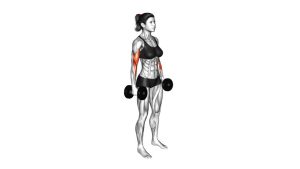
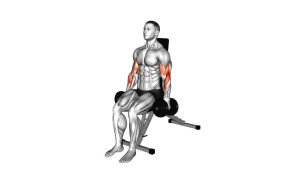
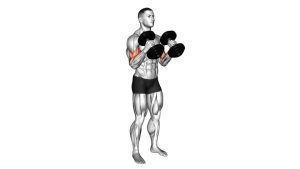
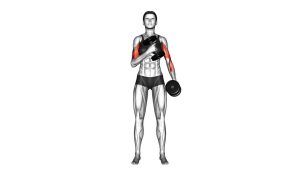
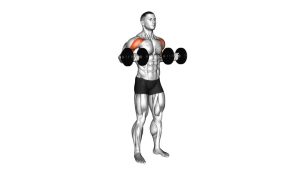
The Dumbbell Zottman Curl works best when performed with strict form, moderate weight, and a controlled tempo. The goal is not just to curl the dumbbells, but to smoothly rotate the wrists at the top and lower the weight under control with the palms facing down. When done correctly, this movement challenges both elbow flexors and forearm muscles without relying on body swing or momentum.
Quick Overview
| Body Part | Arms |
|---|---|
| Primary Muscle | Biceps brachii |
| Secondary Muscle | Brachioradialis, brachialis, forearm flexors, forearm extensors |
| Equipment | Pair of dumbbells |
| Difficulty | Beginner to Intermediate |
Sets & Reps (By Goal)
- Muscle growth: 3–4 sets × 8–12 reps with controlled lowering and 60–90 sec rest
- Strength-focused arm training: 4 sets × 6–8 reps using slightly heavier dumbbells and strict form
- Forearm and grip emphasis: 2–4 sets × 10–15 reps with slower eccentric tempo
- General arm development: 2–3 sets × 10–12 reps near the middle or end of your workout
Progression rule: Increase weight only when you can keep the elbows stable, rotate the wrists smoothly, and lower every rep with full control. If the lowering phase becomes sloppy, the dumbbells are too heavy.
Setup / Starting Position
- Stand tall: Position your feet about hip-width to shoulder-width apart and keep your chest up.
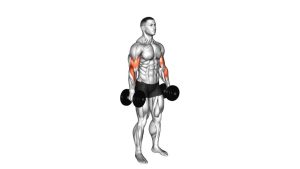
- Hold a dumbbell in each hand: Start with your arms fully extended at your sides and palms facing inward in a neutral grip.
- Brace your core: Keep your torso still and avoid leaning backward to help the curl.
- Set the shoulders: Pull your shoulders slightly back and down so the upper body stays stable.
- Keep elbows close: Your elbows should remain tucked near your sides throughout the exercise.
Tip: Start lighter than you would for a normal dumbbell curl. The wrist rotation and slow pronated lowering make this exercise more demanding than it first appears.
Execution (Step-by-Step)
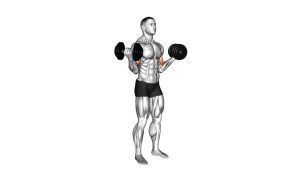
- Begin the curl: Curl the dumbbells upward while rotating your wrists so your palms gradually turn upward.
- Reach the top under control: Bring the dumbbells near shoulder level while keeping your elbows close to your sides.
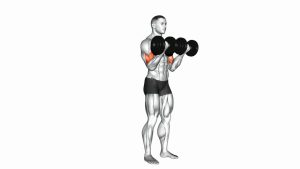
- Rotate at the top: Pause briefly and turn your wrists so your palms face downward.
- Lower slowly: With the palms facing down, lower the dumbbells in a controlled manner back to the starting position.
- Reset the grip: At the bottom, rotate the wrists back to the neutral starting position and begin the next rep.
Pro Tips & Common Mistakes
- Use lighter weight than standard curls: The eccentric pronated phase is usually the hardest part.
- Do not swing the body: Momentum reduces tension on the arms and shifts the work away from the biceps and forearms.
- Control the lowering phase: The forearm benefit comes from resisting the descent, not dropping the dumbbells.
- Keep wrists aligned: Avoid excessive bending or collapsing at the wrist during the rotation.
- Elbows stay pinned: Letting the elbows drift forward turns the movement into a less efficient front curl.
- Move smoothly between grips: The wrist rotation should be deliberate and controlled, not jerky.
- Train later in the workout if needed: Since it taxes the forearms, it may affect pulling exercises if done too early.
FAQ
What muscles does the Dumbbell Zottman Curl work?
It primarily targets the biceps brachii during the lifting phase and places extra emphasis on the brachioradialis and forearms during the lowering phase with a pronated grip.
Is the Zottman Curl better than a regular dumbbell curl?
It is not necessarily better for every goal, but it trains more than just the biceps. It is excellent if you want a curl variation that develops both upper arms and forearms in one movement.
Should I use heavy or light dumbbells for this exercise?
Most lifters should use a lighter weight than their regular curl. The wrist rotation and controlled pronated eccentric make the exercise more challenging than a standard supinated curl.
Where should I feel the exercise most?
You should feel the biceps working on the way up and more of the forearms and brachioradialis during the descent. If you mostly feel your lower back or shoulders, your form likely needs adjustment.
Can beginners do Dumbbell Zottman Curls?
Yes. Beginners can use this movement effectively as long as they start with manageable weight and focus on learning the grip rotation and slow lowering phase before trying to go heavier.
Recommended Equipment
- Adjustable Dumbbells — ideal for progressive overload and convenient weight changes during arm training
- Rubber Hex Dumbbells — durable fixed-weight dumbbells with stable handling for strict curls
- Adjustable Weight Bench — useful for seated arm work and other dumbbell accessory movements
- Weightlifting Gloves — can improve grip comfort during higher-rep forearm-intensive training
- Forearm Grip Strengthener — a useful accessory tool for improving grip endurance and forearm strength
Tip: Choose equipment that supports smooth progression and good grip control. For this exercise, clean wrist rotation and controlled lowering matter more than using the heaviest dumbbells possible.