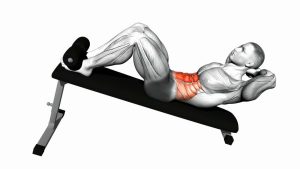
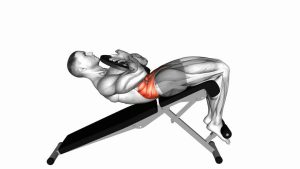
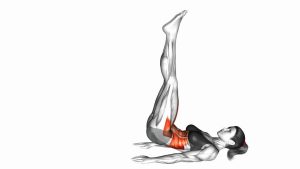
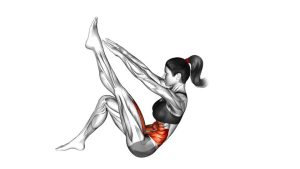
Jack Split Crunches: Proper Form, Core Benefits, Sets, Tips & FAQ
Learn how to do Jack Split Crunches with correct form, safe core control, step-by-step execution, sets by goal, common mistakes, FAQs, and recommended equipment for better ab training.
Jack Split Crunches
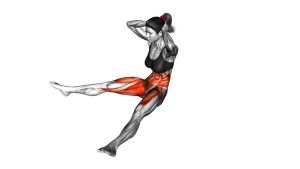
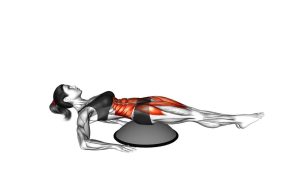
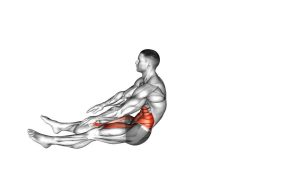
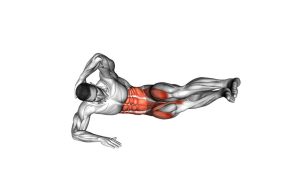
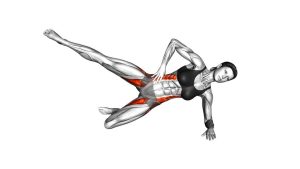
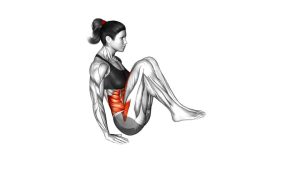
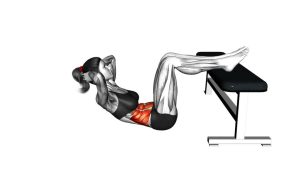
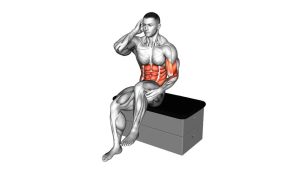
Jack Split Crunches are best used when you want a more athletic crunch variation that trains more than simple spinal flexion. Because the arms and legs move at the same time, the exercise demands timing, coordination, and strong abdominal bracing. The split-leg pattern also increases instability, so your core must resist unwanted rotation while still producing a clean crunch.
This movement should feel sharp and controlled, not rushed or thrown together. Each repetition starts from a long-body position, moves into a strong abdominal contraction, then returns with slow control. When performed correctly, the exercise creates a powerful squeeze through the front of the abs without excessive pulling from the neck or swinging from the hips.
Quick Overview
| Body Part | Abs |
|---|---|
| Primary Muscle | Rectus abdominis |
| Secondary Muscle | Obliques, hip flexors, transverse abdominis, deep core stabilizers |
| Equipment | No equipment required; optional exercise mat |
| Difficulty | Intermediate because it requires coordination, core control, and controlled leg movement |
Sets & Reps (By Goal)
- Core control and form practice: 2–3 sets of 6–8 reps per side with a slow tempo.
- Muscle endurance: 3–4 sets of 10–14 total reps while keeping each rep smooth.
- Ab hypertrophy focus: 3–4 sets of 8–12 reps with a 1-second squeeze at the top.
- Home workout finisher: 2–3 rounds of 20–30 seconds with clean alternating reps.
- Core conditioning: 3 rounds of 30 seconds, resting 30–45 seconds between rounds.
Progression rule: Add reps only after you can keep the lower back stable, the neck relaxed, and the descent controlled. Do not increase speed before mastering control.
Setup / Starting Position
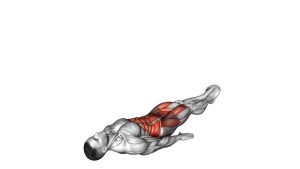
- Lie on your back: Start on a flat surface with your body fully extended.
- Extend your arms: Reach your arms overhead or slightly outward to create a long starting position.
- Set your legs: Keep both legs extended and close together before the first rep begins.
- Brace your core: Pull the ribs slightly down and keep the lower back controlled against the floor.
- Relax your neck: Keep the chin slightly tucked so the head follows the torso instead of leading the movement.
- Prepare to alternate: Plan to raise one leg higher while the opposite leg opens or lowers slightly during the crunch.
A clean setup makes the exercise safer. If you start with loose ribs, relaxed abs, and an arched lower back, the movement will usually shift into the hip flexors instead of the target abdominal muscles.
Execution (Step-by-Step)
- Begin from full extension: Keep your arms long, legs extended, and core braced before you move.
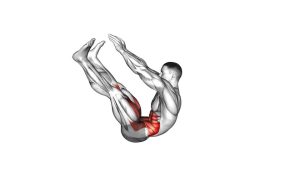
- Crunch upward: Lift your shoulders off the floor while bringing one leg upward at the same time.
- Create the split: Allow the opposite leg to move slightly outward or stay lower as the raised leg comes up.
- Reach toward the raised leg: Bring your hands toward the shin, ankle, or foot without yanking your neck forward.
- Squeeze the abs: Pause briefly at the top and feel the contraction through the front of your core.
- Lower with control: Return your torso, arms, and legs toward the floor at the same time.
- Alternate sides: Repeat the same pattern with the opposite leg on the next repetition.
Pro Tips & Common Mistakes
Pro Tips
- Think “curl and reach,” not “sit up fast”: The abs should create the lift, not momentum.
- Keep the movement compact: A smaller controlled crunch is better than a large sloppy rep.
- Exhale as you lift: Breathing out helps the ribs drop and improves abdominal contraction.
- Control the split: The leg opening should be intentional, not loose or random.
- Alternate evenly: Match your range and tempo on both sides to avoid imbalance.
- Use a mat: A supportive surface makes the start and finish more comfortable.
Common Mistakes
- Pulling the neck forward: This reduces ab focus and can create neck tension.
- Letting the lower back arch: This often means the legs are too low or the core is not braced.
- Swinging the legs: Momentum makes the exercise easier but less effective.
- Dropping too quickly: The lowering phase is part of the training, so keep it controlled.
- Holding the breath: Breath-holding increases tension and can make the movement feel strained.
- Reaching too far: You do not need to touch your foot. Reach only as far as your abs can control.
FAQ
What muscles do Jack Split Crunches work?
Jack Split Crunches mainly target the rectus abdominis, which is the front abdominal muscle. The split and reaching motion also works the obliques, hip flexors, and deep core stabilizers.
Are Jack Split Crunches good for beginners?
They are usually better for intermediate trainees. Beginners can start with basic crunches, dead bugs, bent-knee jackknife crunches, or single-leg crunches before progressing to the full split variation.
Should my lower back stay flat?
Your lower back should stay controlled and stable. It does not need to be aggressively smashed into the floor, but it should not arch strongly as your legs move. If it arches, reduce the leg range.
How fast should I perform the exercise?
Use a controlled tempo. Lift for about 1–2 seconds, squeeze briefly at the top, then lower for 2–3 seconds. Faster reps are only useful after your form is consistent.
Can Jack Split Crunches help build visible abs?
They can strengthen and develop the abdominal muscles. Visible abs also depend on overall body fat, nutrition, training consistency, and total weekly core work.
Why do I feel this more in my hip flexors?
Hip flexor dominance usually happens when the legs move too low, the lower back arches, or the crunch is too large. Bend the knees slightly, shorten the range, and focus on curling the ribs toward the pelvis.
Recommended Equipment
- Exercise Mat — adds comfort and support for floor-based ab exercises.
- Thick Yoga Mat — useful if your spine or hips feel uncomfortable on hard floors.
- Core Sliders — helpful for progressing into sliding core variations and controlled leg movements.
- Light Ankle Weights — optional advanced progression for stronger trainees with excellent control.
- Adjustable Ab Bench — useful for broader core training progressions beyond floor crunch variations.
Tip: Equipment is optional for Jack Split Crunches. Master the bodyweight version first before adding resistance, instability, or advanced progressions.